cuentosIA
Twelve Chapters of Proof
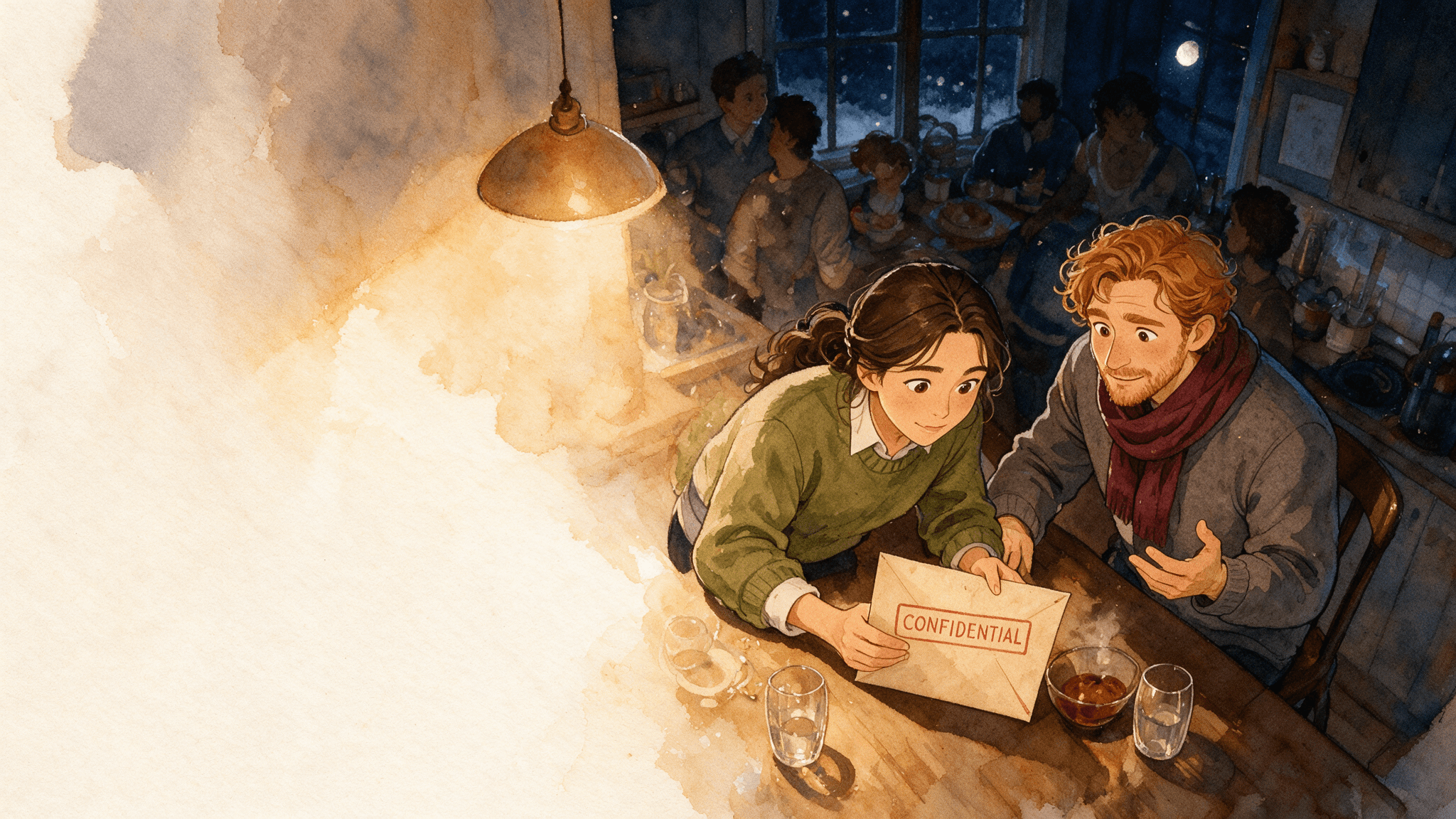
At midnight, three weeks before the wedding, the friends crowded around a kitchen table with cold coffee, one pen, and the back of an envelope. Their assignment was simple: collect the stories Maya and Oliver would each swear had happened differently.
Nobody agreed where to begin. The envelope acquired arrows, arguments, and a mysterious sauce stain.
—You’re making me sound impossible.
Maya glanced at the notes. —We haven’t even started. That settled it: they began with dinner.
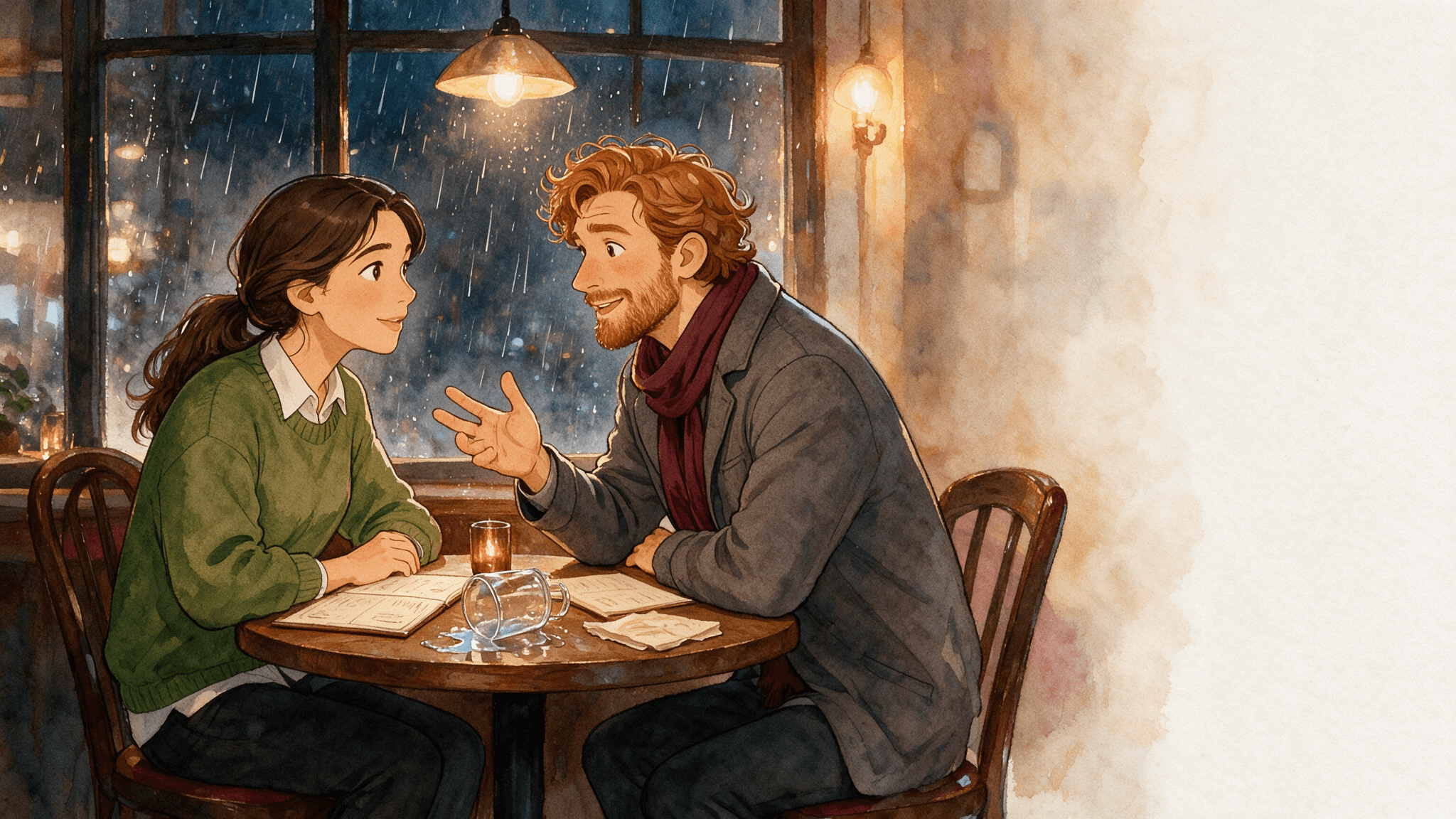
Their first date began at the wrong restaurant, because Oliver had confidently read an address that Maya had correctly questioned. Before the menus arrived, he knocked over a glass of water and rescued the napkins with the solemnity of emergency surgery.
Then Oliver spent forty minutes explaining a documentary nobody else had seen. Maya listened, asked precise questions, and noticed he became kinder whenever he forgot to be impressive.
—That is not how it happened.
It was, emphatically, how it happened.
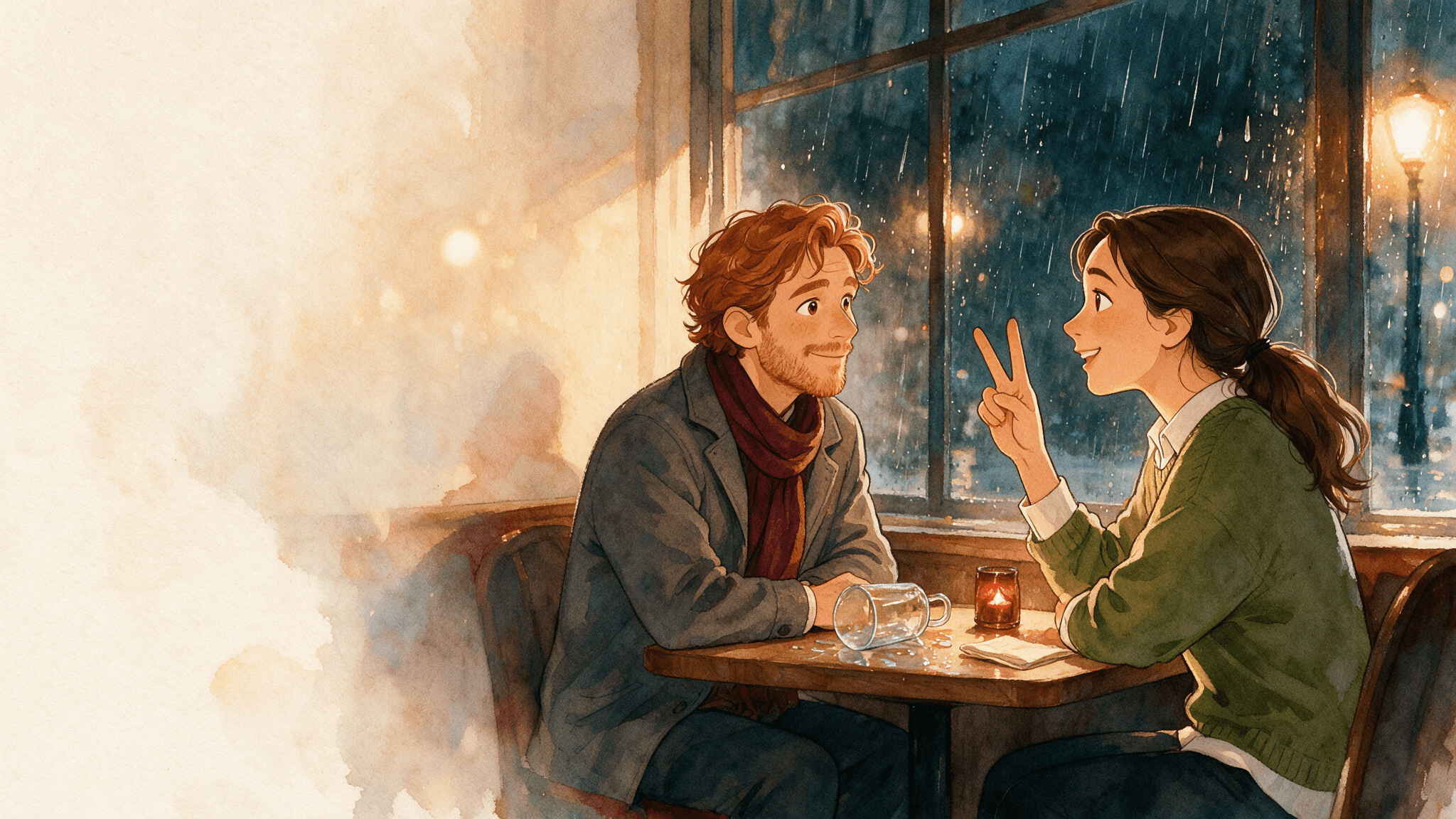
Months later, Maya admitted she had nearly canceled that date twice. The first time, she disliked the restaurant choice. The second, she feared an evening of strained conversation with a stranger. Both concerns, the friends noted, had proved technically justified.
Yet she had gone. Curiosity defeated caution, then kept her seated through the flood and lecture.
—I wanted to know how the documentary ended.
Oliver smiled. He understood that this was not the whole answer, and wisely left it there.
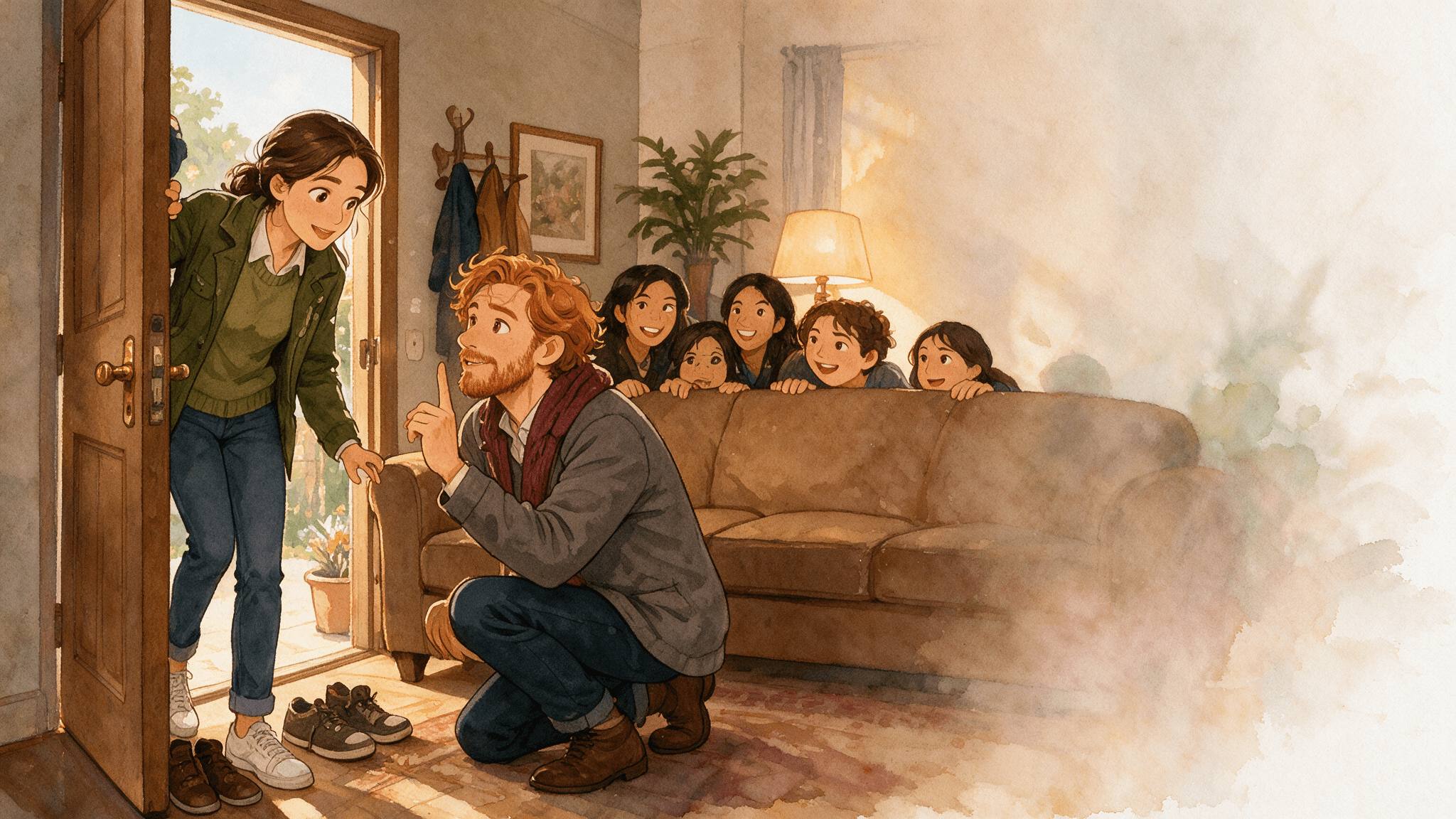
Maya’s relationship with time deserved its own chapter. She was exactly twenty minutes late so consistently that punctuality would have caused alarm. At her surprise birthday party, fourteen friends crouched behind a sofa until their knees objected and their whispers turned toward dinner.
By minute fifteen, someone began ordering food. At minute nineteen, Oliver predicted the door.
Maya entered at minute twenty, paused at the suspicious silence, and said:
—You know I notice shoes, right?
The surprise was hers: she had arrived early.
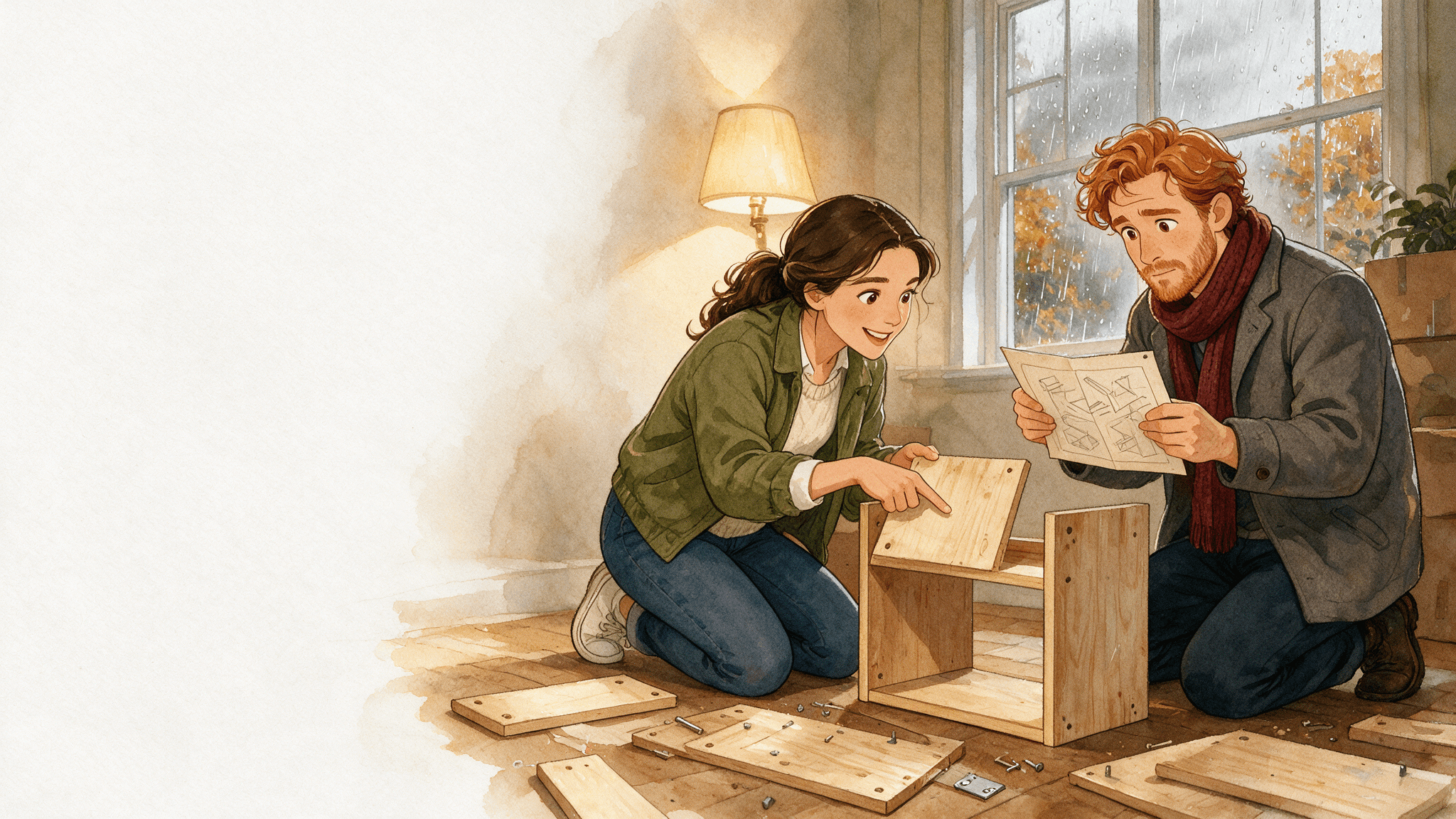
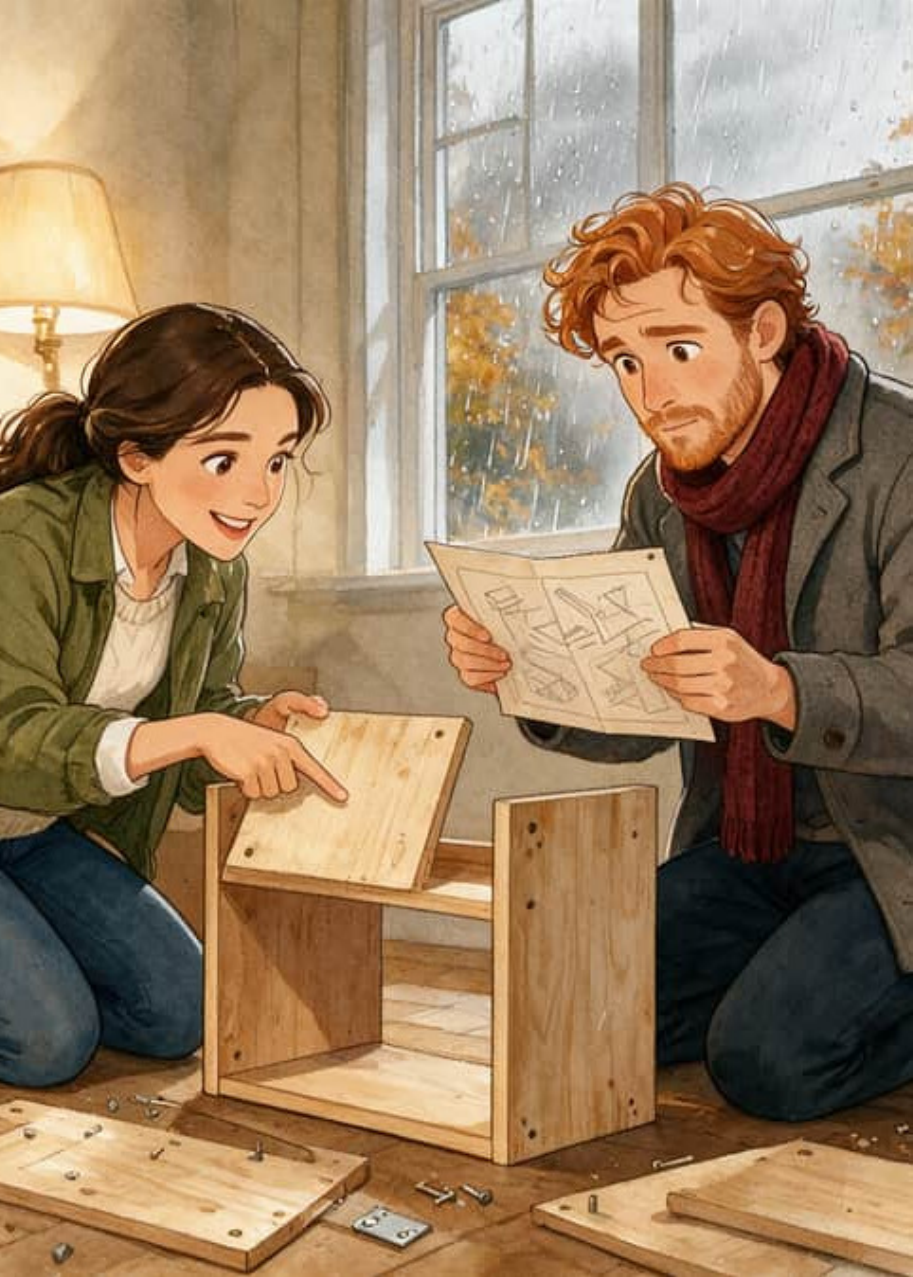
The bookshelf chapter required diagrams, though none clarified what occurred. One Sunday, Maya and Oliver spread flat-pack panels across the floor beside an instruction sheet containing no words, only arrows and unreasonable confidence.
By afternoon, the shelf leaned with philosophical uncertainty. Three screws remained. Maya asked where step six had gone; Oliver maintained they had completed step six emotionally.
Their legendary argument continued entirely in whispers so the neighbors would not hear.
—You installed it backward.
—Quietly, though.
They rebuilt it together.
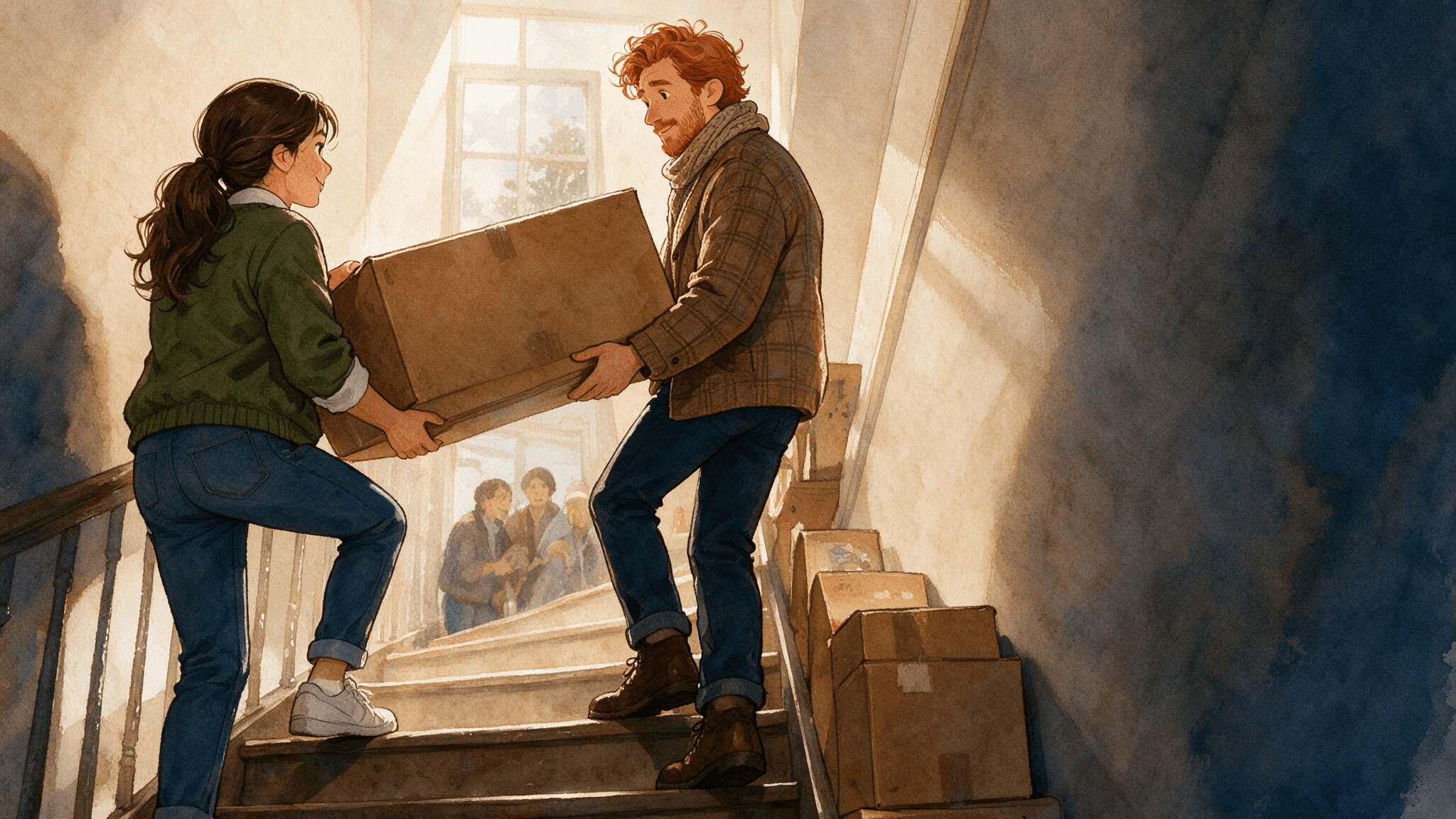
When they moved into the third-floor apartment, the staircase somehow contained four flights, each narrower than the last. The radiator clanked like a trapped toolbox. Friends carried boxes upward on the solemn promise of pizza.
Maya and Oliver shared the heaviest box, stopping at every landing to renegotiate their grip and their life choices. The pizza arrived two hours late.
—Perfect timing.
Maya opened a carton on the floor. —We can eat while the radiator applauds.
It answered with CLANK.
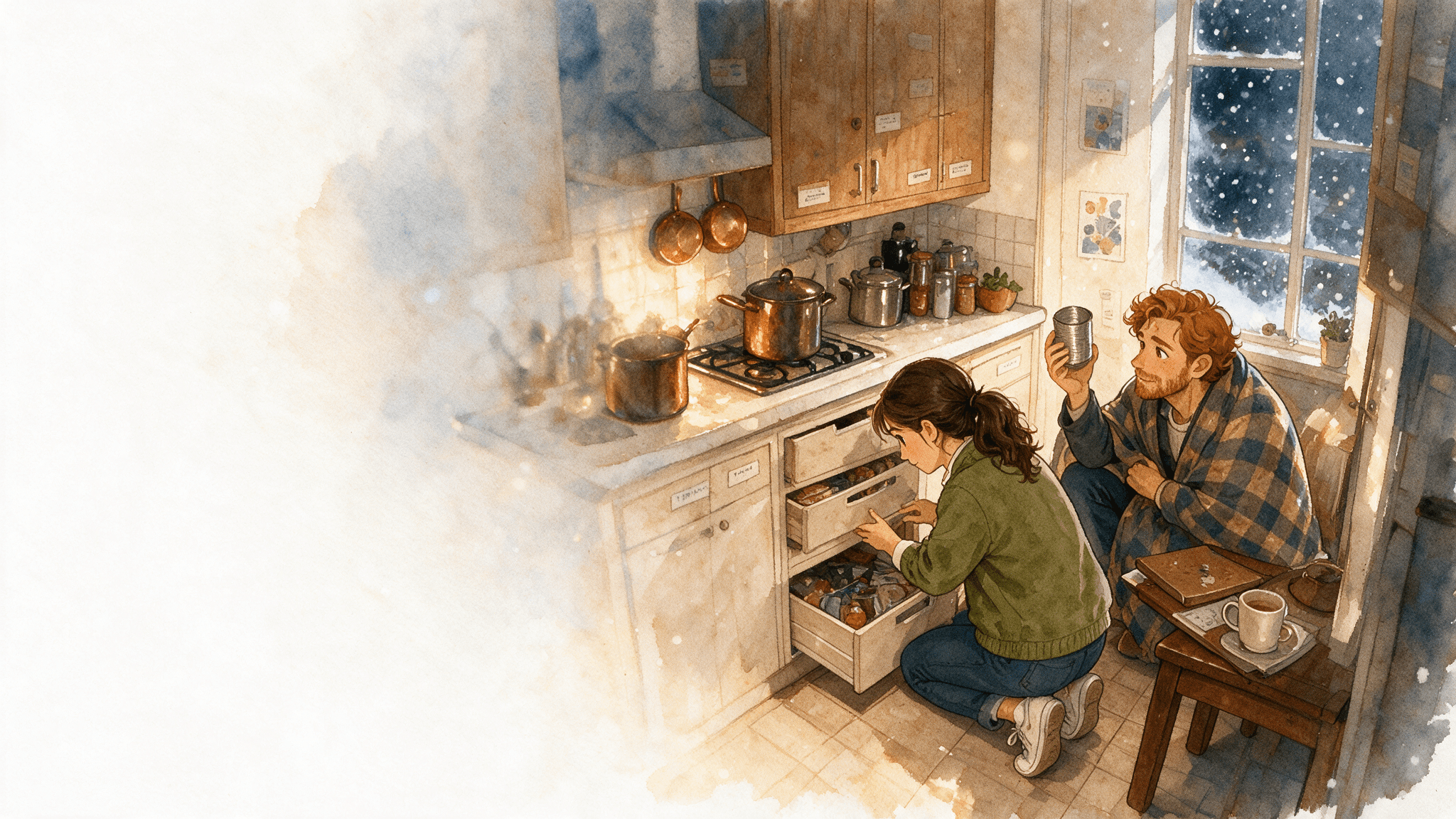
That winter, Oliver caught the flu and surrendered the kitchen to Maya, who cared for him with tea, blankets, and the restless efficiency of someone unable to sit still. By the time his fever broke, she had reorganized every cupboard.
Labels faced outward. Pans nested beautifully. Nothing occupied its former country.
—Where is the tin opener?
Maya opened three drawers, then a fourth. —Somewhere more logical.
He has not found it since. Still, the friends wrote, he recovered suspiciously fast.

On vacation, they missed a train by seconds and spent six hours in a station cafe beneath a clock that seemed personally offended. Rain combed the dark windows. Their plans dissolved into two cups of tea, a shared sandwich, and nowhere useful to go.
Maya began asking questions they had postponed for years. Oliver answered without performing certainty. They watched departures appear and vanish.
Later, interviewed separately for the book, both named that accidental day the best of the trip. Neither looked surprised.
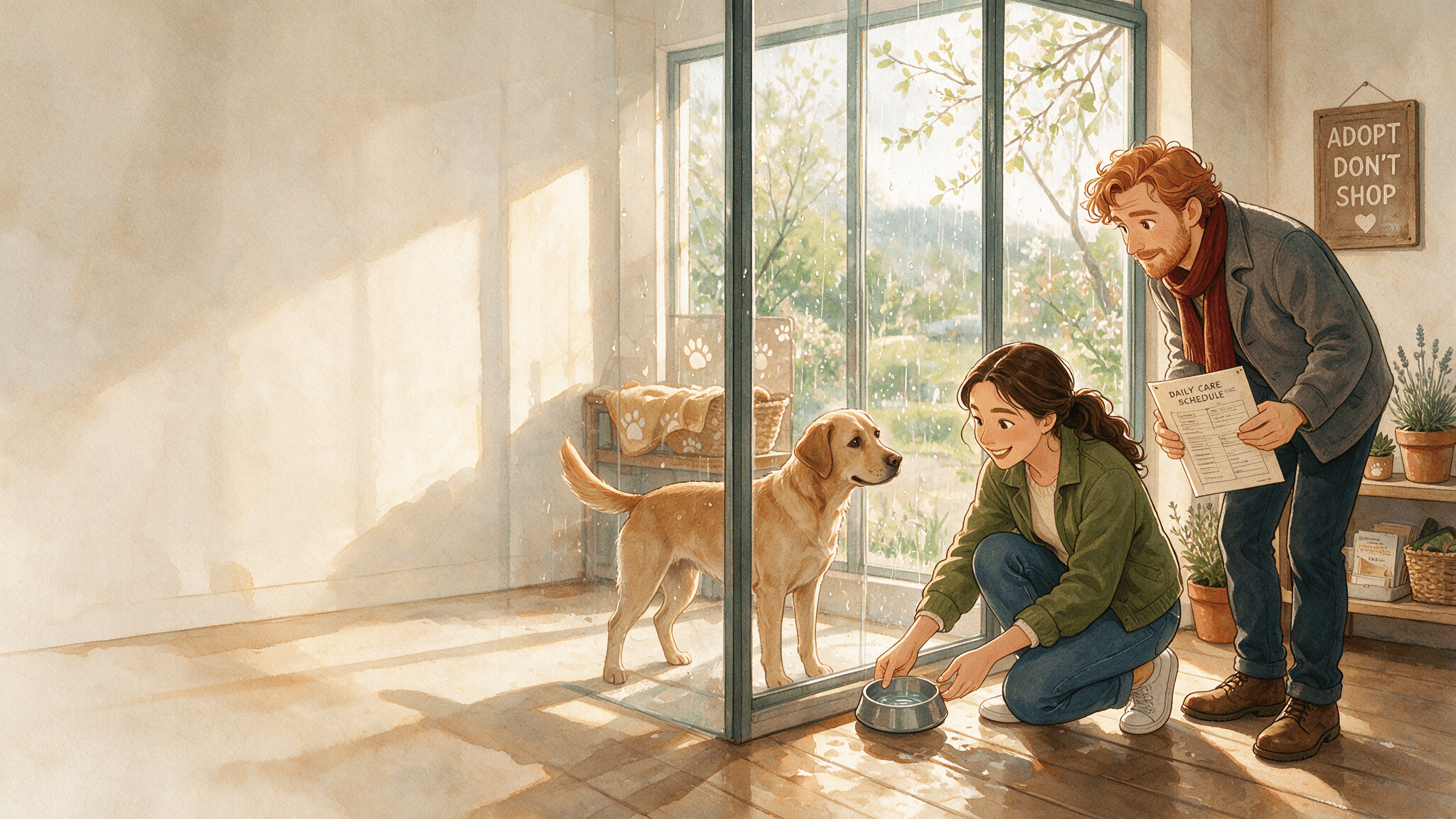
Then came the dog they did not adopt, twice. The first visit ended with Maya listing practical objections while Oliver nodded too quickly. The second ended with Oliver discussing schedules while Maya had already chosen where a water bowl might go.
They left without the dog both times. Outside, each accused the other of being dangerously persuadable.
—We were responsible adults.
—We went back twice.
The chapter concluded that responsibility and longing had apparently agreed to a draw.
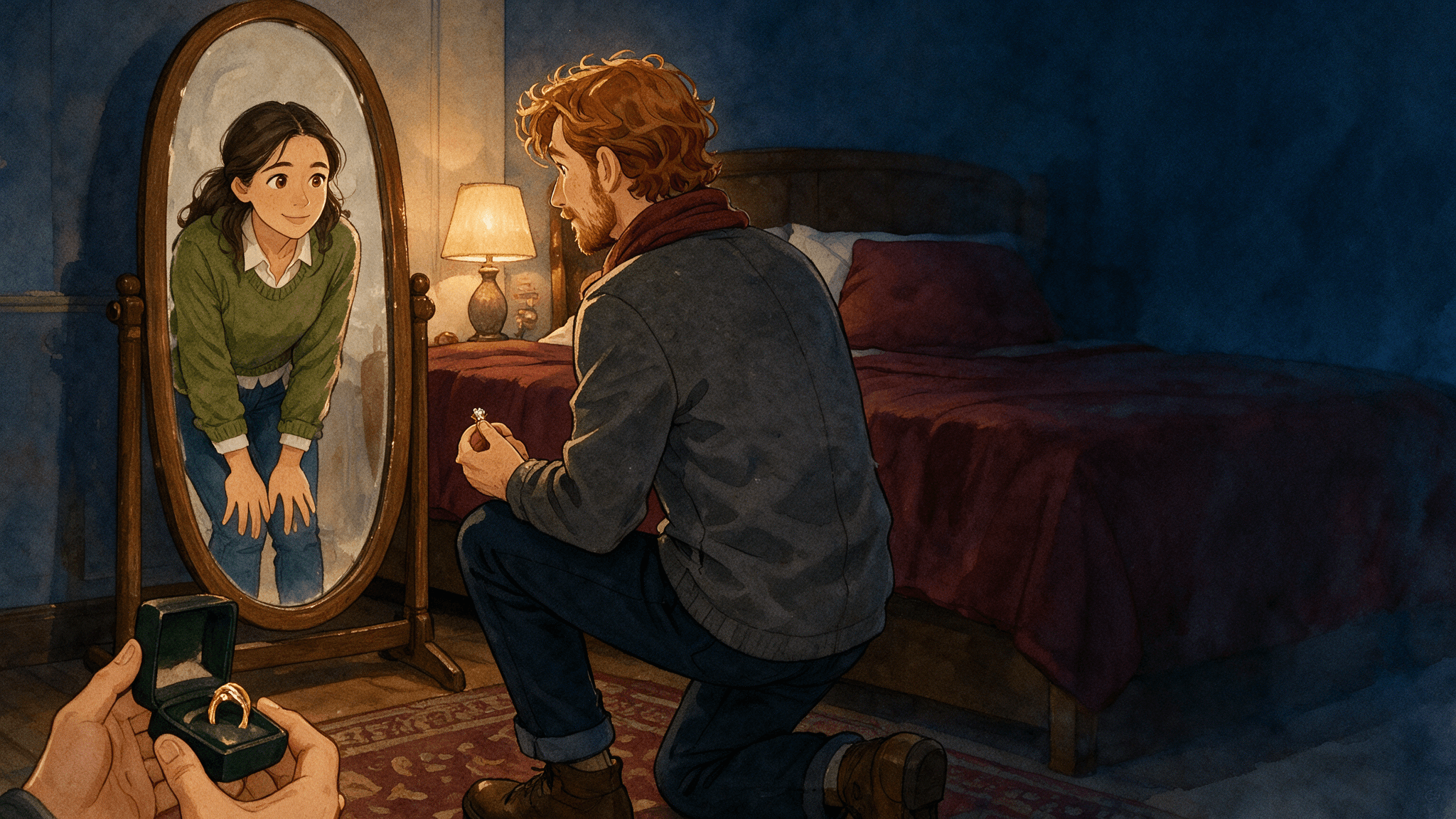
The proposal chapter nearly broke the room. One night, Oliver practiced asking the question before a mirror while his best friend held the ring and offered notes. Oliver tried solemn, casual, and one version so elaborate that even he stopped believing it.
—I sound like I’m negotiating a lease.
His friend suggested fewer words. Oliver breathed, pictured Maya noticing every nervous detail, and finally spoke simply.
In the kitchen, the listeners laughed until they saw his expression. Then affection quieted them all.
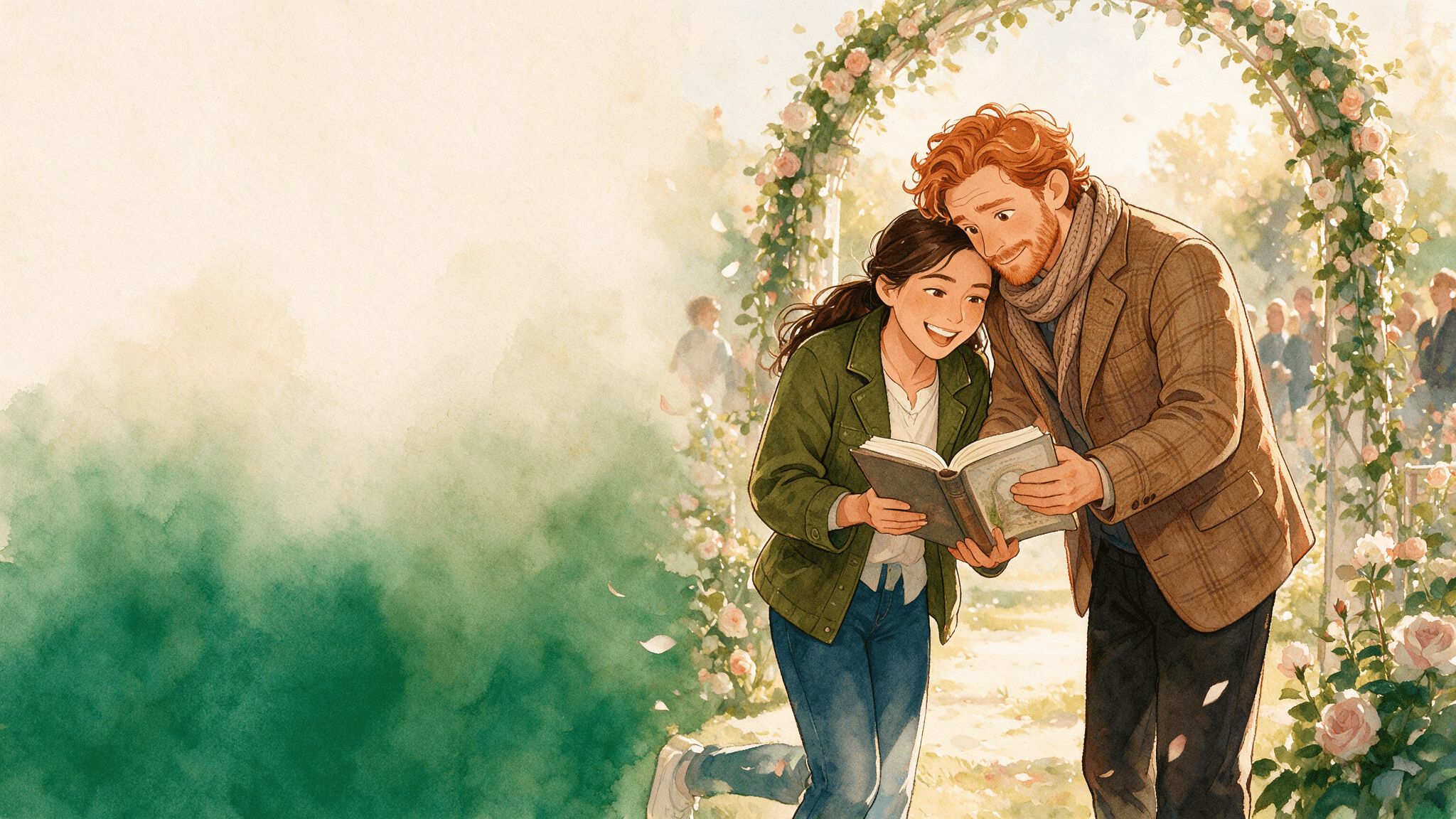
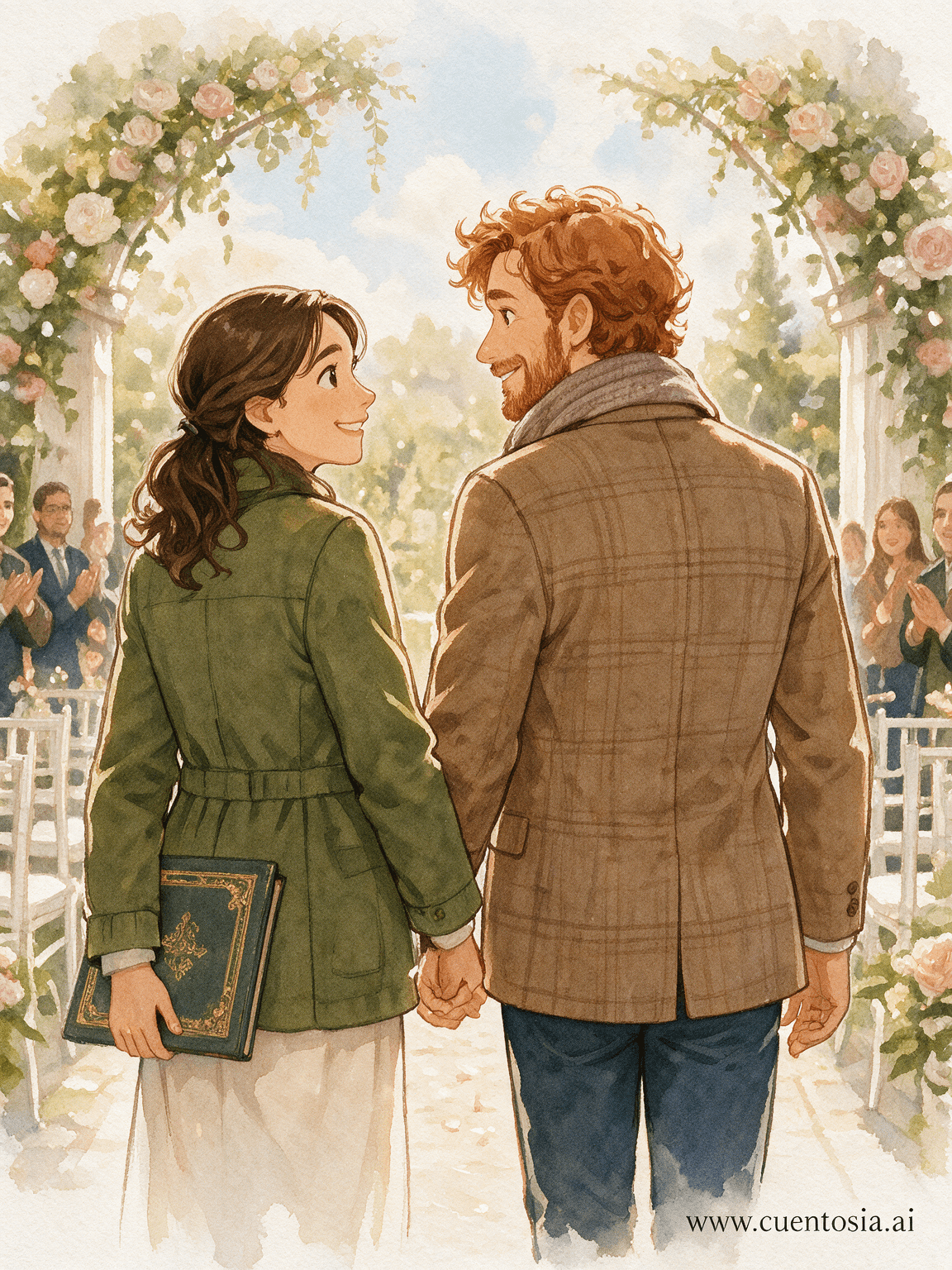
On the wedding morning, the friends carried the finished book into the garden and found Maya and Oliver near the gate, stealing one calm minute before everything began. The pages were bound, titled, and considerably less discreet than either recipient preferred.
Maya opened to the water glass. Oliver groaned. She turned to the missing tin opener and laughed against his shoulder.
—You kept all of this?
The friends admitted they had kept the important parts. The garden seemed to hold its breath.
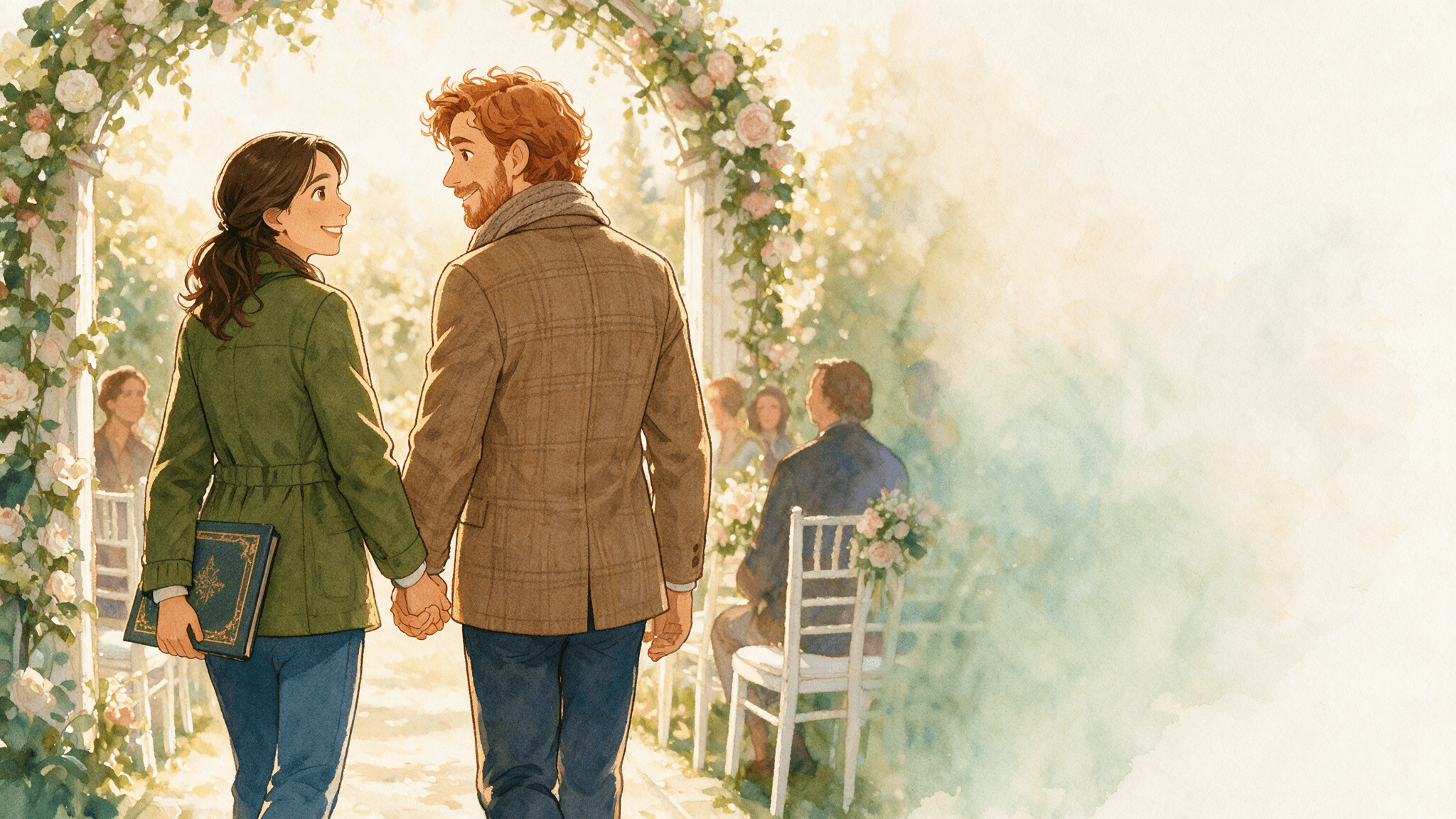
The last chapter contained no joke at first. It confessed what the friends had discovered while arranging every disputed memory: each teasing story was secretly evidence. They failed gracefully, waited, carried weight together, and turned delays into places worth remembering.
Oliver closed the book. Maya took his hand, her eyes lingering on the envelope reproduced inside.
—We still built the shelf correctly.
—Eventually.
Then they walked through the gate together, carrying twelve chapters of proof into the life they had already begun.