cuentosIA
The Two True Stories of Elena and Amir
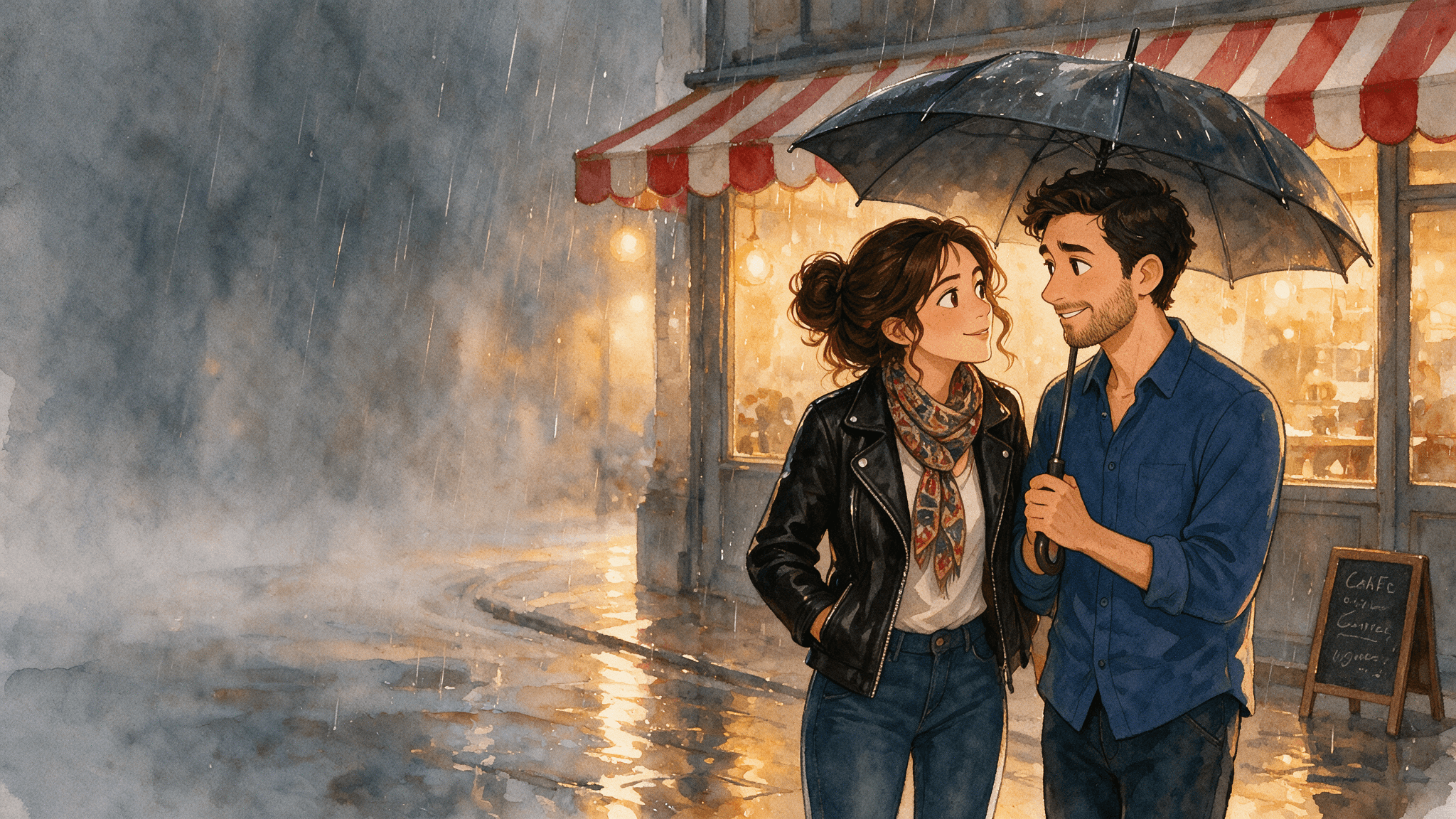
On the eve of their wedding, Elena and Amir sat together with the question they had been asked separately: How did you meet? Elena began immediately. Amir waited, certain patience would favor accuracy.
—It was sunny, and I spoke first outside the cafe on Linden Street.
—It was raining, the cafe was on Mercer, and I offered you my umbrella.
They looked at each other. Tomorrow promised vows. Tonight, apparently, required evidence.

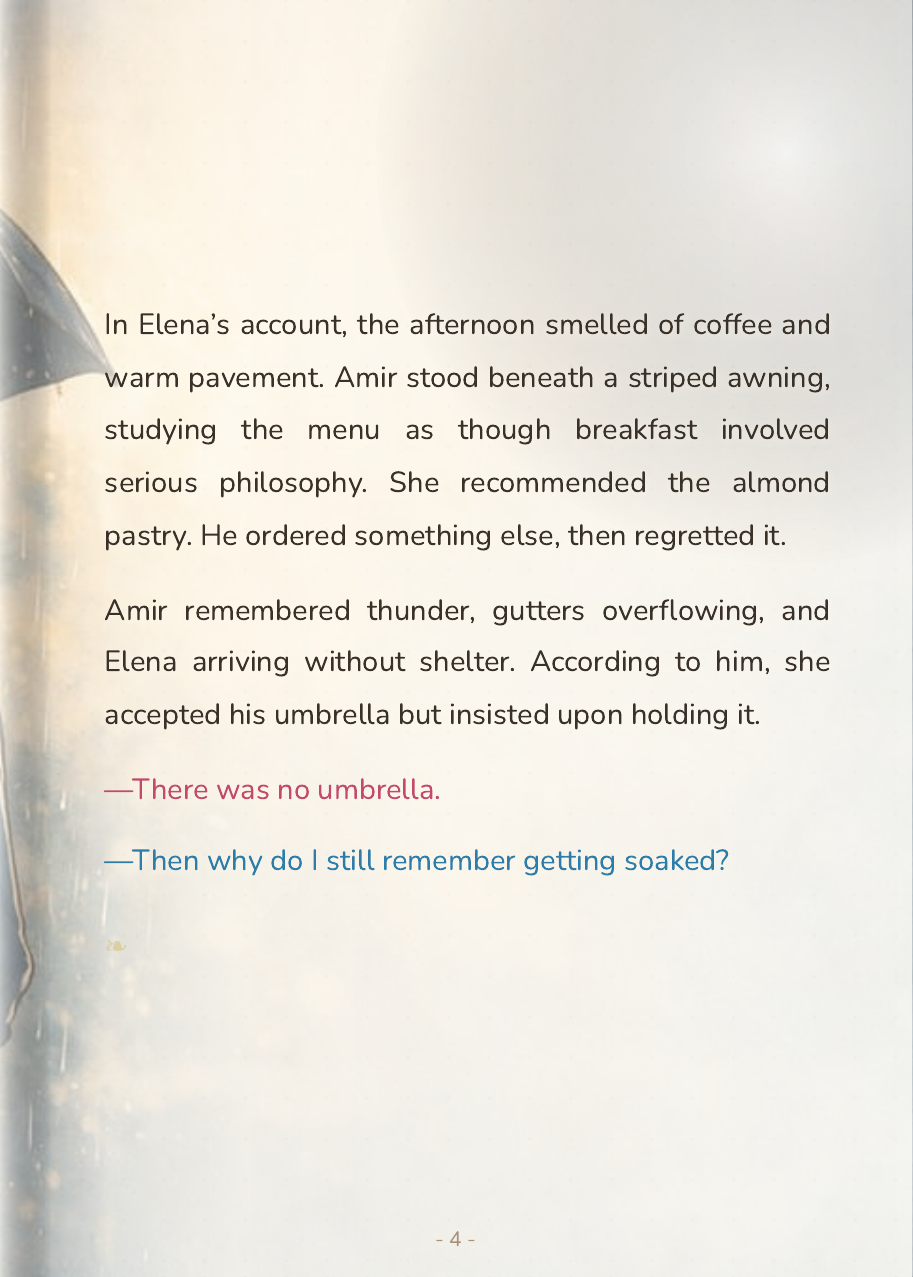
In Elena’s account, the afternoon smelled of coffee and warm pavement. Amir stood beneath a striped awning, studying the menu as though breakfast involved serious philosophy. She recommended the almond pastry. He ordered something else, then regretted it.
Amir remembered thunder, gutters overflowing, and Elena arriving without shelter. According to him, she accepted his umbrella but insisted upon holding it.
—There was no umbrella.
—Then why do I still remember getting soaked?

The following year brought their first trip together. Elena remembered a spring train heading north, sunlight moving across their shared table, and a love song playing softly overhead. Amir insisted it was fall, they traveled south, and the speaker played jazz.
They did agree that they missed their stop. Elena blamed Amir’s confident directions. Amir blamed Elena’s certainty that intuition counted as navigation.
Neither mentioned how easily they had stepped onto the next train, still together.
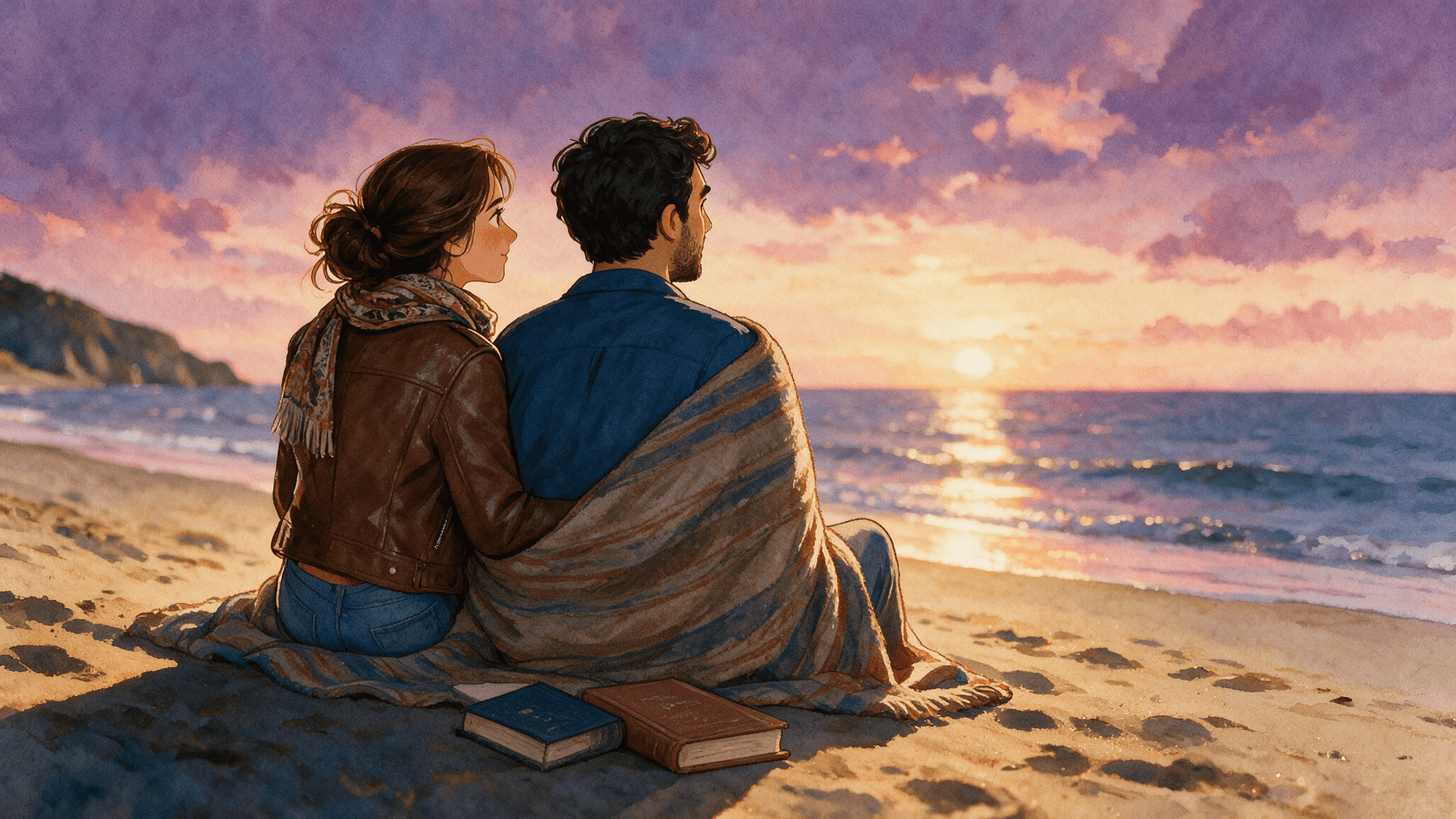
Elena said their destination had been a quiet beach, where they walked until dusk and spoke about the lives they hoped to build. Amir maintained they had reached the shore before noon and spent hours reading in companionable silence.
—You told me you wanted a life that felt spacious.
—You said that. I said life connects in ways we understand later.
Yet both remembered sharing one blanket after the air turned cold.
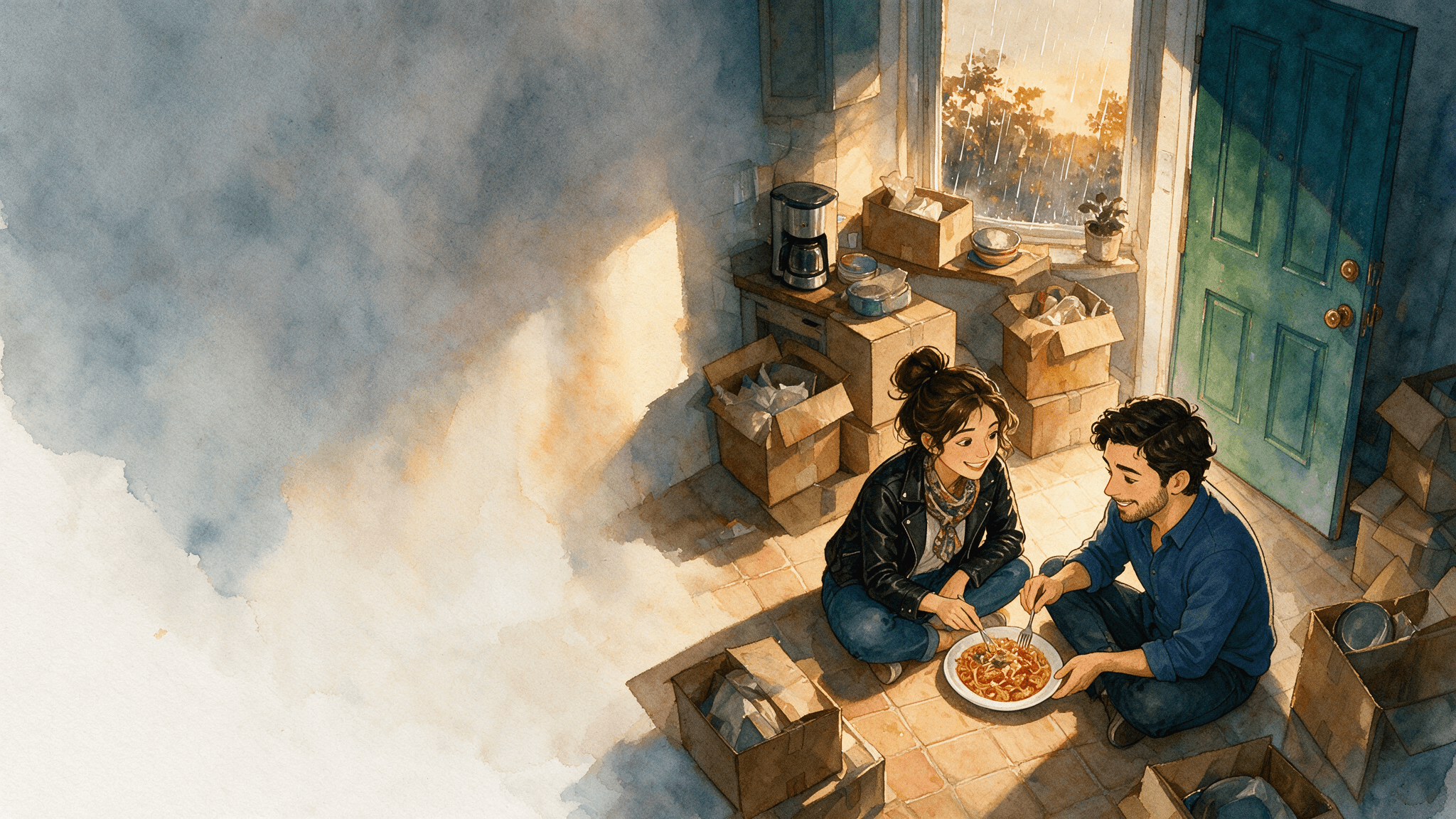
Two years later, they moved into the tiny apartment. Elena remembered a green door that stuck whenever the weather changed. Amir remembered a blue door that stuck because Elena pulled it before turning the key.
Cardboard boxes crowded the kitchen. They sat on the floor, eating from the same plate because neither could locate the others.
—That was when the apartment started feeling like home.
—No. That happened when we finally found the coffeemaker.
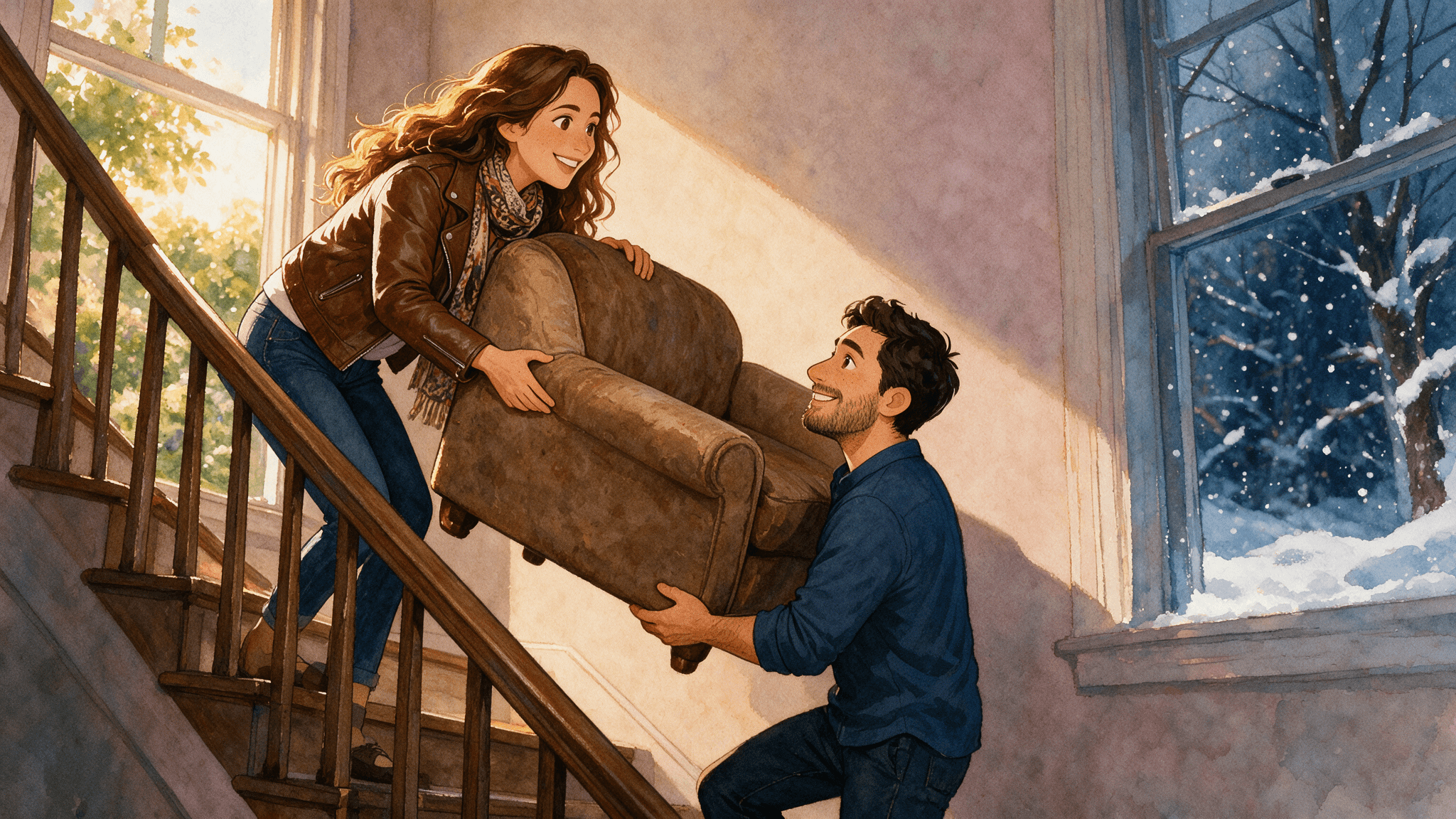
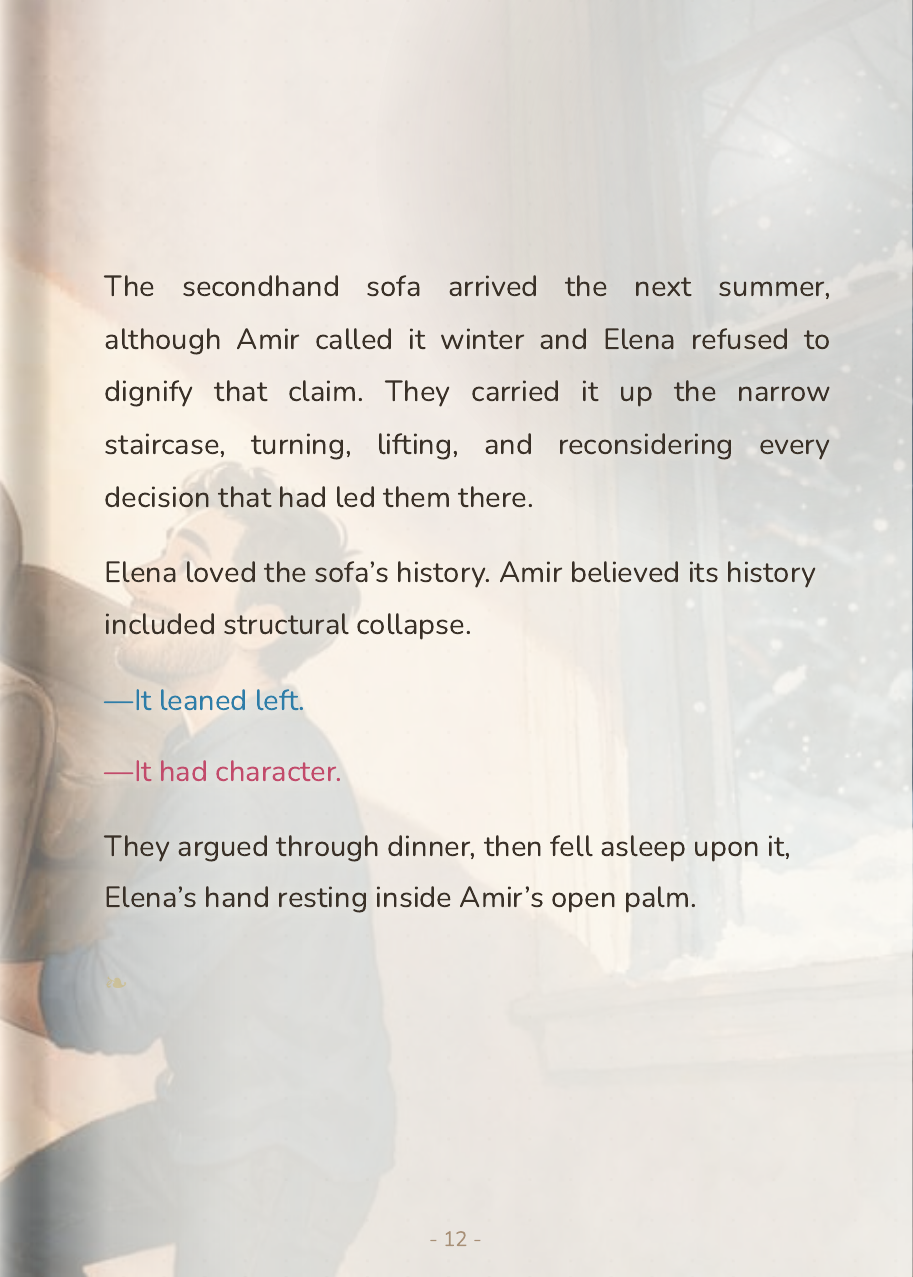
The secondhand sofa arrived the next summer, although Amir called it winter and Elena refused to dignify that claim. They carried it up the narrow staircase, turning, lifting, and reconsidering every decision that had led them there.
Elena loved the sofa’s history. Amir believed its history included structural collapse.
—It leaned left.
—It had character.
They argued through dinner, then fell asleep upon it, Elena’s hand resting inside Amir’s open palm.
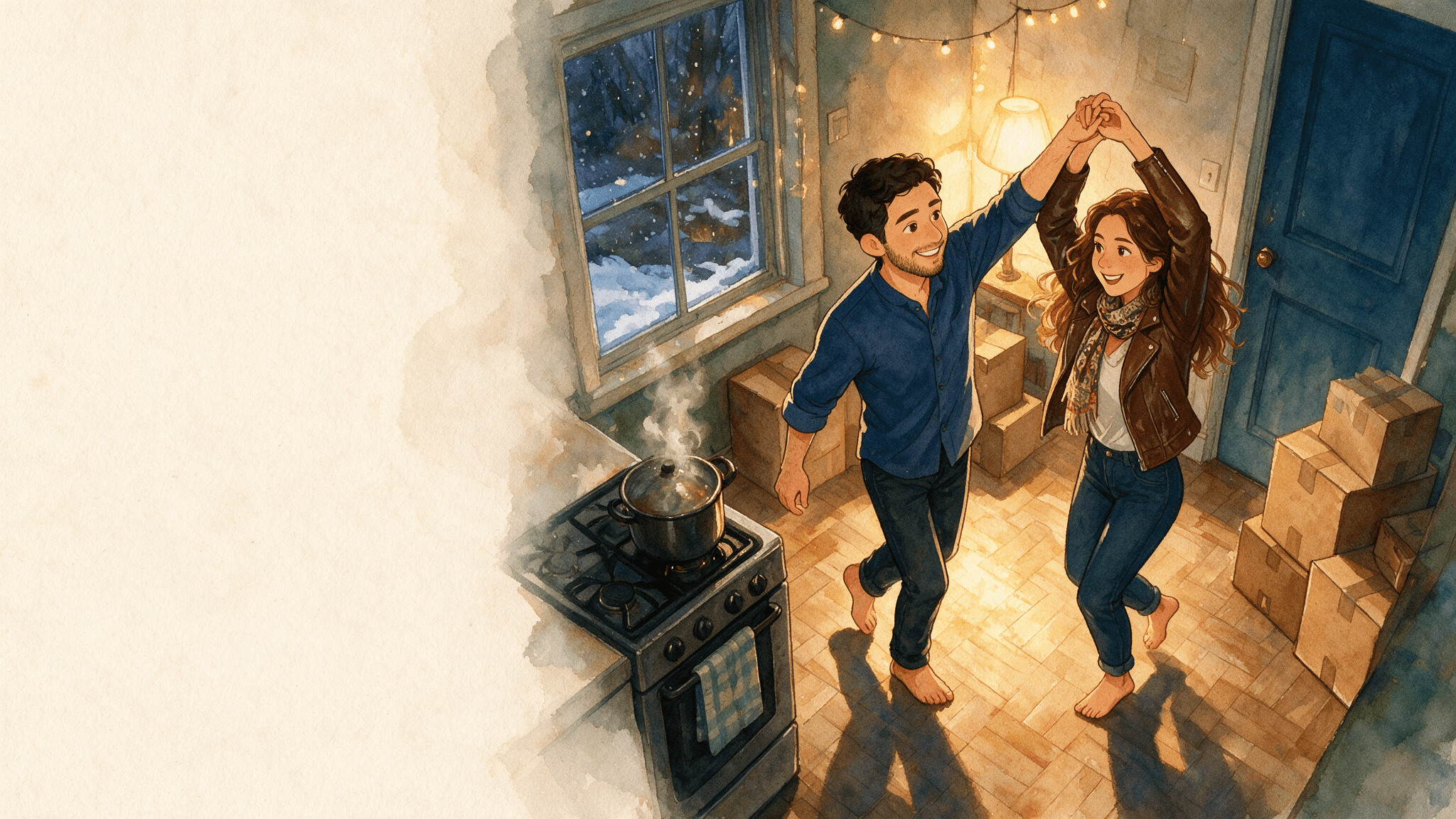
Later, their versions softened around harder seasons. Elena remembered one winter when every plan seemed delayed and every room felt too small. Amir called it early spring, because hope had already begun returning.
They disagreed about which song played while they cooked in the cramped kitchen. Elena said it was the tune from their first train. Amir claimed that train had never played music.
Still, when Elena began dancing barefoot, Amir joined her without asking why.
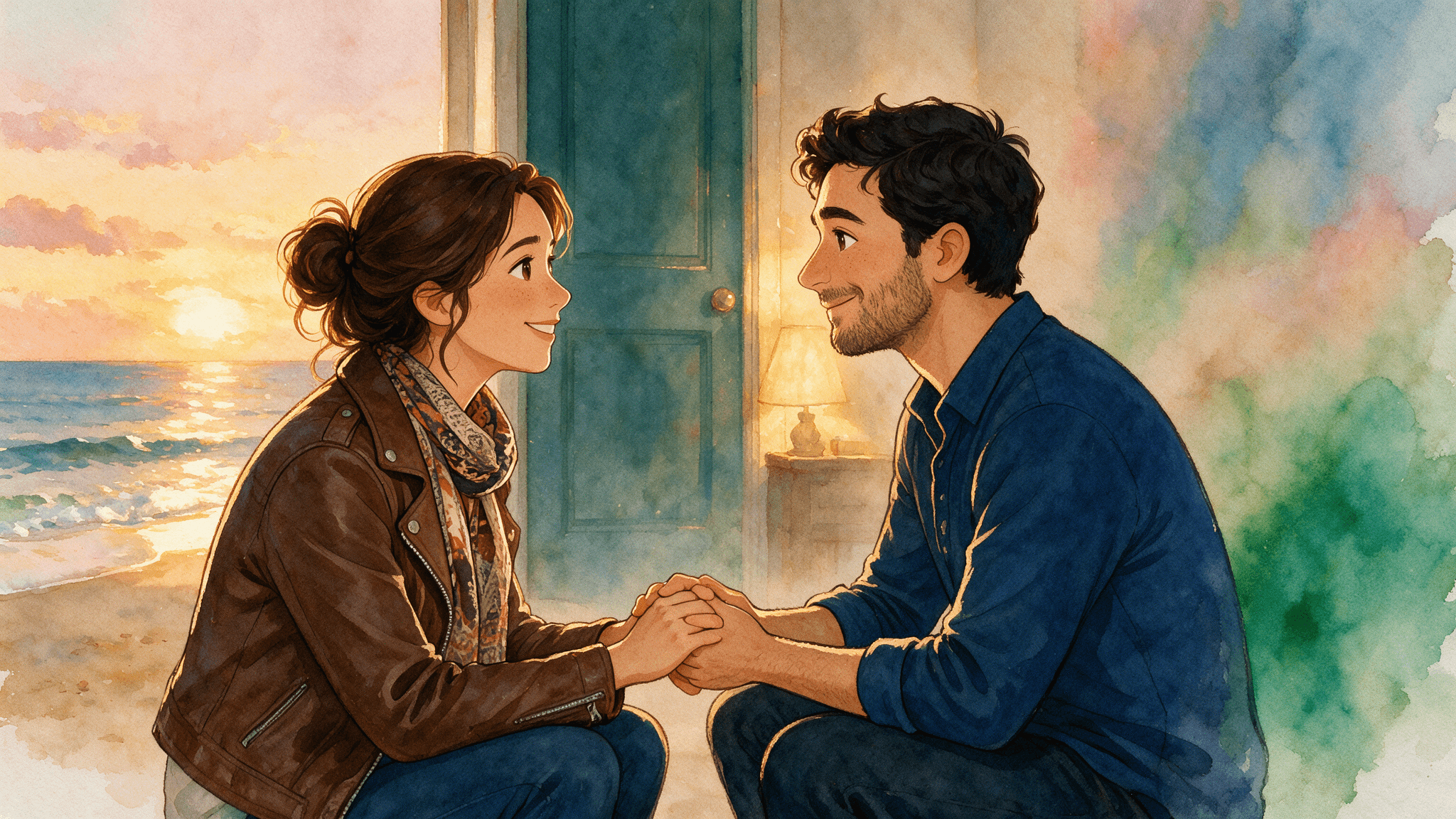
The question of who first spoke about marriage produced their longest disagreement. Elena placed the conversation on the beach at dusk, with wind carrying salt across their faces. Amir located it in the apartment, after the stubborn door finally closed.
—You said, “What if we chose this for good?”
—You said, “I already have.”
They fell quiet, each recognizing the same tenderness beneath incompatible scenery: neither had needed convincing, only courage.
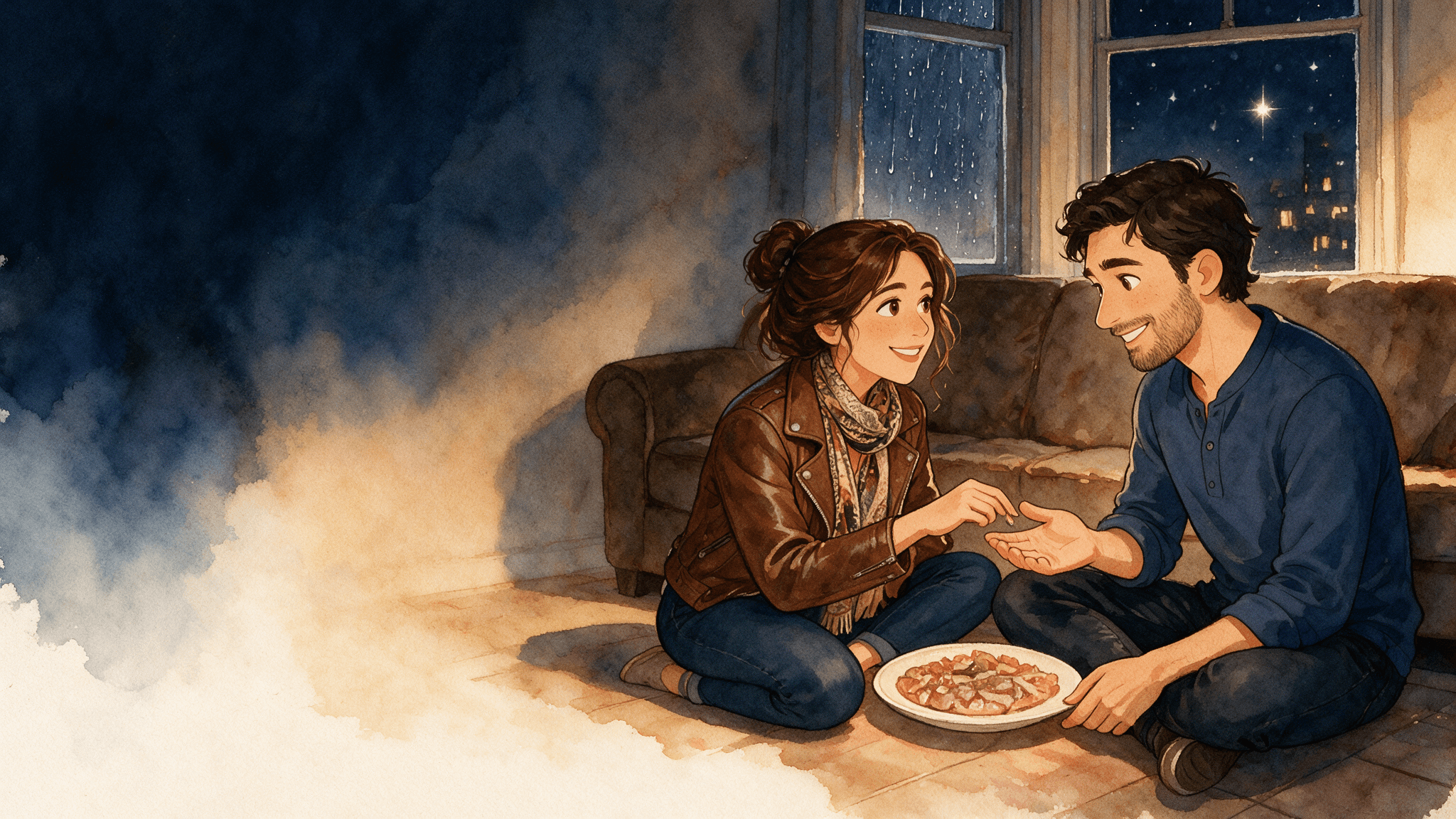
Then came the night one of them finally said it first. Elena remembered rain against the apartment windows and Amir standing beside the unreliable sofa. Amir remembered clear skies and Elena sitting cross-legged on the kitchen floor.
—You said you loved me.
—You said it first, very quietly.
—I am never quiet.
That nearly settled the matter, until Amir smiled. Elena smiled back, knowing evidence had never been his real purpose.
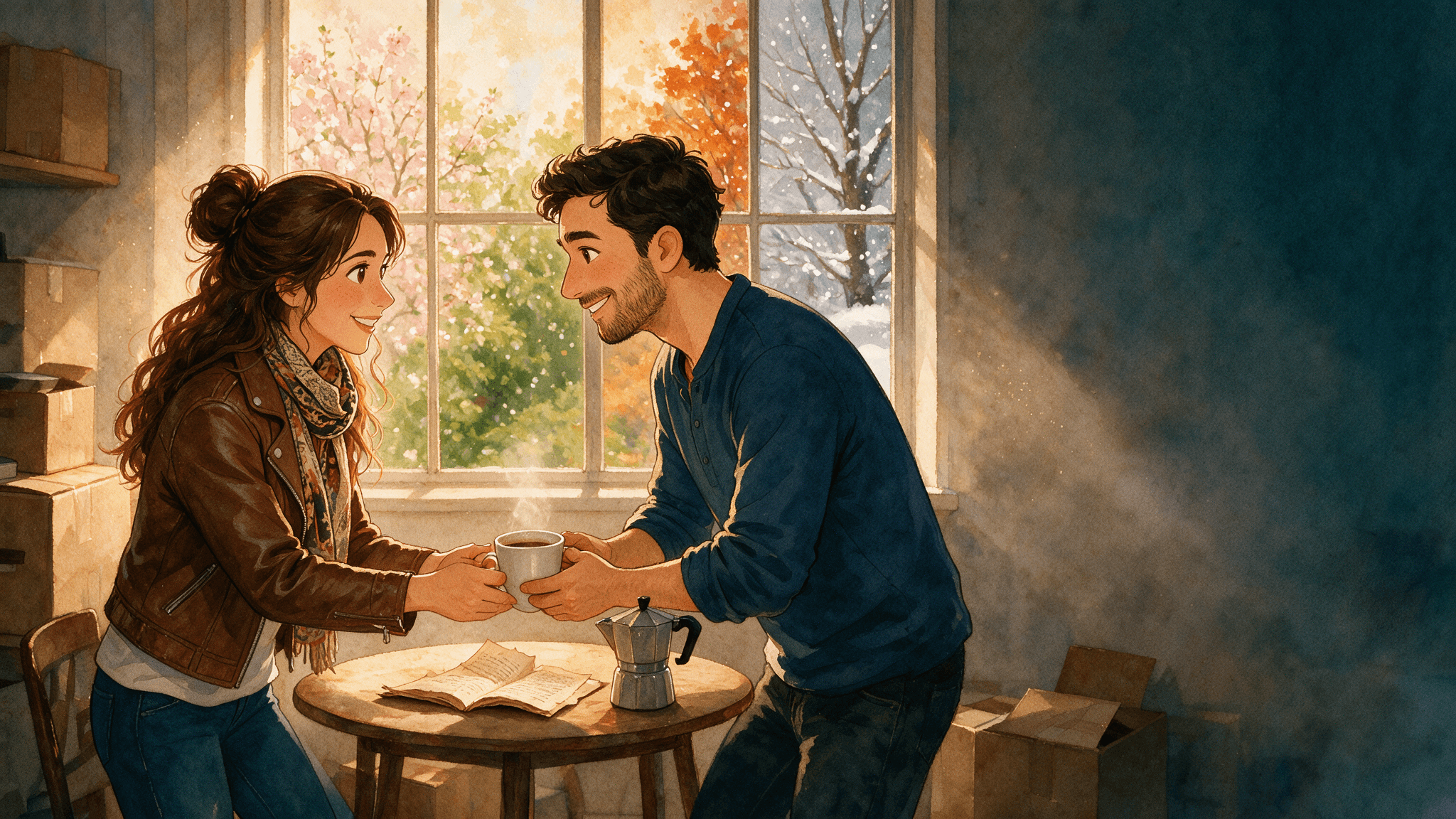
They continued through the years, placing rival memories side by side. Every season changed between tellings. Every street turned a different corner. Songs became silence; morning became midnight; the apartment door shifted from green to blue.
Yet certain details never moved. Elena had reached for Amir whenever uncertainty tightened around them. Amir had steadied the world without diminishing Elena’s dreams. After every disagreement, one of them had made coffee, and the other had stayed close enough to share it.
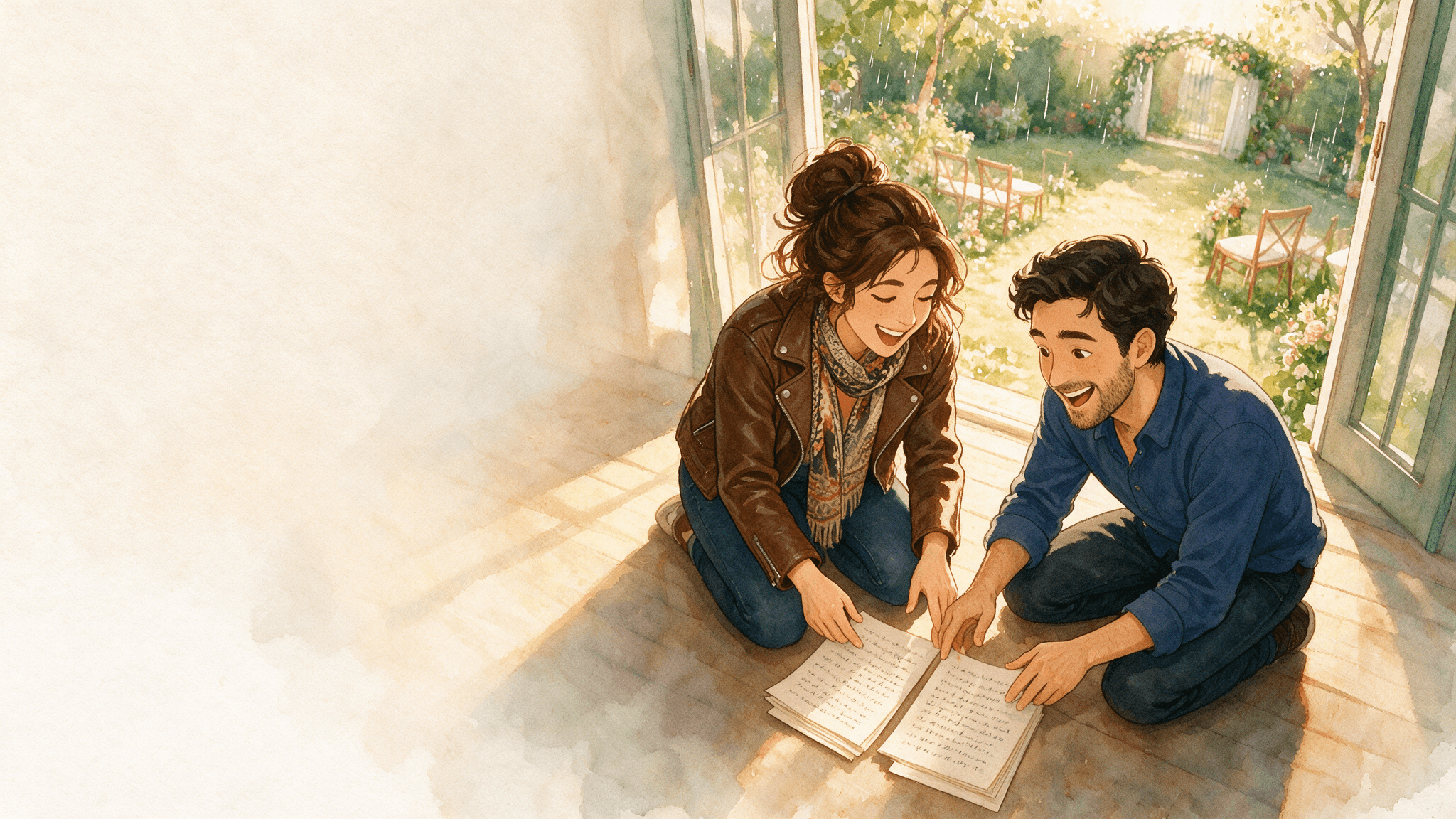
Morning entered gently. Beyond their window, the garden waited for the ceremony, while Elena and Amir remained among unfinished sentences and two equally stubborn histories.
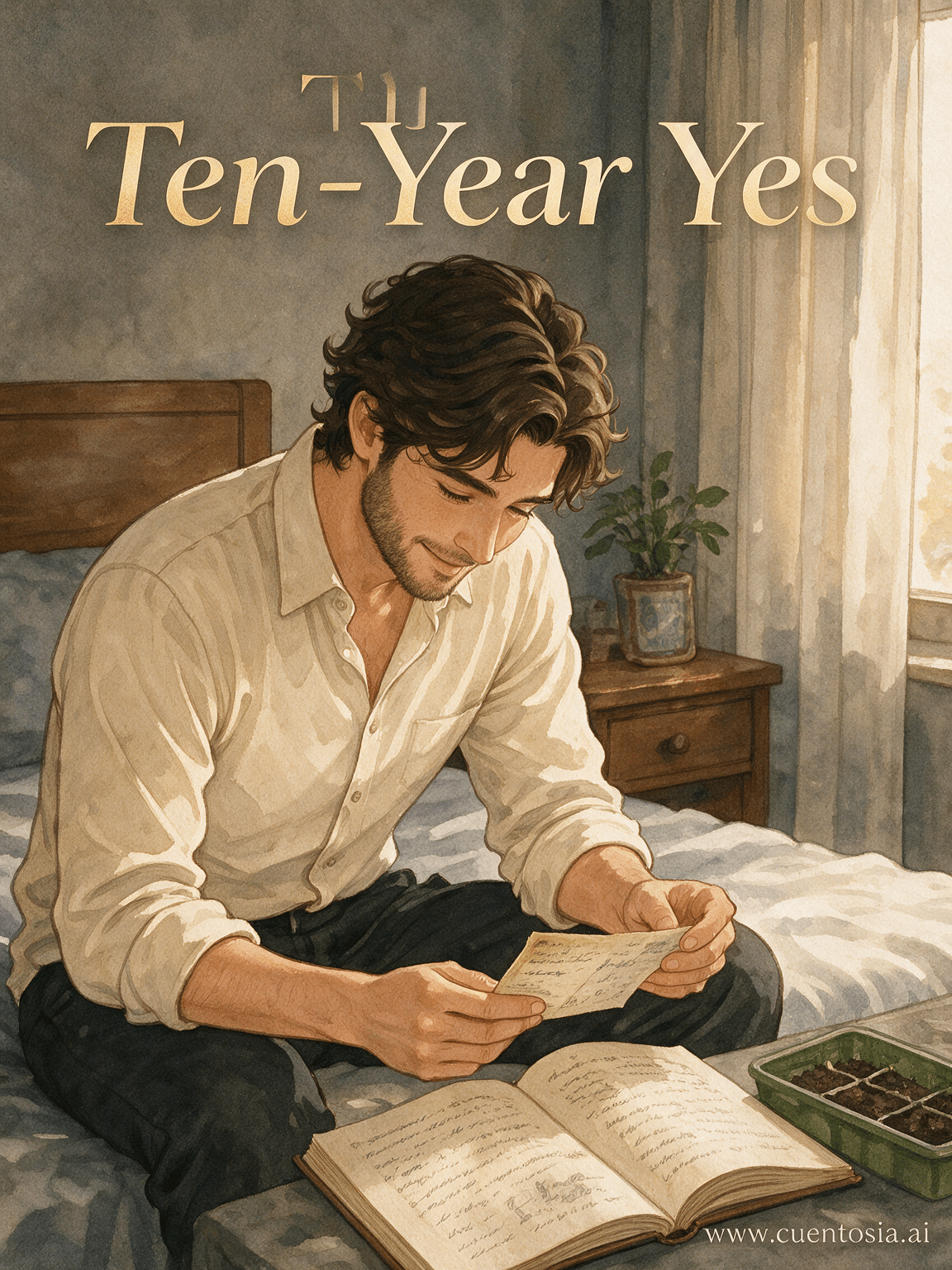
Elena gathered their written accounts and aligned the pages. Nothing matched except their names and the fact that each chapter ended with them together.
—We could spend our marriage correcting each other.
—Or we could admit we’re both completely reliable in different realities.
Elena laughed, and the last tension dissolved.
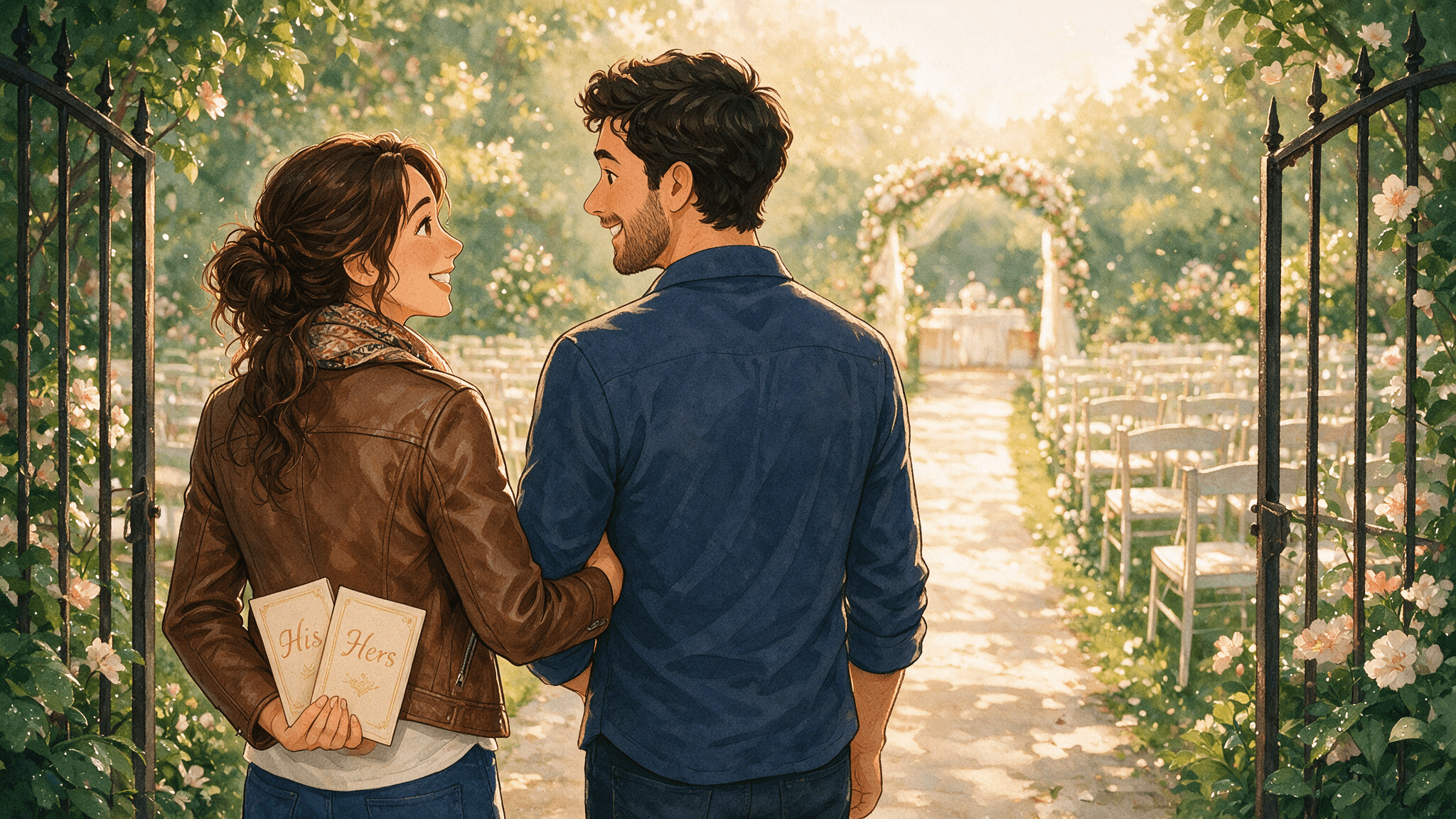
At the garden gate, just before the ceremony, Elena carried both accounts. Amir asked which version they would keep.
—Both. Mine for the truth, yours for the weather.
His easy laughter joined hers. They did not settle the cafe, the umbrella, the train, the sofa, the song, or who had spoken first. Instead, they stepped forward together, as they always had. Whatever details memory rearranged, love preserved the essential thing: year after year, they chose each other.