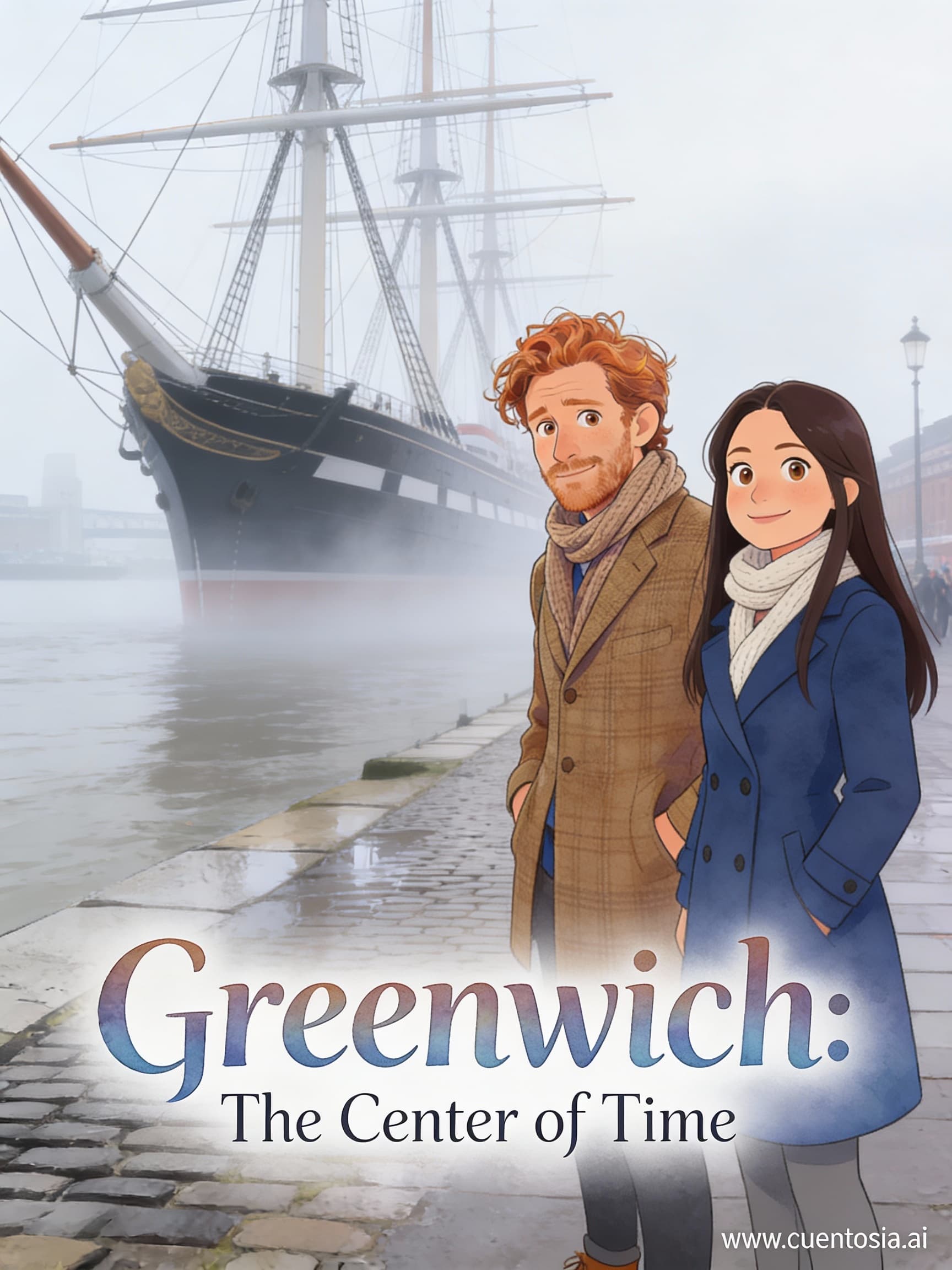
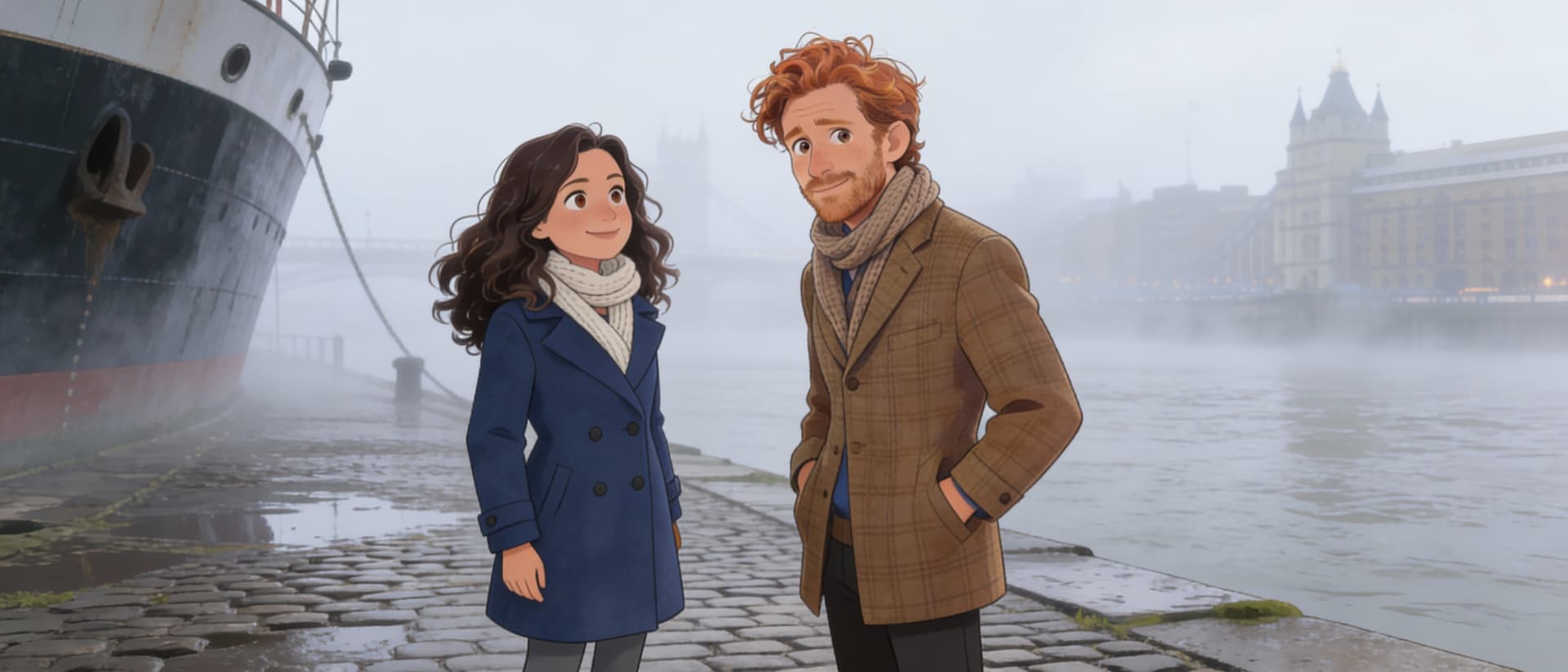
Valentine’s Day arrived in a soft fog, wrapping Greenwich like a secret. Oliver met Sophie near the Cutty Sark, listening to the river breathe. He carried a small box in his pocket and a heavier thought in his chest.
They walked along the water where the Thames turned the city into ripples and silhouettes. Oliver tried to speak casually—about coffee, about work—yet his sentences kept snagging. Sophie noticed, her fingers brushing his sleeve as if checking a pulse. “You’re somewhere else,” she said. Oliver watched the Cutty Sark’s rigging fade into mist and admitted, “I keep thinking time is sprinting ahead of us.”
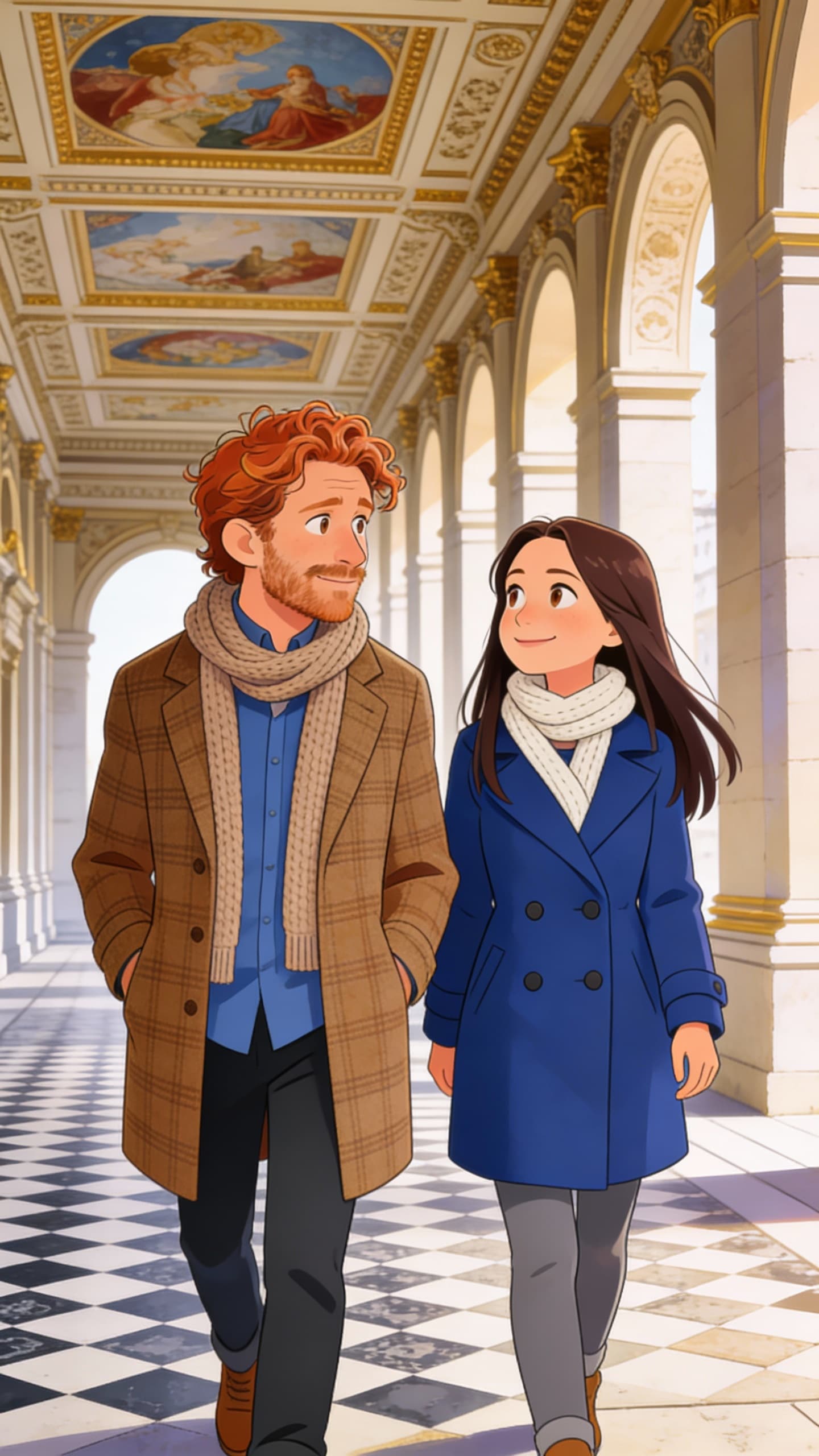
At the Old Royal Naval College, Oliver slowed under the grand arches. The stone felt patient, like it had seen every kind of promise. “I’m scared,” Oliver said. “Not of you. Of losing the days before I notice they’re gone.”
Sophie stopped where the corridor opened to the broad courtyard. She turned Oliver toward her like she was setting a compass. “Time isn’t only what slips away,” she said. “It’s also what we choose to hold.” Oliver’s laugh came out thin. “That sounds like something carved into a monument.” “Maybe,” she replied, “but we’re not monuments. We’re living. We can keep choosing.”
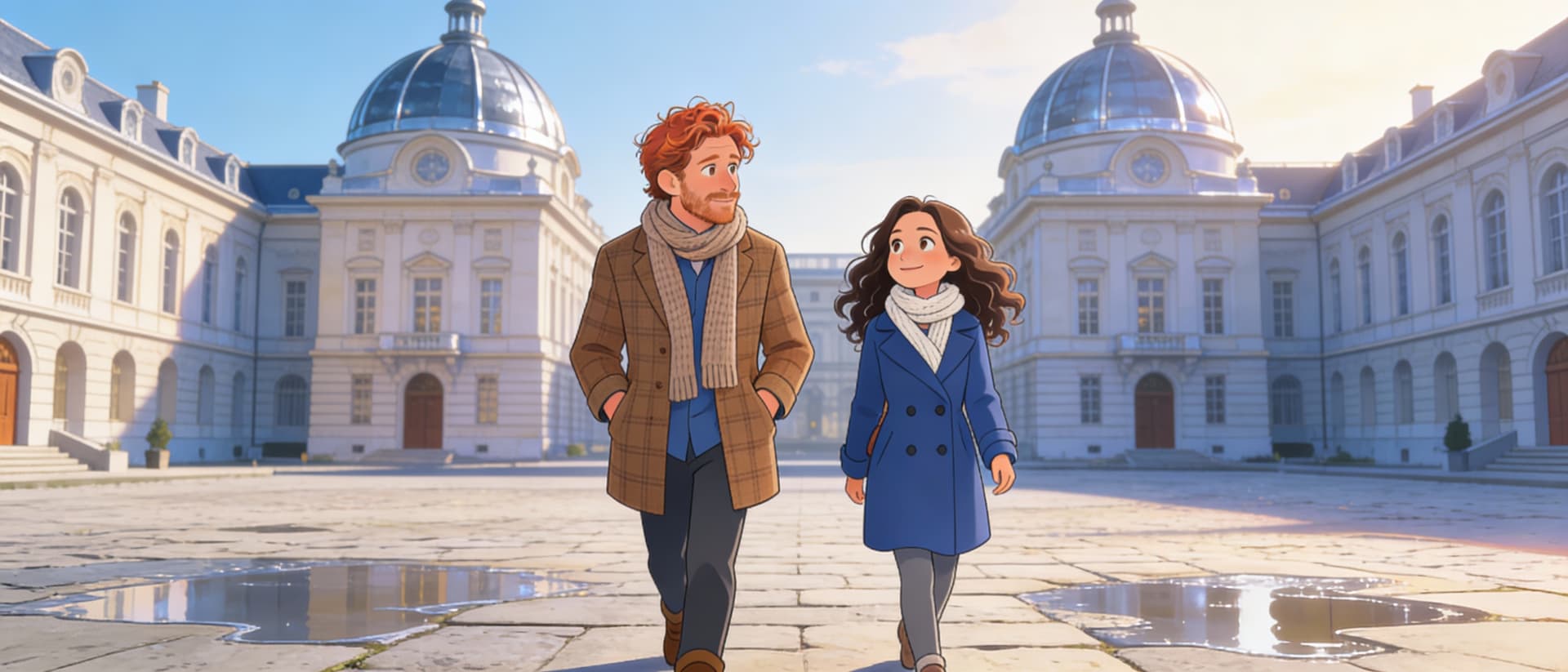
Their steps echoed between columns, and Oliver felt his worry become audible. He told Sophie how birthdays seemed closer together, how friends moved away, how even joy felt brief. Sophie listened without interrupting, letting his unease have room to exist.
Sophie guided him toward the wide lawn where the buildings framed the sky like a measured stage set. “When you spiral like that,” she said, “I hear you trying to outrun a clock that isn’t chasing you.” Oliver rubbed his palms together, embarrassed by his own intensity. “I want to be better at being here,” he confessed. Sophie nodded. “Then let’s practice. One moment. Then the next.”
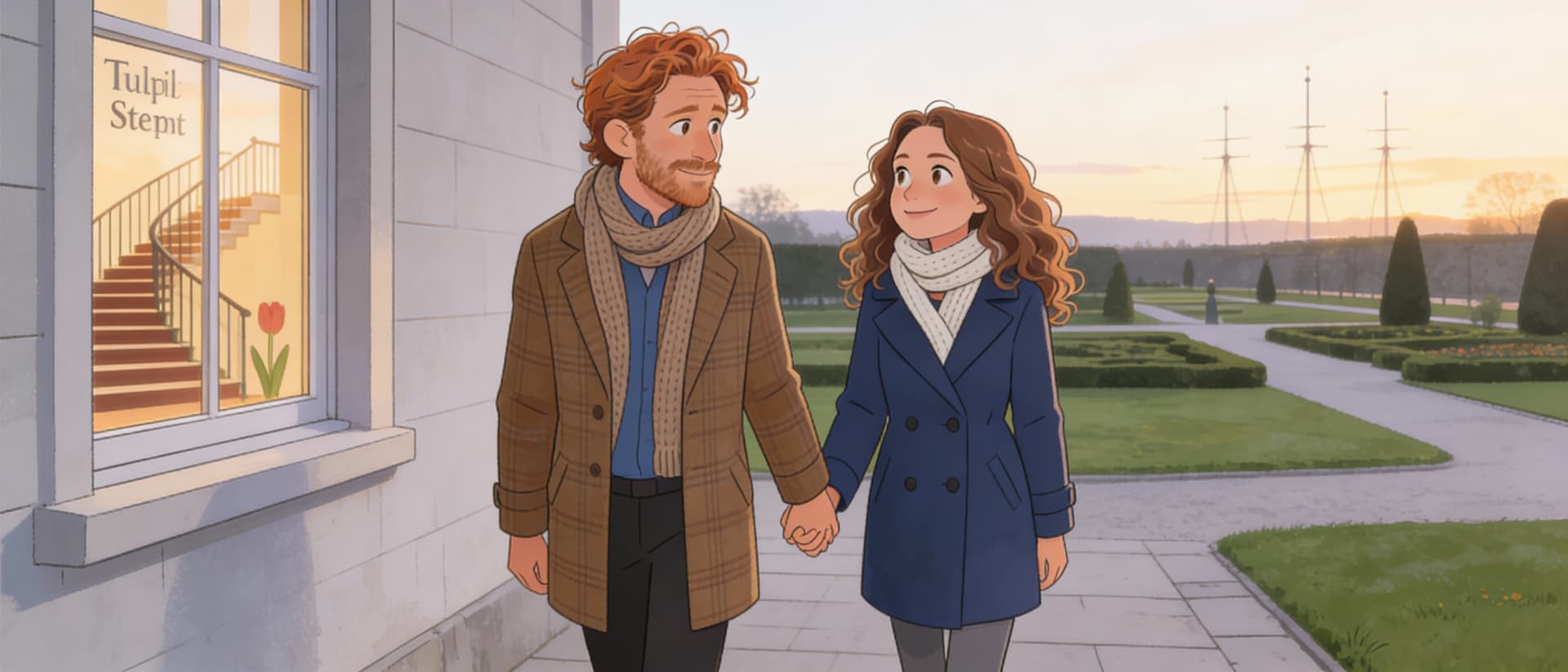
They crossed to the Queen’s House, its clean lines calm against the unsettled weather. Oliver glanced at the tall windows and imagined other couples passing through centuries ago. “Do you think they worried like this?” he asked. Sophie squeezed his hand. “Probably. And they still loved.”
A breeze lifted the edge of Sophie’s coat and tugged at Oliver’s scarf, as if the day wanted to hurry them along. They started up toward Greenwich Park, leaving the river behind. Oliver’s phone buzzed with messages he didn’t read. “If I stop moving,” he said, “I feel like I’ll fall behind.” Sophie answered quietly, “Behind what? An imaginary finish line?”
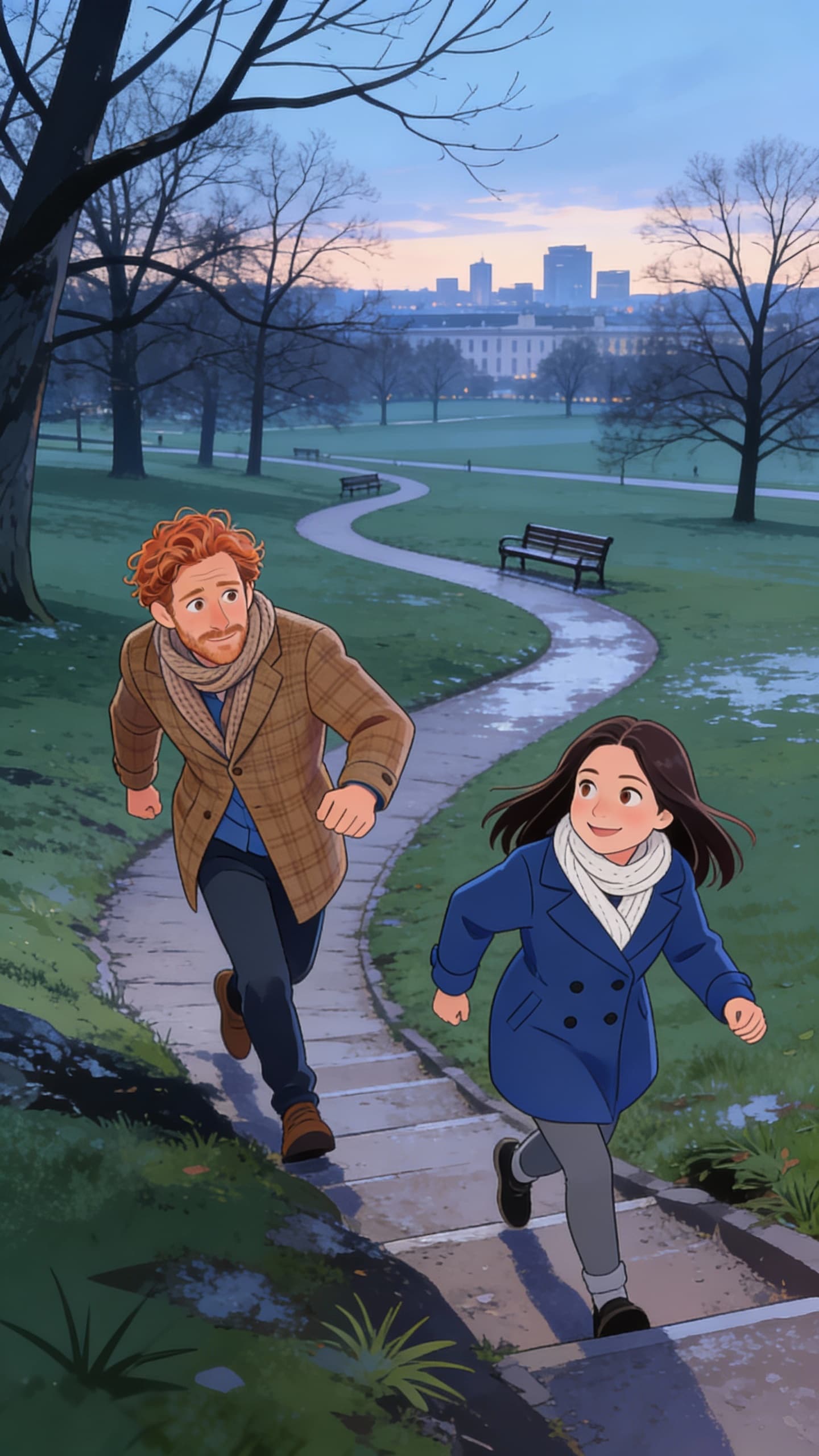
In the park, the path rose between bare trees and winter grass. Oliver’s breathing turned loud, then steadied. Sophie pointed toward the skyline, barely visible through thinning fog. “Look,” she said. “Even the city takes its time showing itself.”
Halfway up the hill, Oliver stopped at a railing and stared at his reflection in a rain-darkened plaque. He looked suddenly younger to himself, as if he’d been borrowing adulthood and the loan was due. “I’m terrified I’ll waste it,” Oliver said. Sophie leaned in, forehead near his, not forcing eye contact. “Then don’t waste this,” she whispered. “Breathe. Let me be here with you.”
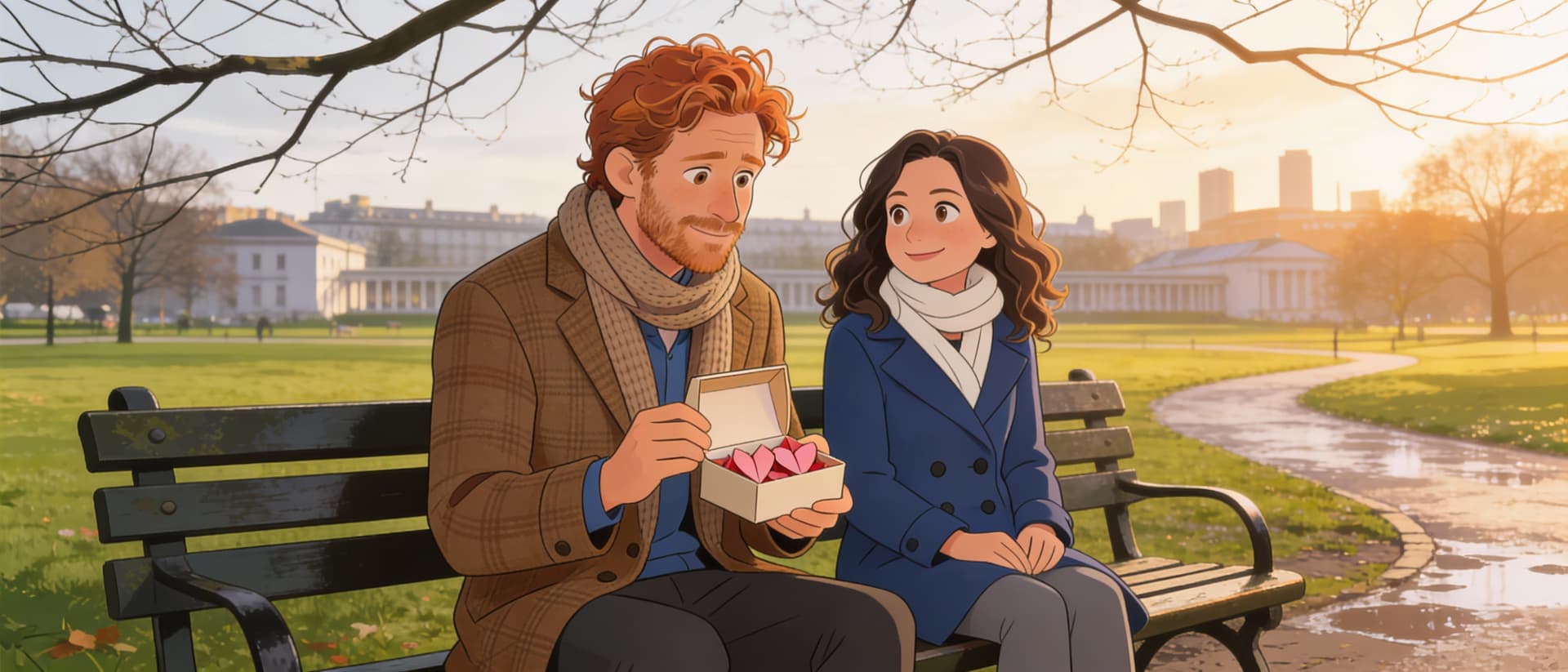
They found a quiet bench where the ground flattened. Oliver finally opened the small box and revealed two simple paper hearts, folded like tiny boats. “I made them last night,” Oliver admitted. “It felt ridiculous.” Sophie smiled. “It feels brave.”
Oliver explained he’d timed each fold with the ticking clock in his kitchen, counting seconds until he hated the sound. “I kept thinking, if I can measure it, maybe it won’t scare me,” he said. Sophie turned one heart over in her palm. “You can’t tame time by wrestling it,” she replied. “But you can let love set the pace. A quiet pulse. Steady. Reliable.” Oliver exhaled, as if he’d been holding air all winter.
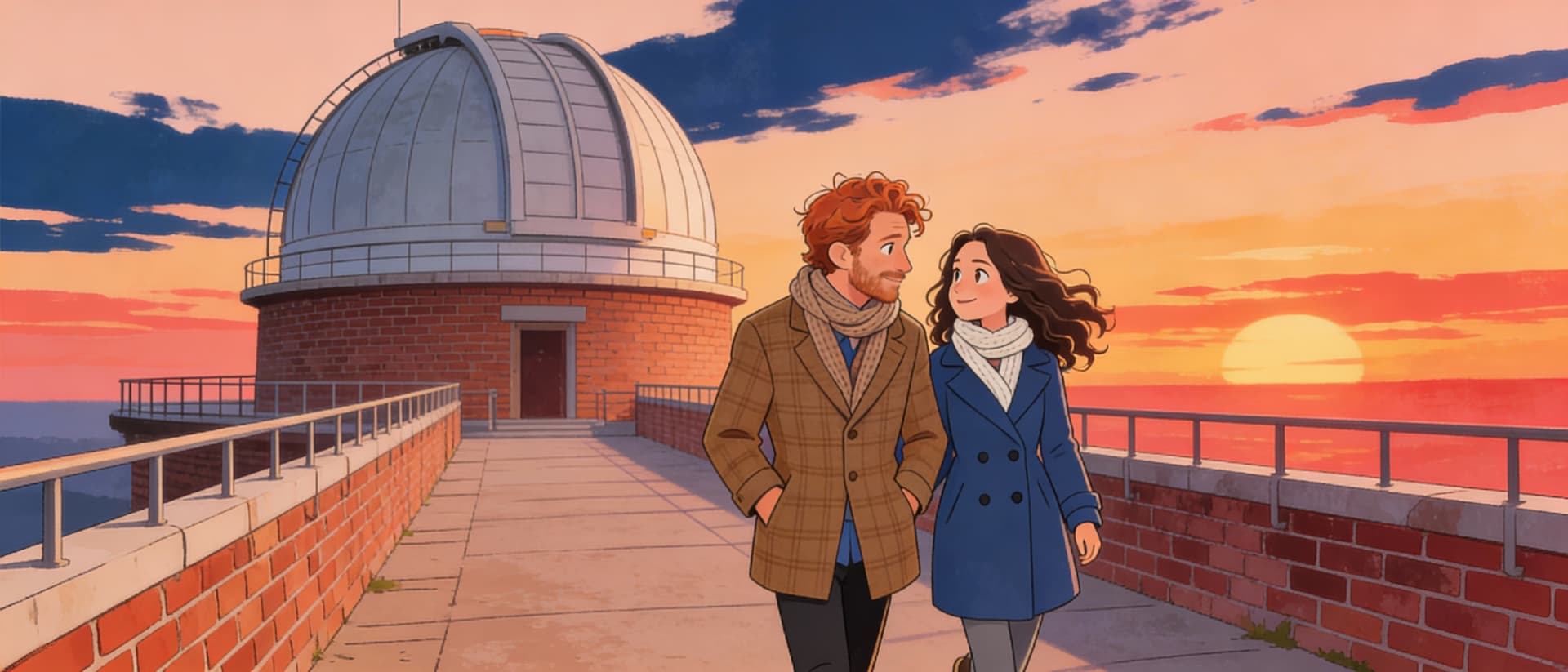
They resumed the climb, and the Royal Observatory appeared above the trees like a calm verdict. The sky opened into bands of peach and steel. Oliver felt his fear return, sharper near the summit. “What if my anxiety ruins us?” he asked.
Sophie didn’t answer right away. She let them reach the terrace where the view widened and the wind smelled faintly of cold metal and distant traffic. “Oliver,” she said, “I’m not asking you to be fearless. I’m asking you to be honest.” He swallowed. “I’m trying.” “I can feel that,” she replied. “And if you stumble, we’ll slow down together.”
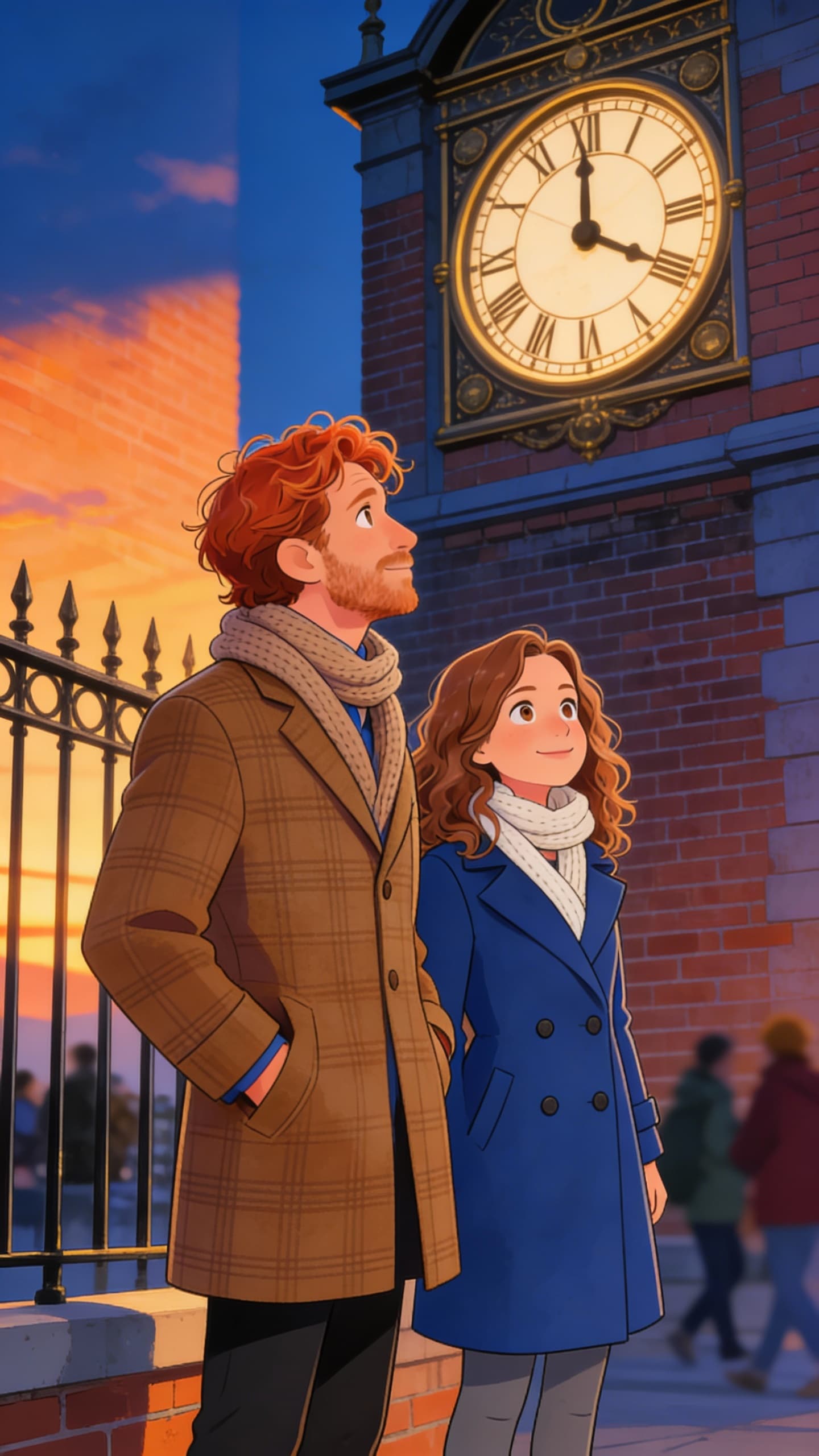
Inside the courtyard, the Observatory clock face watched them without judgment. Oliver traced the air near its hands, not touching. “Everything here is about precision,” he murmured. Sophie answered, “And yet, the best parts of us aren’t precise. They’re lived.”
Oliver admitted the truth he’d been hiding: he’d been considering a job offer abroad, not because he wanted to go, but because he feared staying still. Sophie’s eyes held steady. “So you’d run,” she said softly, not accusing. Oliver nodded, ashamed. “I thought movement might protect me.” Sophie took his hand. “Movement without meaning is just noise,” she said. “Tell me what you actually want.”
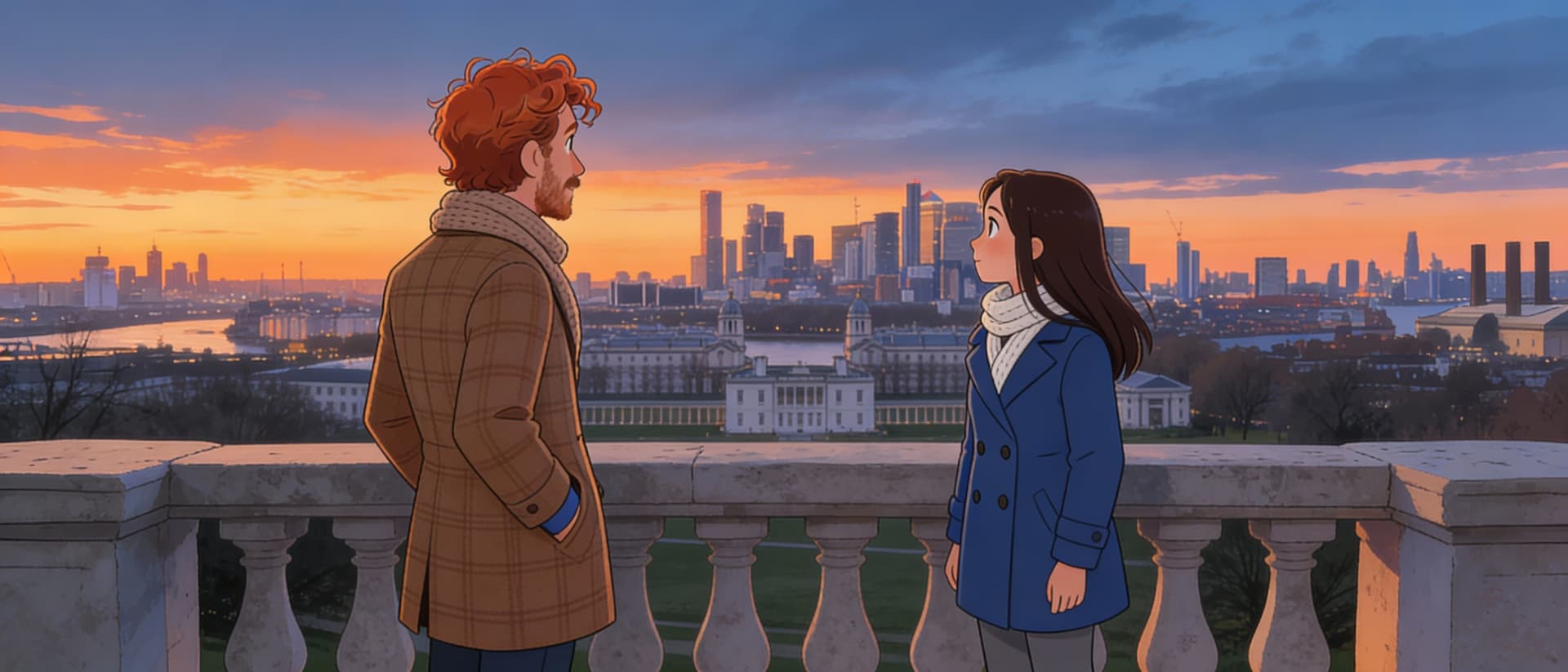
Oliver looked out at London, the buildings catching the last fire of day. “I want a life that feels deliberate,” Oliver said. “I want you in it.” Sophie’s answer was immediate: “Then choose it. Out loud. Right now.”
The request landed like a challenge and a gift. Oliver felt the familiar urge to hedge, to qualify, to promise later. Instead, he turned to Sophie and said, “I want to stop negotiating with my fear.” Sophie nodded once. “Okay,” she said. “Then we need a plan, not just a vow.” Oliver managed a shaky smile. “A plan sounds like love in practical clothes.”
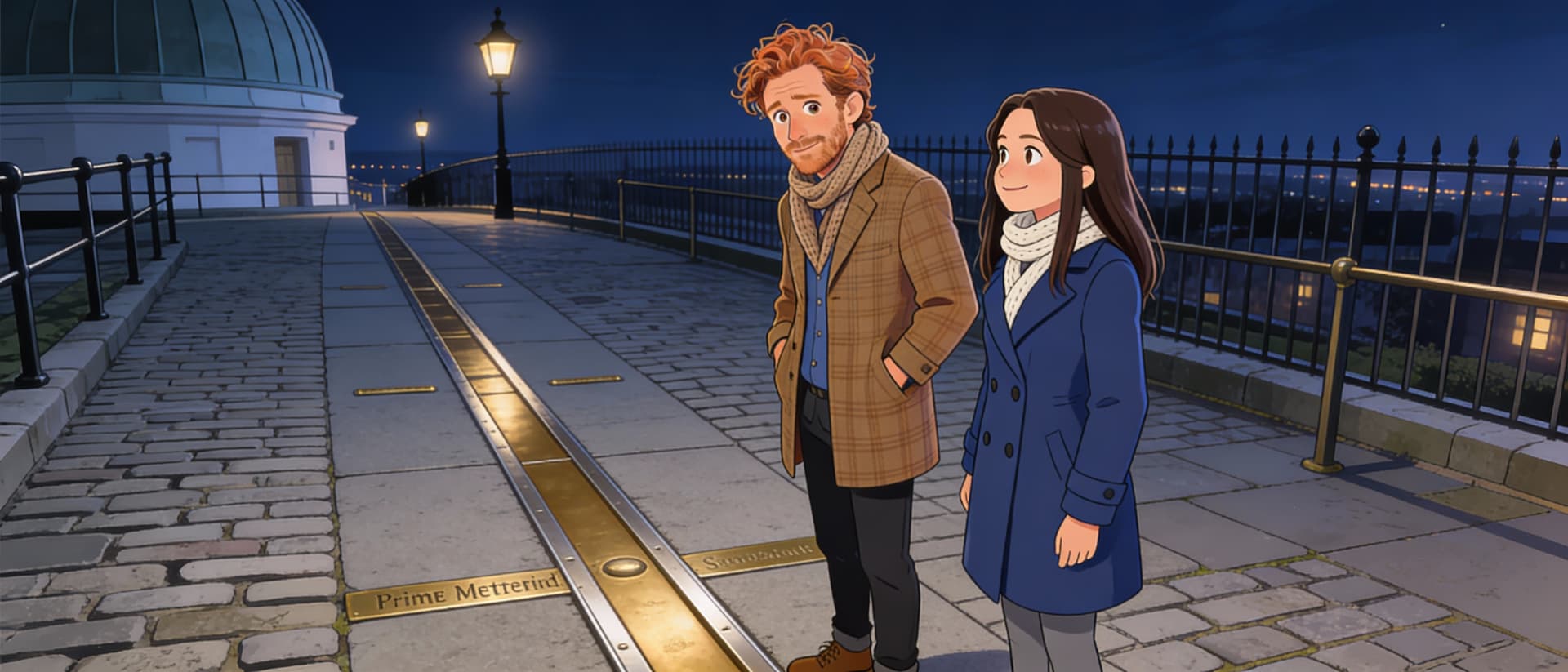
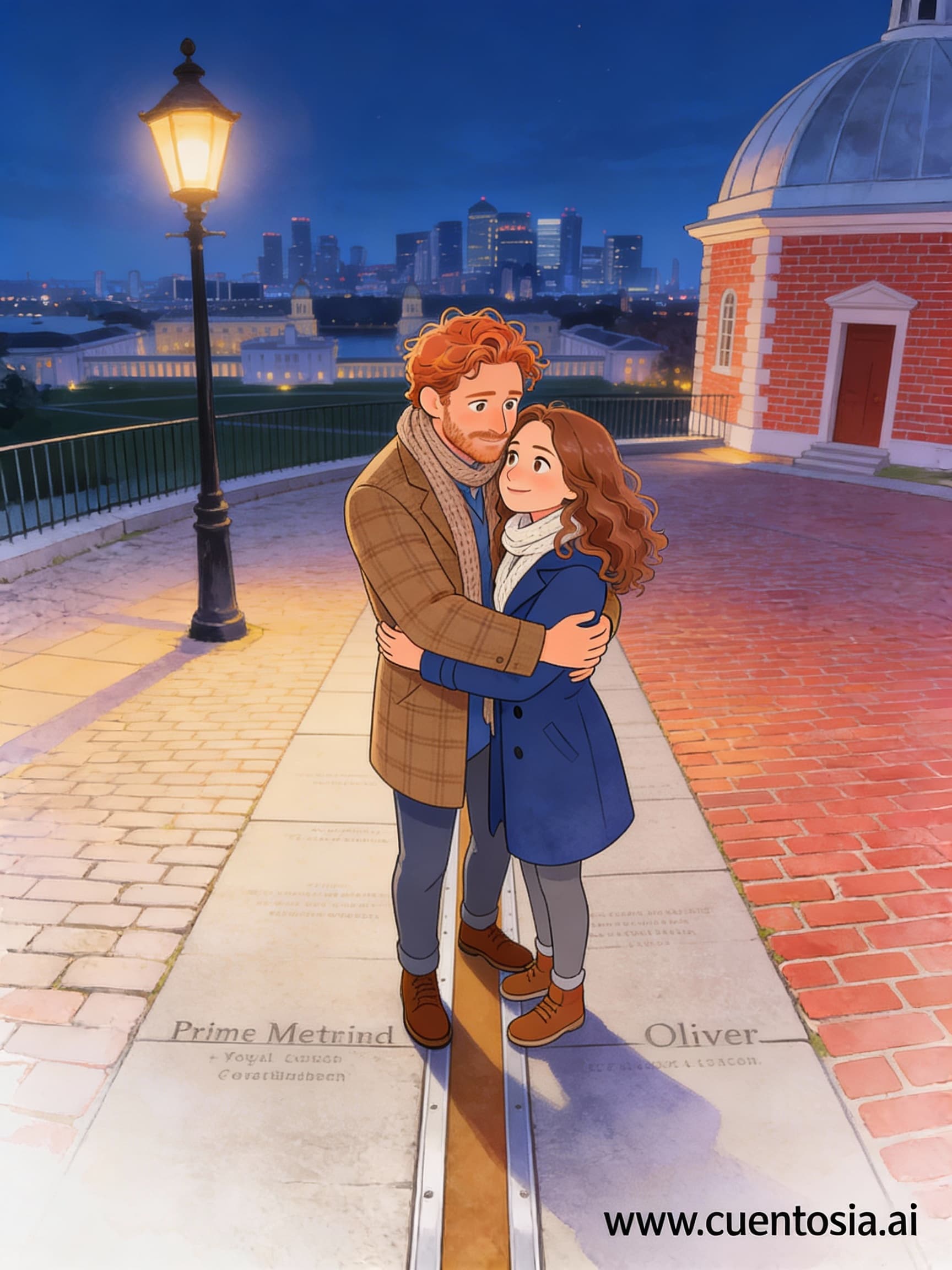
They walked to the Prime Meridian line, where tourists posed with one foot in each hemisphere. Oliver waited until the crowd thinned. The brass strip glowed under lanterns. “This is where the world agrees on time,” Oliver said. “No hiding.”
Oliver stepped onto the line and held out the two paper hearts like offerings. “I don’t want to flee into some new map just to feel safe,” he said. “I want to build steadiness with you, even when my mind gets loud.” Sophie took the hearts, then pressed them against his chest. “When it gets loud,” she said, “listen for us. That quiet pulse.”
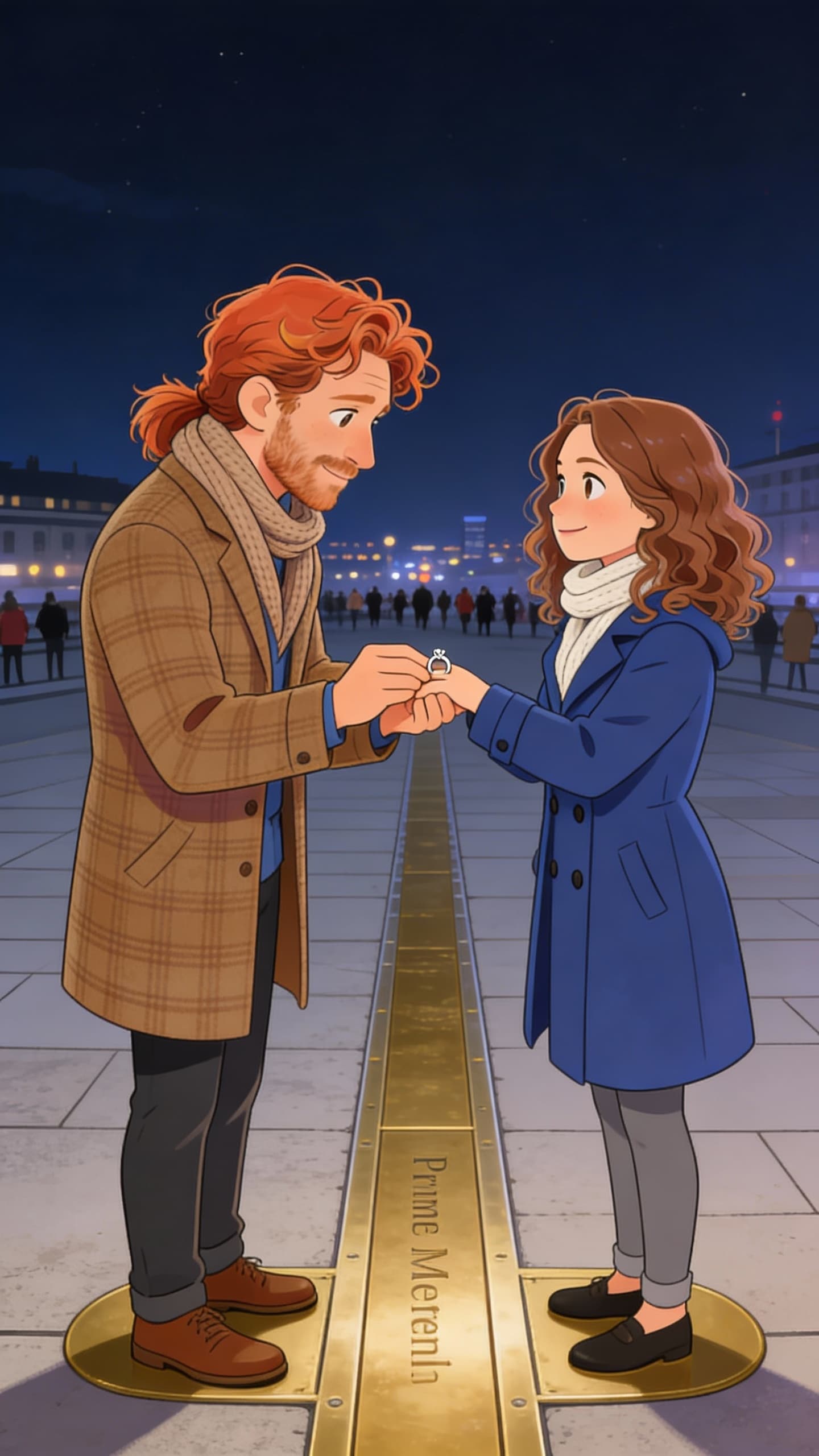
Oliver reached into his pocket again and found the real gift: a simple ring, more honest than flashy. He didn’t kneel for drama; he just took Sophie’s hand. “Sophie,” Oliver said, “will you take the rest of my seconds?”
Sophie stared at him, not surprised exactly, but moved by how unguarded he looked. For a breath, Oliver feared he’d misread everything. Then Sophie laughed—soft, a little tearful—and said, “Yes. But not as your cure.” Oliver blinked. “As your partner,” she finished, pulling him close. “We’ll count time the way we should have all along: together.”
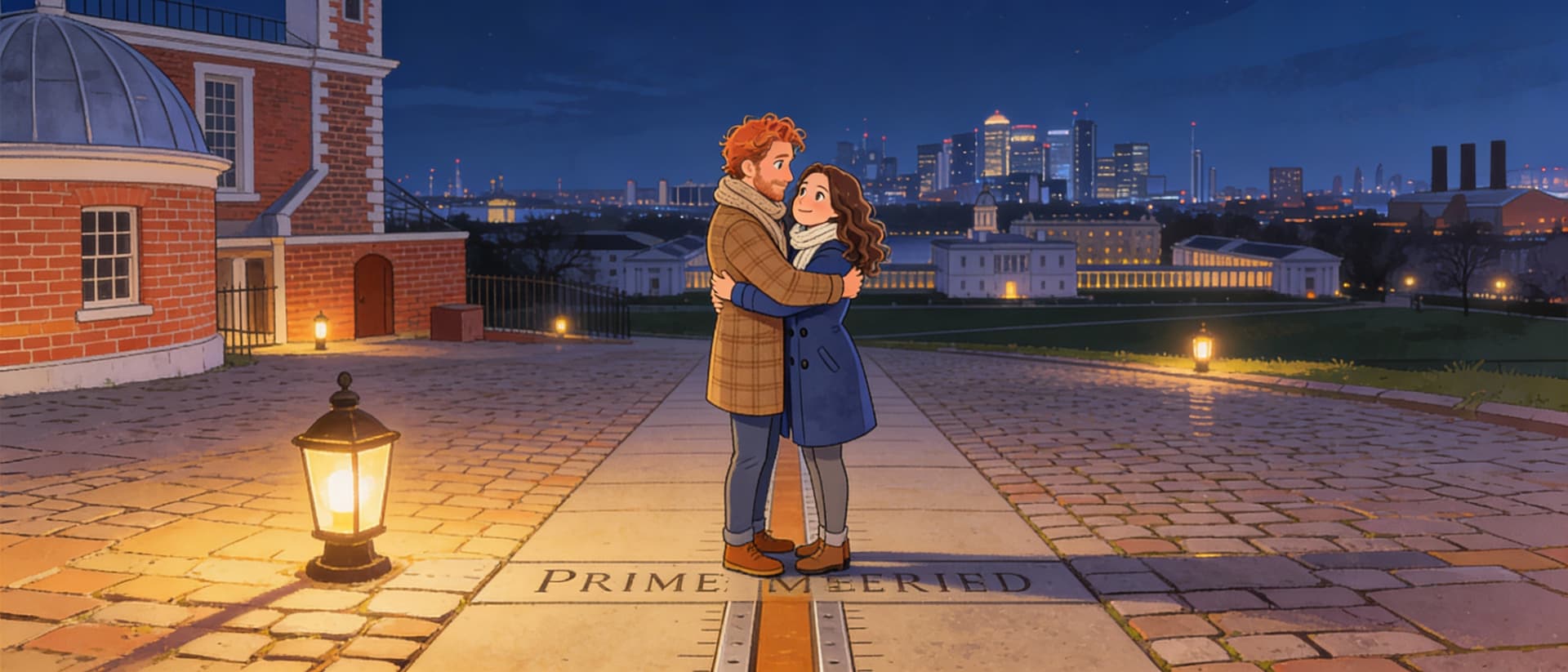
They stood straddling the line, foreheads touching, as if the world had narrowed to a single steady point. Oliver felt the panic loosen its grip. The river below kept moving, but it no longer sounded like a threat. Oliver whispered, “Every second.”
On the walk back down through Greenwich Park, the fog returned, gentler now, like a curtain lowering after a finished scene. Oliver didn’t check his phone once. Sophie talked about small things—a weekend trip, a meal to cook, a friend to visit—and Oliver heard each detail as a kind of promise. When they reached the river, he squeezed her hand and felt time pass, not stolen, but shared.