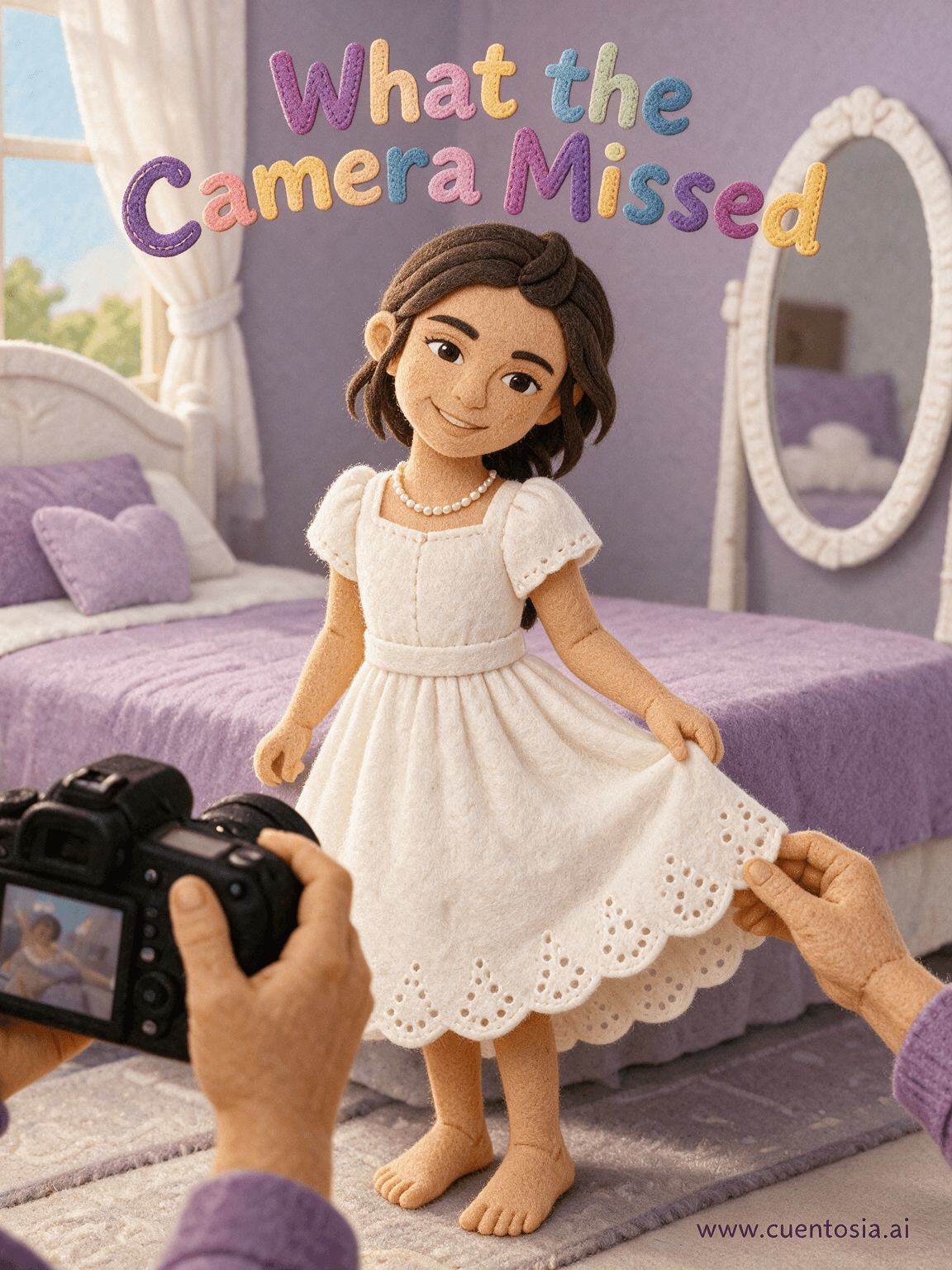
On the morning of her First Communion, Sofi is far more worried about the photographs than about the ceremony, until her grandmother Maribel tells her what she actually remembers from her own.
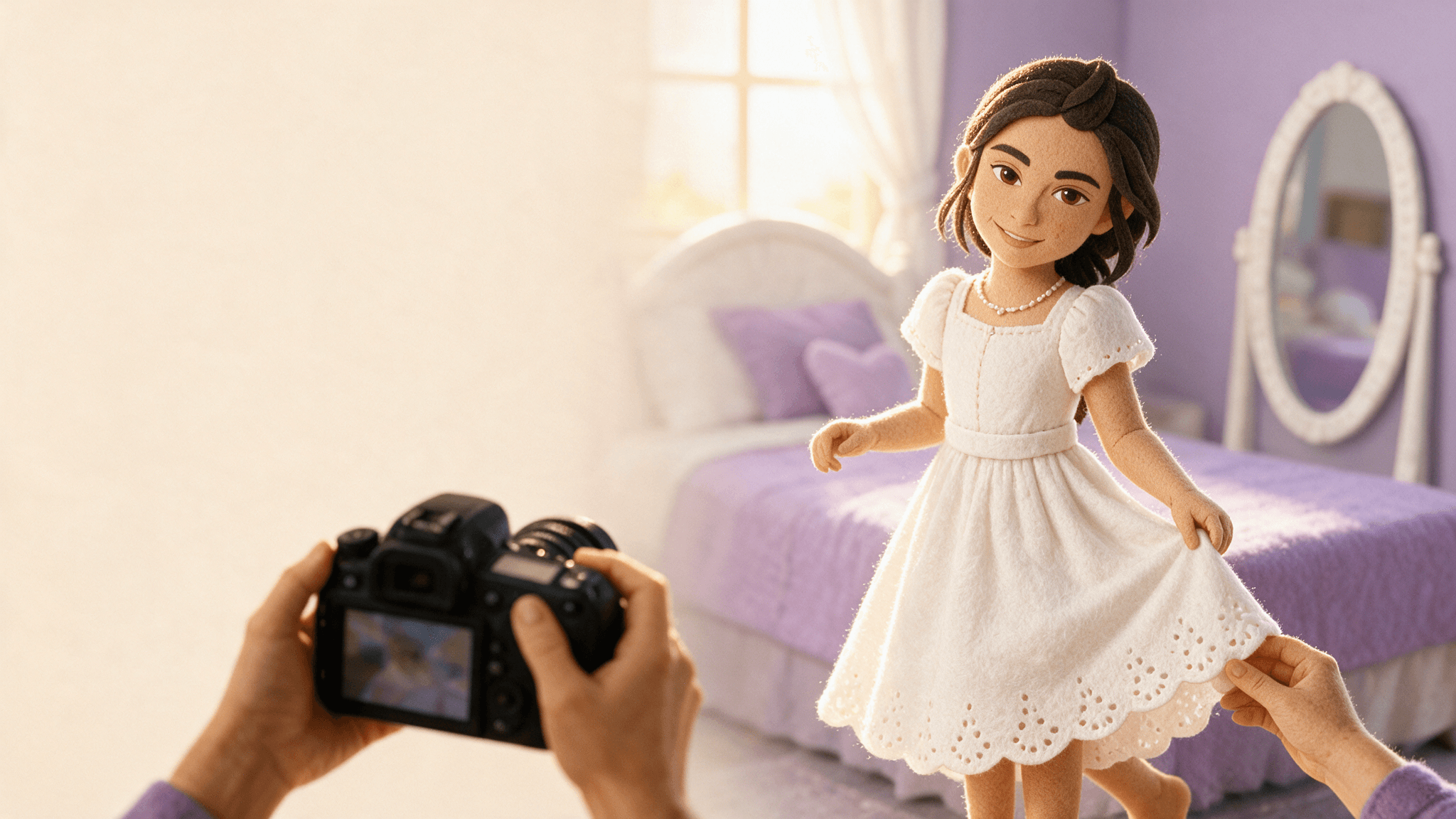
On the morning of her First Communion, Sofi feared the camera more than the ceremony. Her new shoes pinched, her hem itched, and every grown-up nearby asked her to stand still and smile.
Each click made her shoulders climb a little higher toward her ears.
1
023
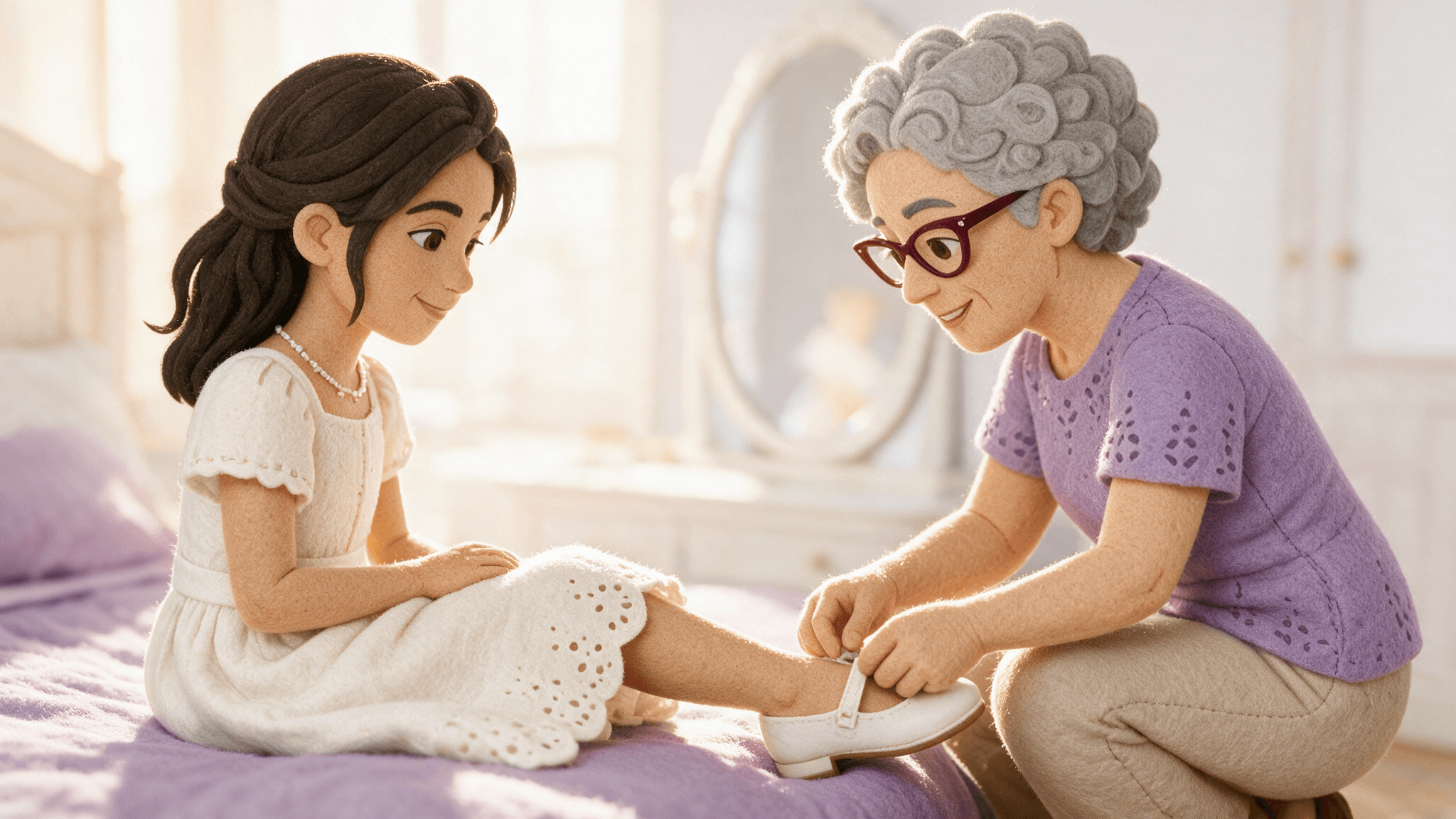
Grandma Maribel sat beside her on the bed and loosened one stubborn buckle.
—Want to know what I remember from my First Communion?
Sofi expected a perfect dress or a shining church. Maribel shook her head.
—Walking home barefoot, with warm pavement under my feet.
4
03
Later, in the long line outside the church, Sofi listened instead of practicing her smile. Bells trembled overhead, doors sighed open, and candle fragrance drifted through the entrance.
She tucked each detail away, like a bright bead no camera could thread for her.
5
047
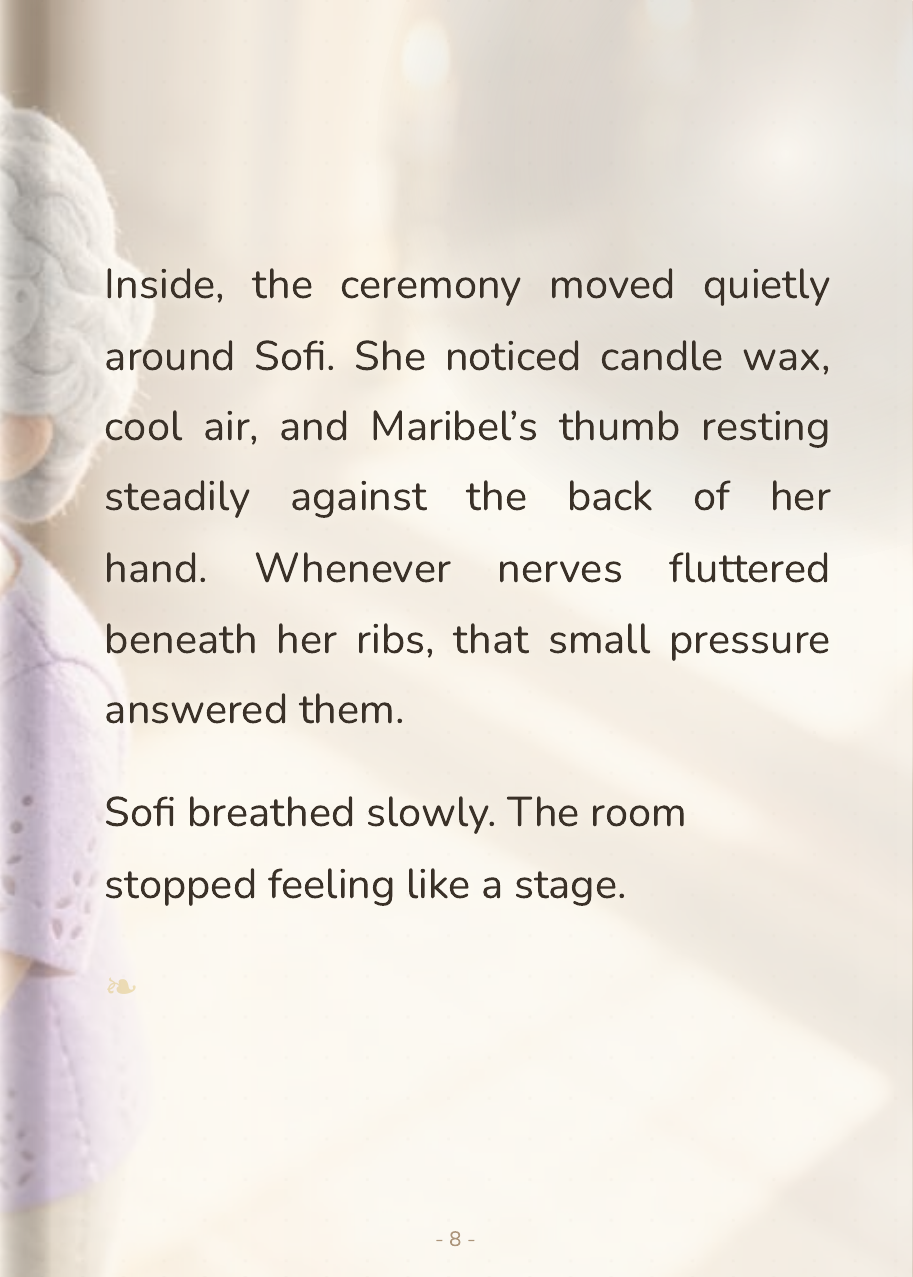
Inside, the ceremony moved quietly around Sofi. She noticed candle wax, cool air, and Maribel’s thumb resting steadily against the back of her hand. Whenever nerves fluttered beneath her ribs, that small pressure answered them.
Sofi breathed slowly. The room stopped feeling like a stage.
8
05
Afterward, the group photograph became a forest of elbows and blinking eyes. Sofi nearly smiled for real when a cousin whispered a joke just before the click.
At lunch, too many aunts passed plates, and the cake leaned bravely. Sofi remembered cinnamon, frosting, and Maribel’s knowing glance.
9
0611
By late afternoon, photographs covered the table, yet Sofi’s favorite moments lived elsewhere. She told Grandma Maribel about the bells, the candles, the joke, and the steady thumb.
—Those are the parts I want to keep.
Maribel squeezed her hand, and Sofi understood she already had.
12
07
Walking home in the last light, Sofi paused where the pavement still held the day’s warmth. She unbuckled her stiff white shoes and carried them, one in each hand.
Maribel said nothing. She simply walked beside Sofi, while every barefoot step pressed the unphotographed morning gently into memory.
13
An adventure starring your little one
Create a story with their name and photos turned into illustrations. Read it together today and keep it as a memory.
Interested in “Personalized First Communion Stories”? You can choose the topic of your own story.
Your first 12-page digital story is free when you sign up. The printed edition is purchased separately.
Children's story · Ages 8-11
What the Camera Missed begins on the morning of Sofi's First Communion, with the new shoes pinching, the hem itching and a camera going off every few seconds. Every grown-up in the house wants her to stand still and smile, and with each click her shoulders climb a little closer to her ears. Then Grandma Maribel sits down on the edge of the bed, loosens one stubborn buckle and asks her a question nobody else has thought to ask that morning.
What Maribel remembers from her own First Communion is not the dress and not the church: it is walking home barefoot, with the pavement still warm under her feet. That answer quietly changes how Sofi spends the rest of the day. In the long line outside the church she listens instead of practising her smile, and she begins collecting the things no camera is pointed at — the bells trembling overhead, the smell of the candles drifting out of the doorway, a cousin's whispered joke just before the group photo, her grandmother's thumb resting steadily on the back of her hand.
It is an unhurried, emotional story for readers of about eight to eleven and for the grown-ups reading beside them. There is no catechism and no lesson to memorise: the communion is the setting, not the subject. Read it the week before the big day to take some pressure off, or afterwards, once the photographs are spread across the table and everyone is trying to remember what actually happened.
A First Communion morning told from the inside
Sofi is eleven, and on the morning of her First Communion the ceremony is not what frightens her. The camera is. Her new white shoes pinch, the hem of her dress itches, and every relative in the house has the same instruction: stand still, smile, one more. By the time the family is ready to leave, she has been photographed more in one hour than in the whole month before.
The story turns on a single question. Grandma Maribel sits down next to her, works one stubborn buckle loose, and asks Sofi whether she wants to know what she remembers from her own First Communion. It is not the dress, and it is not the church. It is the walk home afterwards, barefoot, with the day's warmth still coming up out of the pavement. From that moment on, Sofi spends her communion day paying attention to a completely different set of things.
Every click, and her shoulders climbed a little higher toward her ears.
What children take away from it
This is not a story about doctrine, and it never explains the sacrament. It is about the gap between the day that gets photographed and the day that is actually lived — a gap most children feel on any big occasion, from a communion to a birthday to a school performance, without having words for it yet.
Attention as a keepsake. Sofi learns to notice the bells, the candle smell and the cool air inside the church, and to tuck each detail away like a bead no camera could thread for her.
Nerves have an answer. Maribel's thumb resting on the back of her hand does more for Sofi's stage fright than any instruction to relax.
Grandparents as memory keepers. An older voice reframes the day by simply describing her own, sixty years earlier.
Imperfection is the good part. The group photo is a forest of elbows and blinking eyes, the cake leans, and those are exactly the bits worth keeping.
Walking home barefoot, with warm pavement under my feet.
In the line outside the church, she started listening instead of posing.
Now imagine it with your own child's name
Sofi and Maribel are the characters in this version, but the day belongs to whoever is living it. With cuentosIA you can create the same kind of story starring your daughter, your son, your godchild or your grandchild — their name on the cover, their face in the illustrations, and the grandmother, godparent or aunt who matters most to them walking beside them through the ceremony.
You choose the details that make it theirs: the church they will actually walk into, the relative whose hand they will hold, the thing they are genuinely nervous about. A communion gift that is about this particular child, rather than one more object that ends up in a drawer.
How to create your own personalised story
Upload a photo of the child and add the people who will share the day with them.
Choose the tone, the age of the reader and the illustration style you like best.
In a few minutes you have the finished story: read it online, download the PDF, or order it as a printed book.
Why it works as a First Communion gift
Communion presents tend to be things: a chain, a watch, an envelope. A story is the rare one that is about the child rather than for them, and it keeps working long after the day itself. Godparents and grandparents especially find it lands well, because it puts them inside the story rather than at the end of a receipt.
It is also the gift that reads well twice: once in the excitement of the week before, and again years later, when the photographs have faded into an album and the small things — the joke, the candles, the hand — are what is left.
A cousin whispered a joke, and for once the smile was not for the camera.
What age is this story for?
It is written for readers of about eight to eleven, the usual First Communion age, and it works just as well read aloud by a parent or grandparent.
Is it a religious story?
No. The communion is the setting, not the subject: there is no catechism, no sermon and nothing to learn by heart. It is an emotional story about a family day, so it suits religious and non-religious households alike.
Can I read it for free?
Yes. The full story is free to read here, page by page with all its illustrations. Creating a personalised version with your own child is a separate step.
Turn this communion day into a story with your child's face and name on the cover.