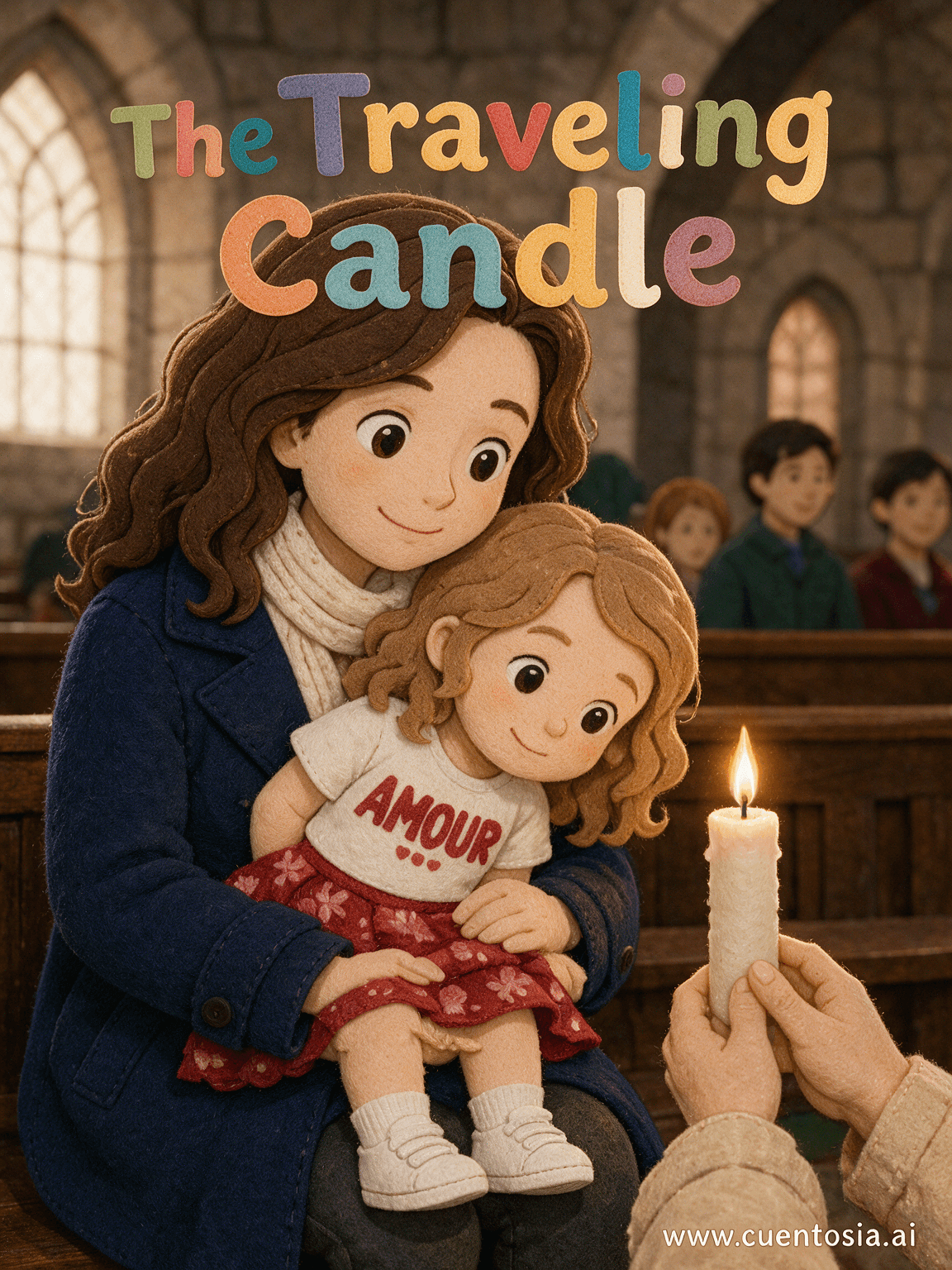
At Larita's christening a single candle is passed from hand to hand, and everyone who holds it says out loud one thing they promise to teach her. A gentle baptism story about the people who make up a child's first list.
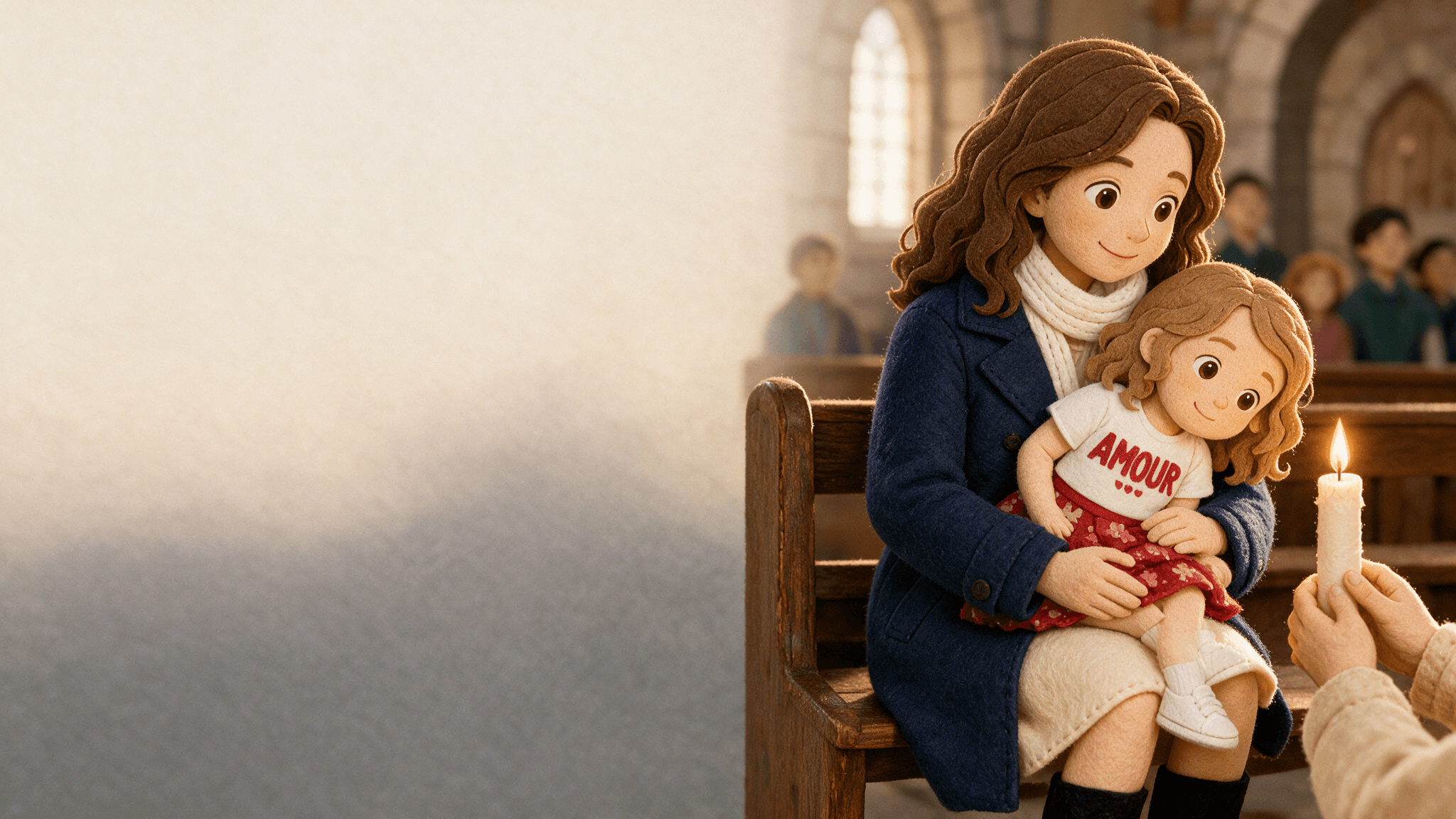
At Larita's christening, Sophie held her at the front of the small stone church. Family filled the pews behind them.
One candle waited nearby. A tall taper touched its wick, and a small, steady flame woke. Larita tipped her head and watched, very still.
1
023
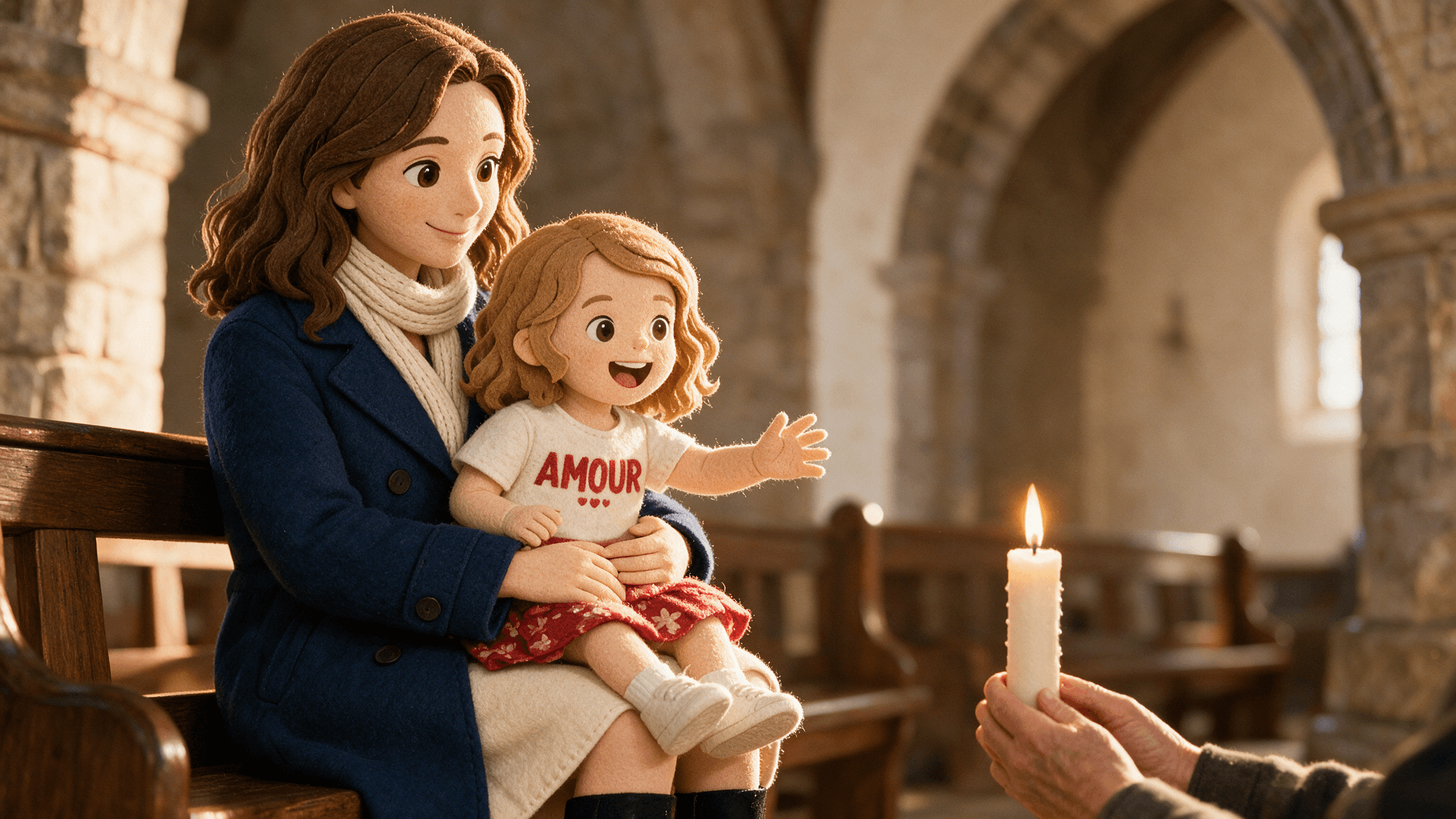
The candle began to travel, hand to hand, over shoulders and along the pews. Grandmother held it near her chest.
—I promise to teach you the song I sang at the kitchen sink.
Larita opened and closed one hand, then gave a bright little laugh.
4
03
Uncle received the flame with care. Its warm light rested between them.
—I promise to teach you how to whistle.
Larita wriggled in Sophie's arms and rounded her lips without a sound. The candle moved onward, while Sophie smiled and held Larita safely close.
5
047
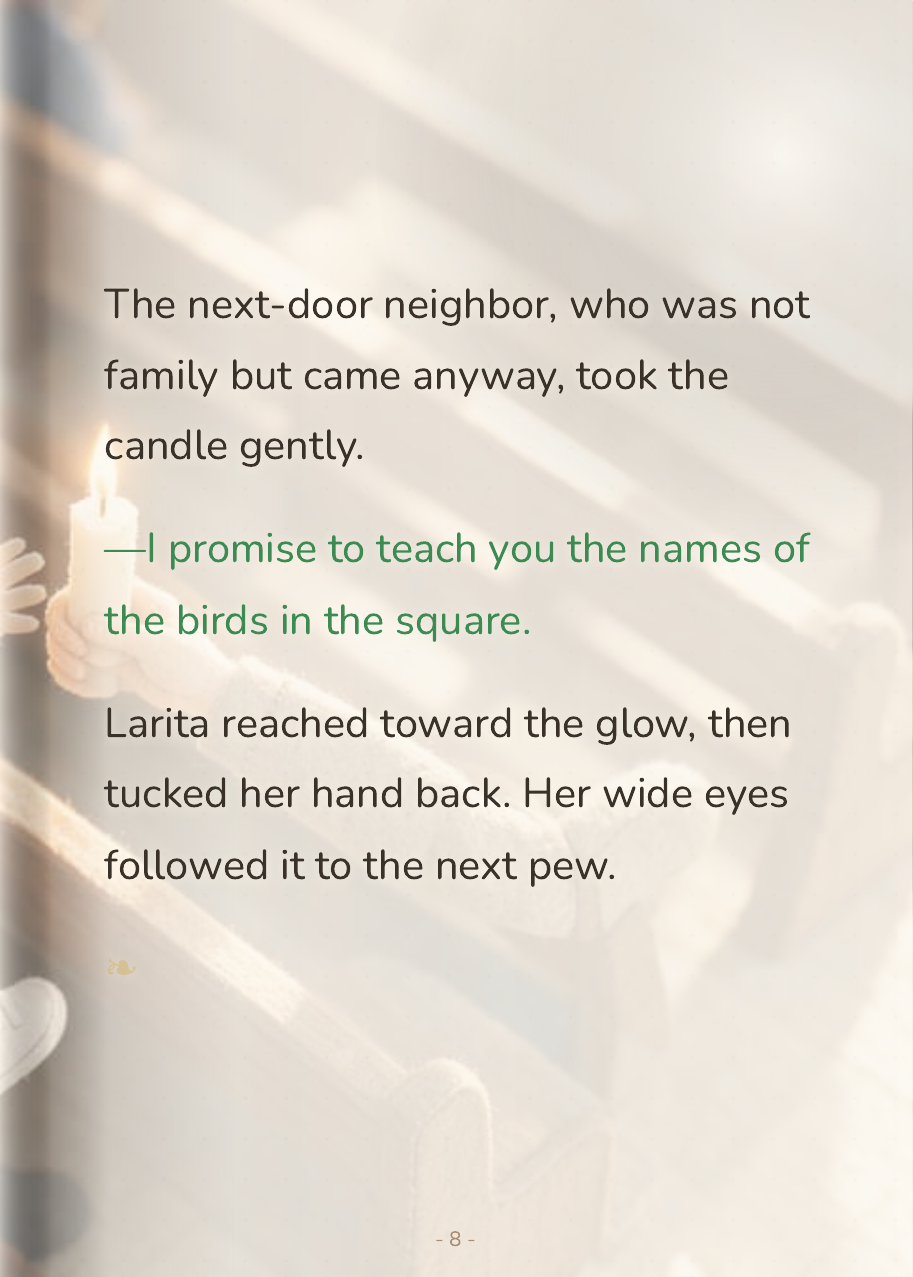
The next-door neighbor, who was not family but came anyway, took the candle gently.
—I promise to teach you the names of the birds in the square.
Larita reached toward the glow, then tucked her hand back. Her wide eyes followed it to the next pew.
8
05
The godmother lifted the candle. For a moment, the church grew so quiet that Larita heard the wick softly flicker.
—I promise to teach you to be brave when things are new.
Larita leaned forward, curious and calm. Then she smiled and bounced once against Sophie.
9
0611
Hand by hand, the flame came home to Sophie. The room had made Larita a list of songs, whistles, birds, and courage. Sophie held the candle low enough for Larita to see.
—You don't have to remember. We will remember for you.
Larita rested closer.
12
07
Sophie invited everyone near. Together, they blew gently. The flame vanished, and a soft thread of smoke curled upward.
Quiet humming filled the little church. Larita gave one last sleepy wriggle, then slept on Sophie's shoulder, held by every promise in the room.
13
An adventure starring your little one
Create a story with their name and photos turned into illustrations. Read it together today and keep it as a memory.
Interested in “Christening”? You can choose the topic of your own story.
Your first 12-page digital story is free when you sign up. The printed edition is purchased separately.
Children's story · 2-6 years
The Traveling Candle starts the way a christening does: quietly. Sophie holds Larita at the front of a small stone church, the pews behind them full of family, and a tall taper wakes one small, steady flame. Larita is three and cannot talk yet, so she tips her head and watches, very still.
Then the candle begins to move. It goes hand to hand, over shoulders and along the pews, and whoever is holding it says out loud one thing they promise to teach her. Grandmother offers the song she used to sing at the kitchen sink. Uncle promises to teach her to whistle. The next-door neighbor, who is not family but came anyway, promises the names of the birds in the square. Larita answers the only way she can: a laugh, a wriggle, one hand opening and closing.
It is a slow, warm story for children between 2 and 6, and it reads just as well at bedtime as it does on the day itself. Families use it to explain what a christening feels like without any doctrine at all, and godparents and grandparents often keep it as a record of the promises they made out loud.
A christening told from the candle's point of view
Most stories about a baptism describe the ceremony. This one follows an object. At Larita's christening there is one candle, it is lit exactly once, and then it has a journey to make: from the front of the church, through the hands of grandmother, uncle, the neighbor and the godmother, and back again. The rule everyone in the room seems to know without being told is that you cannot hold the candle without saying something.
Larita is three and does not have words yet, so she is not the one talking. She is the one watching. From Sophie's arms she follows the small flame around the room, tipping her head, reaching toward the glow and tucking her hand back, and the reader follows it with her. By the time the candle comes home, the whole church has quietly built her a list.
The candle is lit only once. Everything that happens afterwards is people carrying it.
What children take away from it
The story never explains its own moral, which is why it lands. Everything a small listener needs is in the promises themselves, said plainly by people who mean them, and in the way Larita is allowed to be exactly as old as she is. Read aloud, it gives a two- or three-year-old something rare: a scene where the adults do all the work and the child only has to be there.
A child belongs to more than her parents. The list is made by a grandmother, an uncle, a godmother and a neighbor who is not family and came anyway.
Promises are small and concrete. A song from the kitchen sink, a whistle, the names of the birds in the square, courage when things are new.
Being little is not a problem to fix. Larita answers with a laugh and a wriggle, and the room treats that as an answer.
Nobody has to carry it alone. Sophie tells her, in as many words, that she does not have to remember any of it.
I promise to teach you the names of the birds in the square.
Every pair of hands adds one more line to the list.
Now imagine it with your own child's name
This version belongs to Larita and Sophie, but the shape of it is yours to borrow. On cuentosIA you can create the same story with your daughter's or your godchild's name, their face, and the people who were actually in the church that day: the aunt who always sings, the friend who taught your older one to ride a bike, the grandfather who promises fishing. The promises change and the story stays.
It works for a christening, a naming ceremony, a dedication or simply a family gathering where everyone wants to say something and nobody knows quite how. Put the real names in and the book stops being a nice idea and starts being a record.
How to make your own in a few minutes
Upload a photo of the child and of anyone else you want in the story, and tell us what the day was about.
Choose the age, the tone and the illustration style, and let the characters keep their real faces.
Read it online in minutes, download the PDF, or order it as a printed hardback book.
Why it works as a christening gift
Baptism presents tend to be either practical or ornamental, and both get outgrown. A personalized book does something neither can: it names the people. Twenty years from now the silver frame will say nothing, and a page with a godmother's exact promise on it will say everything.
Godparents in particular tend to hand this one over with the child's name on the cover and their own promise printed inside, which turns a formality into something the family actually reads again. It is also a good gift from grandparents, from the friend who could not travel to the ceremony, or from a parent to the other parent on the evening of the day itself.
For a moment the church is so quiet that Larita can hear the wick flicker.
Is this a religious story?
No. The christening is the setting, not the subject. There is no doctrine and no instruction, only a room full of people making promises out loud, so it reads perfectly well at a secular naming ceremony too.
What age is it for?
It is written for children between 2 and 6. The sentences are short and the scenes are slow, which suits toddlers, and the promises give older siblings something to talk about afterwards.
Can I read it before the ceremony?
Yes, and many families do. Reading it a few days ahead gives a small child a picture of what a church full of relatives is going to feel like, without any of it being framed as something to be nervous about.
Turn this ceremony into a book with your child's face and name on the cover.