February skips Luna's birthday this year, so her family gives her twenty-nine tiny ones instead: one a day, each lasting exactly as long as one thing she loves.
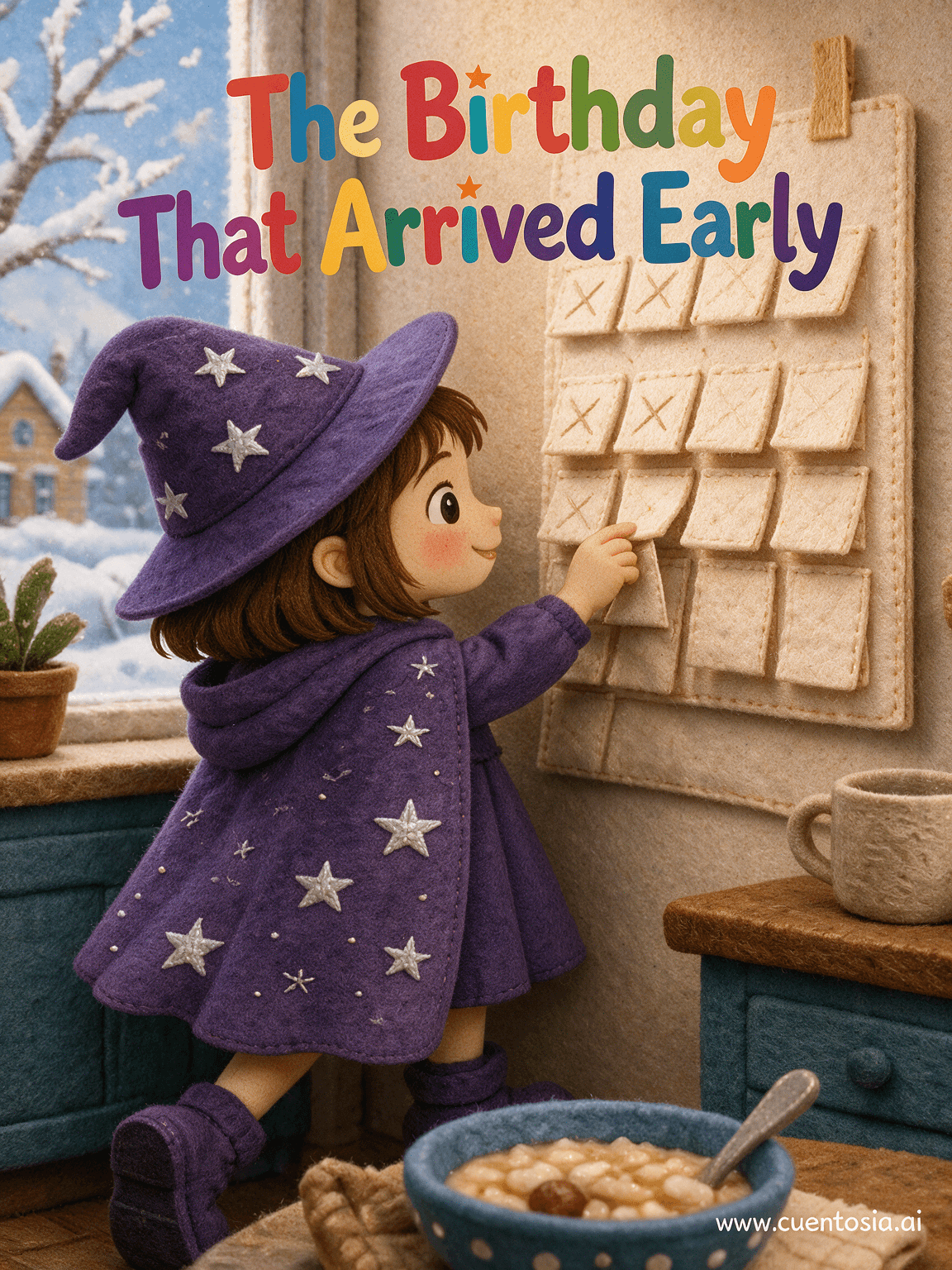
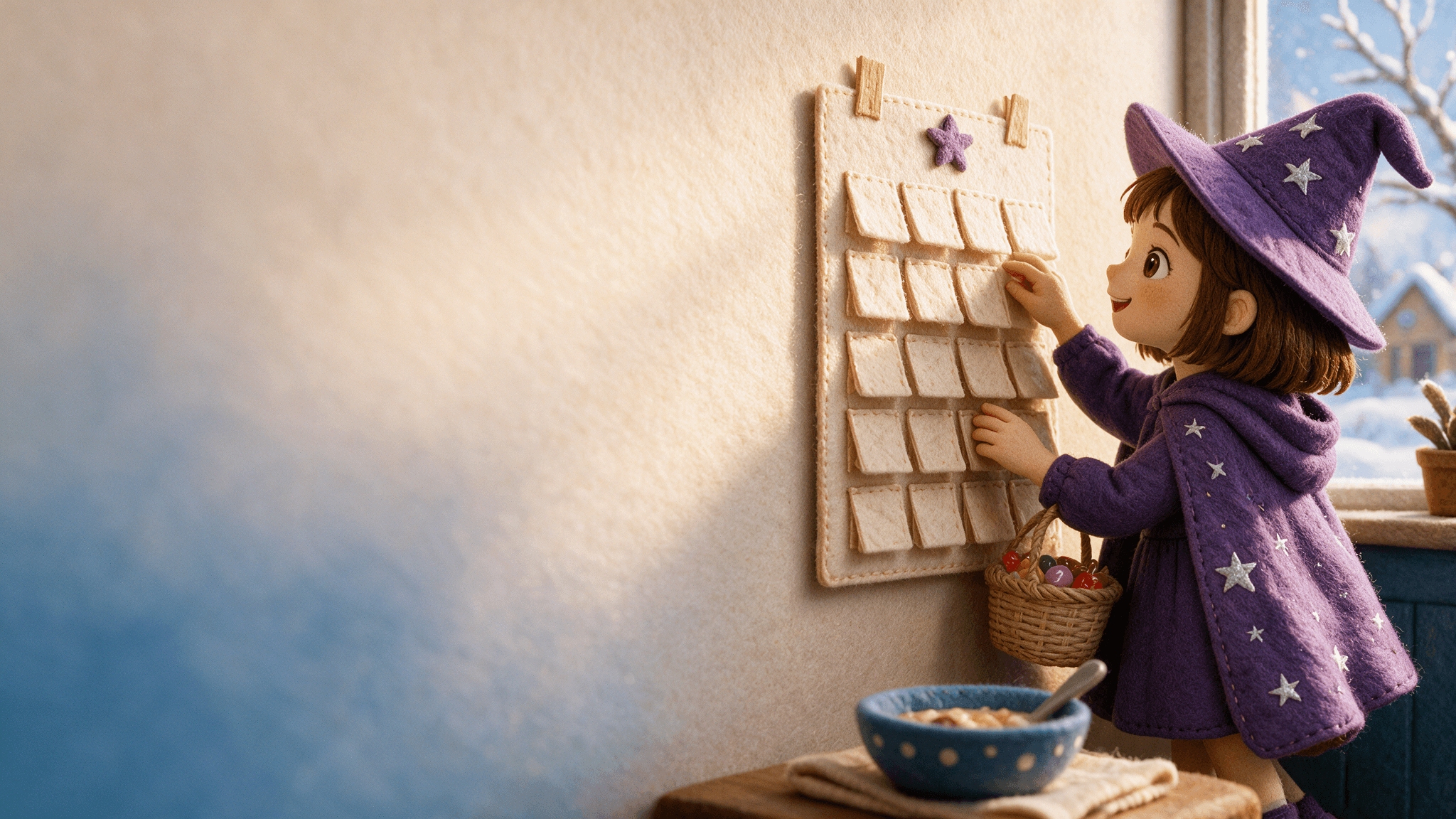
On February first, Luna discovered a handmade paper calendar taped to the kitchen wall before breakfast. It had twenty-nine numbered flaps. She counted them twice, because twenty-nine flaps in a twenty-eight-day month was clearly suspicious.
Her father explained: —The last one is yours to invent.
1
023
Luna appointed herself Official Timekeeper. Every tiny birthday would last exactly as long as one beloved thing.
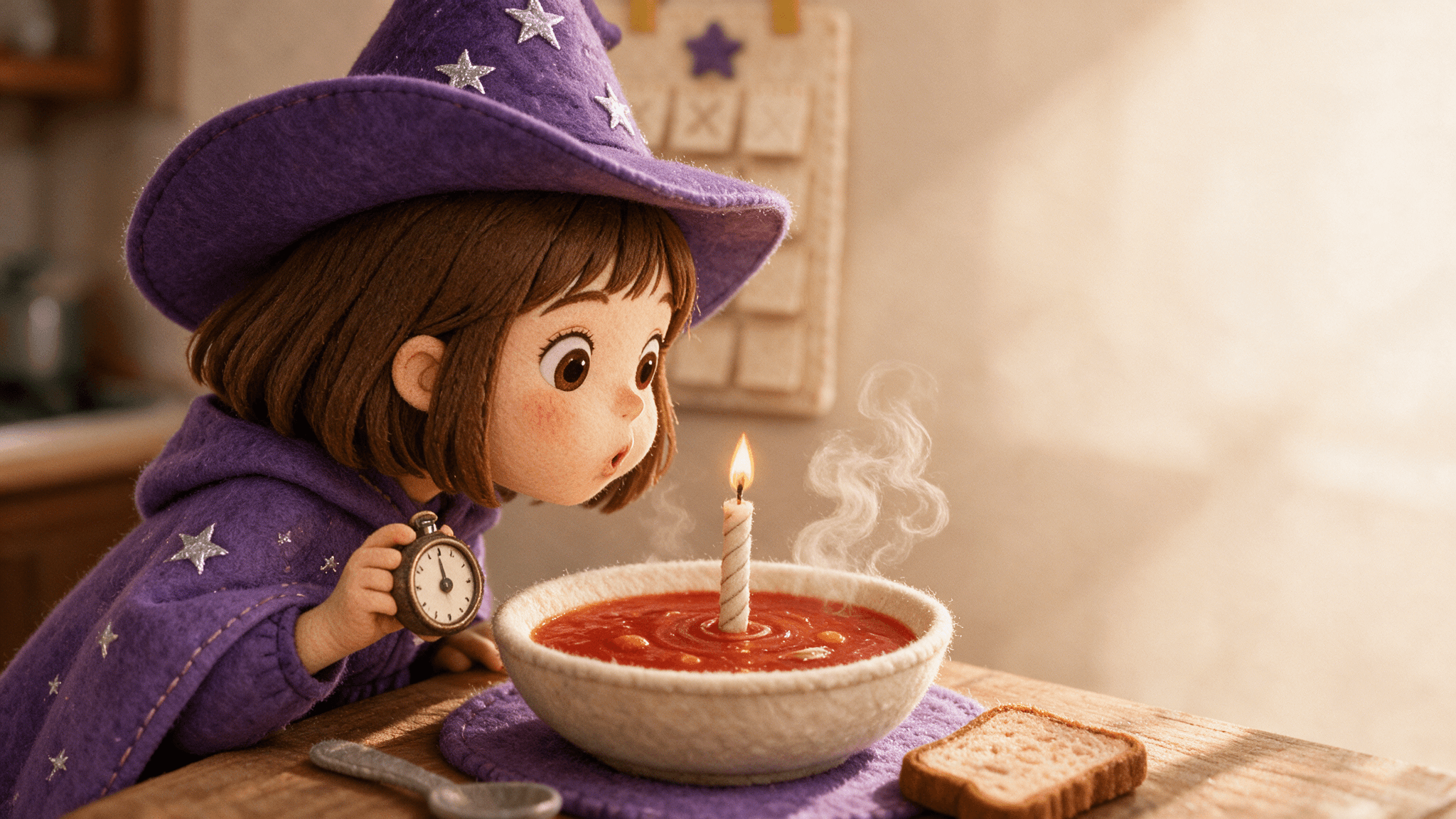
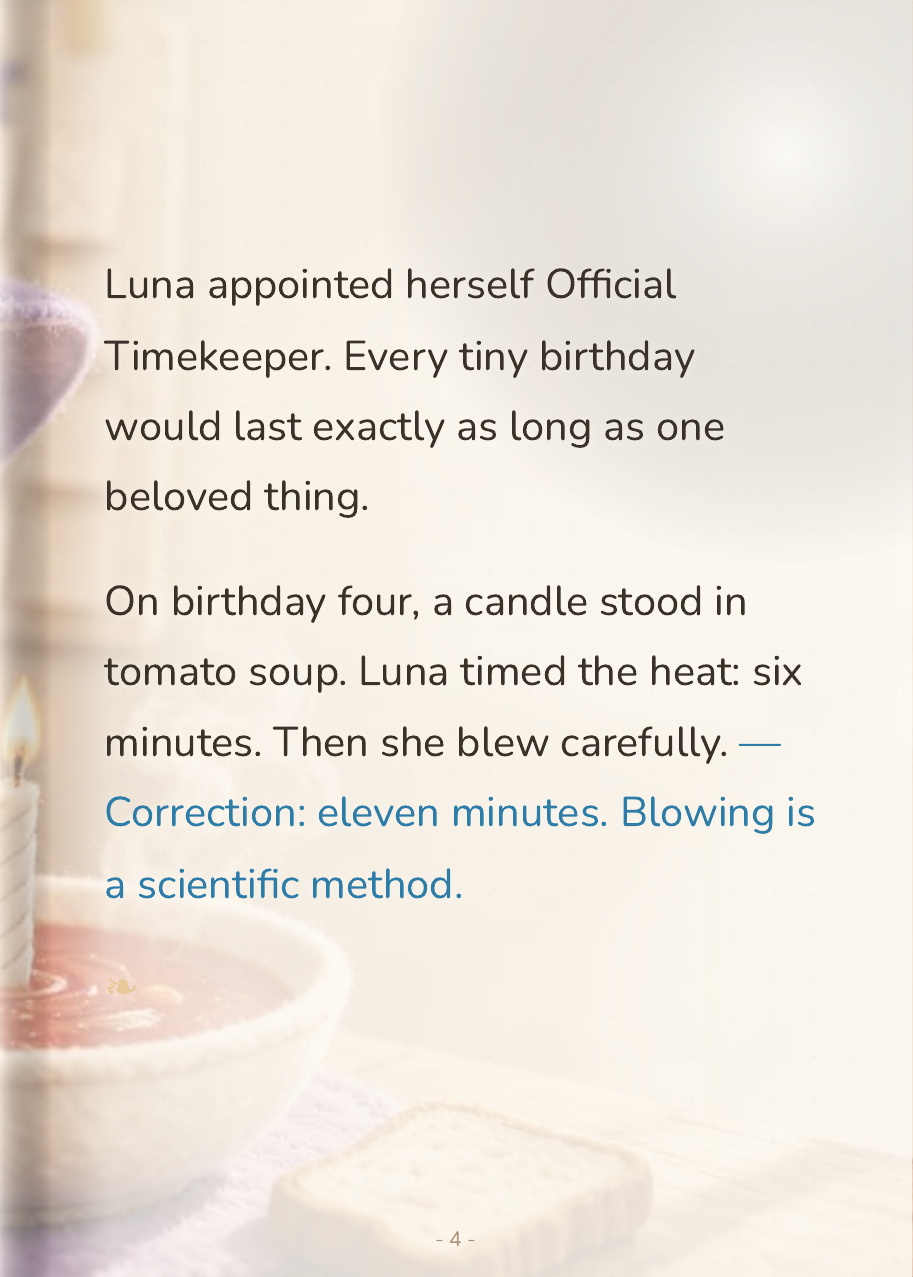
On birthday four, a candle stood in tomato soup. Luna timed the heat: six minutes. Then she blew carefully. —Correction: eleven minutes. Blowing is a scientific method.
4
03
Birthday nine arrived on a gray, rainy afternoon as Luna walked home from school. She leaped from the first puddle to the last with SPLASH, and deliberately took the long way around.
At home, she recorded twenty-three minutes, plus wet socks. —Excellent scheduling.
5
047
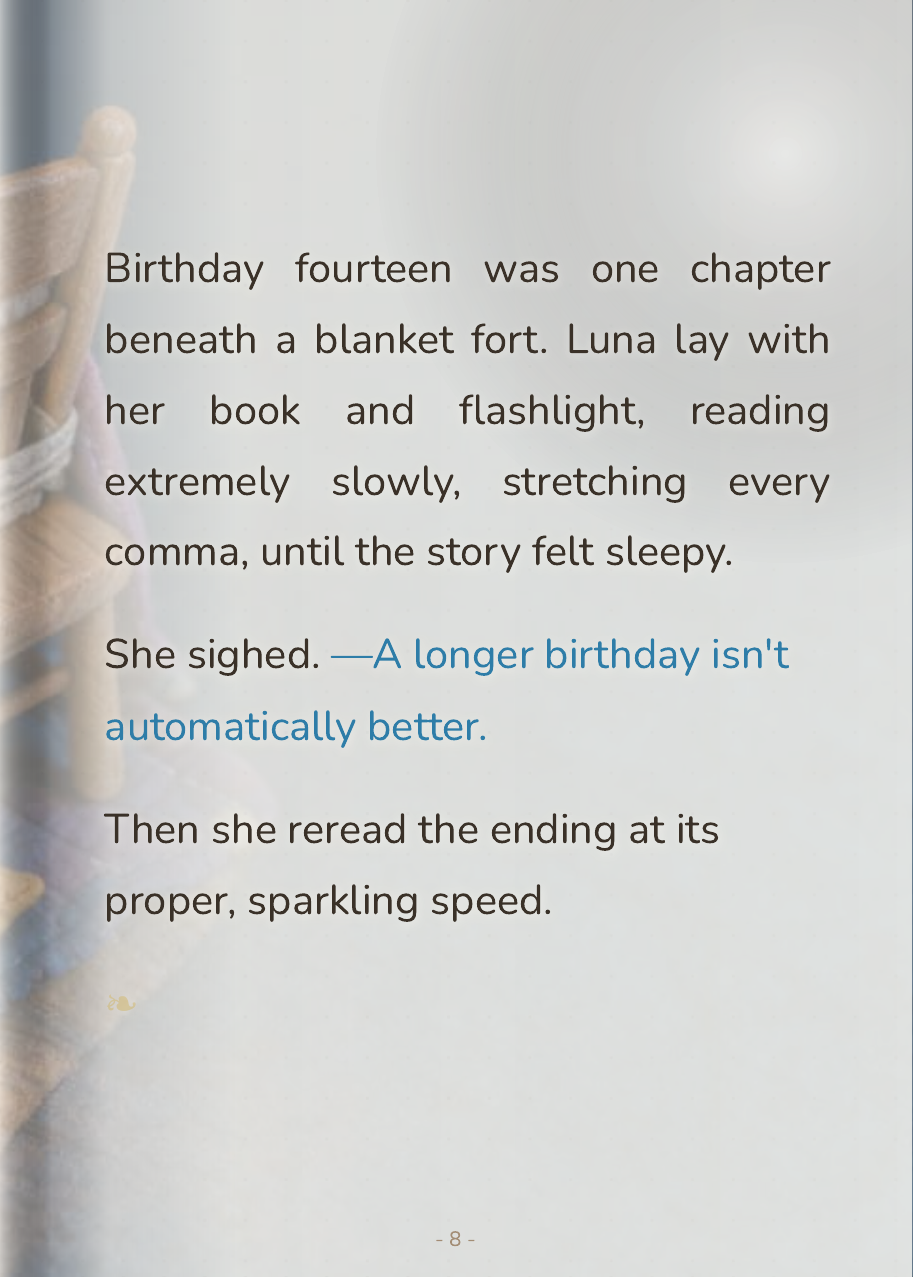
Birthday fourteen was one chapter beneath a blanket fort. Luna lay with her book and flashlight, reading extremely slowly, stretching every comma, until the story felt sleepy.
She sighed. —A longer birthday isn't automatically better.
Then she reread the ending at its proper, sparkling speed.
8
05
At cold dawn, birthday twenty began with Luna tracing her name across the frosted kitchen window. The letters melted almost immediately, leaving five clear streaks.
Luna checked her timer and frowned. —Rude. Also beautiful.
It was the shortest birthday and, annoyingly, one of her favorites.
9
0611
By birthday twenty-six, Luna had begun giving birthdays away. She carried the neighbor's shopping bags up three flights of worn stairs. The handles pinched, and each landing seemed to move farther away.
At the top, Luna caught her breath, smiled, and recorded seven minutes. A birthday was a birthday.
12
07
On February twenty-eighth, Luna faced a wall of crossed-off flaps. Only the last remained blank. Her pencil hovered. Then she understood she did not want her missing date back.
She wrote a final rule: birthday twenty-nine would be shared whenever someone needed help. Its time would never run out.
13
An adventure starring your little one
Create a story with their name and photos turned into illustrations. Read it together today and keep it as a memory.
Interested in “Birthday”? You can choose the topic of your own story.
Your first 12-page digital story is free when you sign up. The printed edition is purchased separately.
Children's story · Ages 7-11
The Birthday That Arrived Early opens on the first of February, when Luna finds a handmade paper calendar taped to the kitchen wall before breakfast. It has twenty-nine numbered flaps, which is exactly one flap too many for a twenty-eight-day month, so she counts them twice. Luna was born on the twenty-ninth of February, and this year her birthday does not exist at all. Her father tells her the last flap is hers to invent.
What follows is a whole month of very small celebrations: one a day, each lasting exactly as long as it takes to do one thing she loves. Luna appoints herself Official Timekeeper and records every single one. A candle standing in a bowl of tomato soup. The walk home from school taken the long way round, through every puddle on the street. One chapter under a blanket fort with a flashlight. Her own name traced across a frosted kitchen window at dawn.
It is a warm, funny read for children between seven and eleven, and it lands especially well in the week before a birthday, when the waiting is the hardest part. Read it aloud at bedtime, bring it into the classroom to talk about what actually makes a day feel special, or share it with a child whose date the calendar keeps skipping.
A birthday the calendar forgot
Luna is ten years old and was born on the twenty-ninth of February. Most years that date turns up on time. This year it does not turn up at all, because February stops at twenty-eight and her birthday is simply not on the calendar. Instead of one party, her family tapes a handmade paper calendar to the kitchen wall with twenty-nine numbered flaps and gives her a plan: one tiny birthday every day of the month, each lasting exactly as long as it takes to do one thing she loves.
Luna, who is very fond of rules, appoints herself Official Timekeeper on the spot. She writes the exact length of every celebration on its flap before crossing it off. Six minutes for a candle standing in tomato soup, and then eleven, because blowing on it counts as a scientific method. Twenty-three minutes and a pair of wet socks for the puddle route home from school. The story never leaves her ordinary week, and that is precisely where the humour comes from.
Twenty-nine flaps in a twenty-eight-day month is, as Luna notes, clearly suspicious.
What children take from Luna's month
Nobody in this story explains anything to Luna. She works it out herself, one measured celebration at a time, and by the end of February her notes on the wall say more about joy than any speech would. These are the ideas a child carries out of the book:
Attention matters more than length. Her name melting off a frosted window at dawn is the shortest birthday of the month and, annoyingly, one of her favourites.
Stretching something does not improve it. Luna reads one chapter as slowly as she possibly can under a blanket fort, then admits that a longer birthday is not automatically a better one.
Waiting can be filled instead of endured. Twenty-eight small days give her far more to look forward to than a single afternoon ever did.
A celebration grows when you hand it to somebody else. By birthday twenty-six she is spending hers on the neighbour's shopping bags, and still writing down the minutes.
Correction: eleven minutes. Blowing is a scientific method.
Birthday nine lasted from the first puddle to the last one, plus wet socks.
Now imagine it with your own child's name
Every page of this story was built around one child: her name, her face, her purple star cape, her very serious notebook. That is what makes the small moments land, and it is exactly what you can do with a child you know. Picture the same month of tiny birthdays with your daughter counting the flaps, or your nephew timing a candle in his soup, or the grandchild who has been asking about her birthday since November.
On cuentosIA you upload a photo, and the child becomes the illustrated protagonist on every page, recognisable from the cover to the last spread. The premise stays yours to choose: a birthday month, a first day of school, a summer at the beach, or something only your family would understand.
How to create your own personalized birthday story
Upload a photo of the child and tell us their name, their age and what they love doing.
Choose the illustration style and the tone, from funny to tender, and describe the adventure you want.
In a few minutes your story is ready to read online, download as a PDF or order as a printed hardcover book.
Why it works as a birthday gift
Birthday presents pile up and then disappear. A book with the birthday child inside it does not: it goes on the shelf, gets read at bedtime, gets shown to visiting grandparents, and gets asked for again months later. For a birthday it does something no toy can do, because the child is not just receiving the gift, the child is the story.
It also travels well as a gift from a distance. A printed copy in the post, or a PDF opened on the morning of the party, both arrive with the same surprise: their name on the cover.
The shortest birthday of the month lasted exactly as long as the letters took to melt.
What age is this birthday story for?
It reads best with children between seven and eleven. Younger children enjoy it read aloud, since the chapters are short and every tiny birthday is a scene of its own.
Is it only for children born on the twenty-ninth of February?
Not at all. The leap-year birthday is the hook, but the story is really about the month of waiting that comes before any birthday, and about what you decide to do with it.
Can I get this story with my own child in it?
Yes. Reading it here is free, and you can create a personalized version with your child as the protagonist in a few minutes.
Turn this month of tiny birthdays into a story with your child's name and face on every page.