cuentosIA
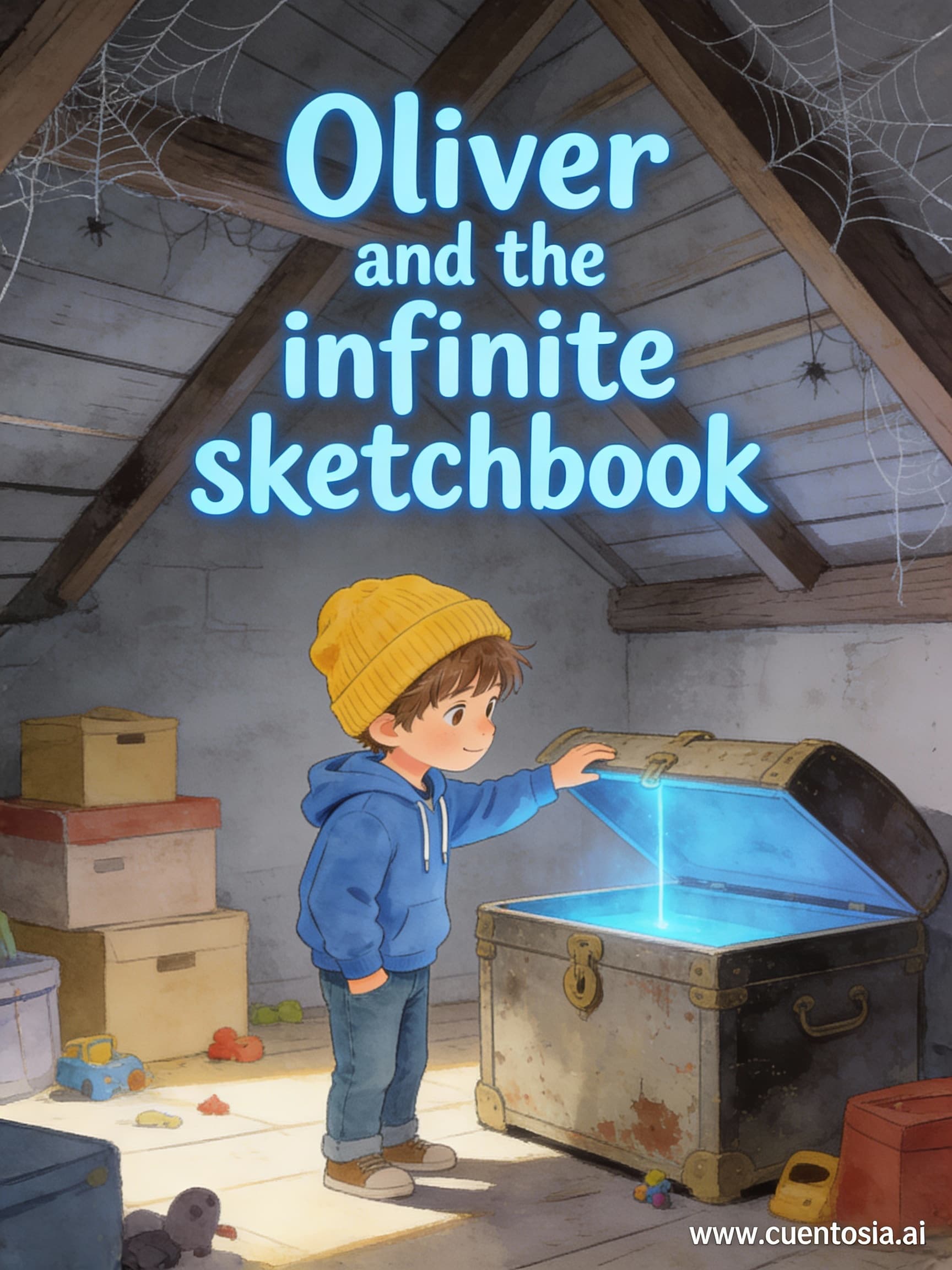
Oliver and the Infinite Sketchbook.
For my little big hero ❤️
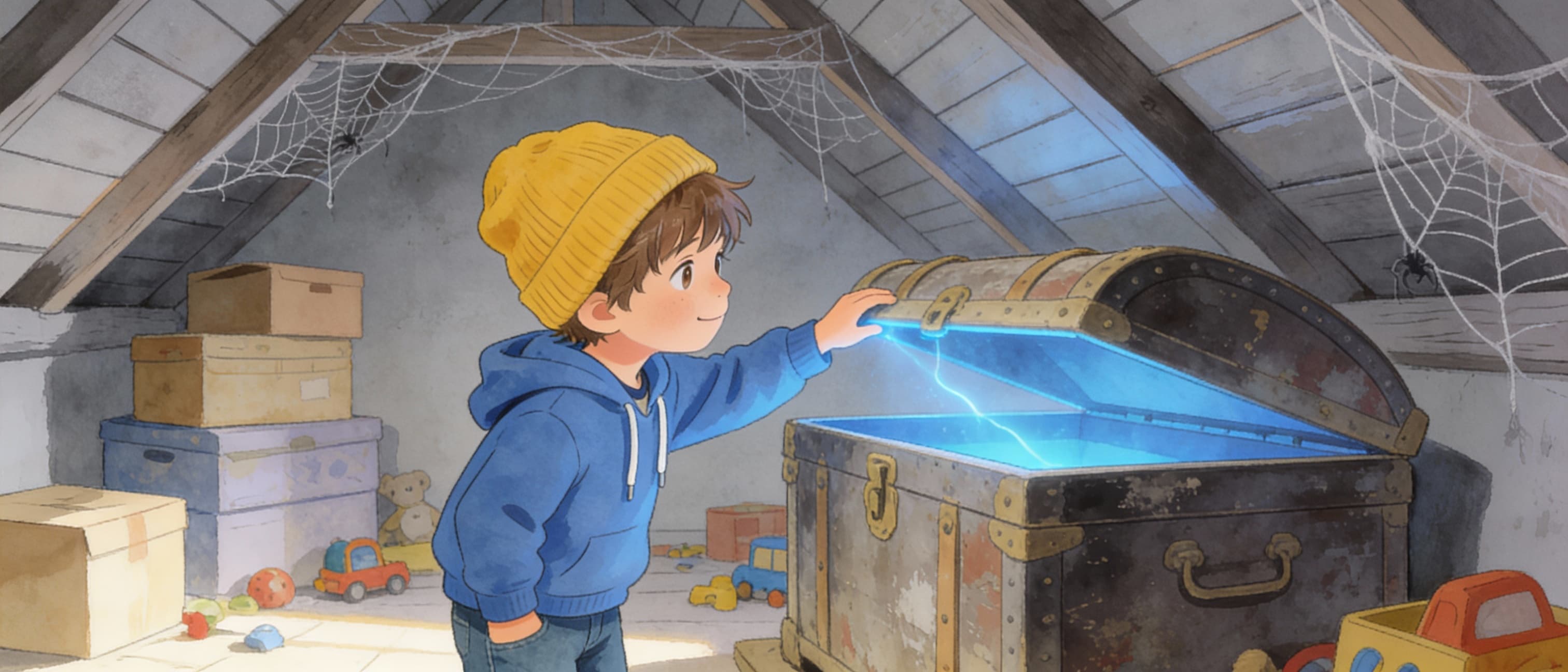
Oliver climbed into the attic because the afternoon felt stuck and gray. Boxes leaned like sleepy towers. Then a thin glow pulsed under an old trunk. “That wasn’t there yesterday,” Oliver whispered, stepping closer.
He lifted the trunk lid and found a pen that shone as if it held a small sunrise. A note lay beneath it: “Write true, write kind.” Oliver turned the pen in his fingers, feeling it warm, like a hand holding back a secret. He opened his notebook. “Okay,” he said. “Let’s try one word.”
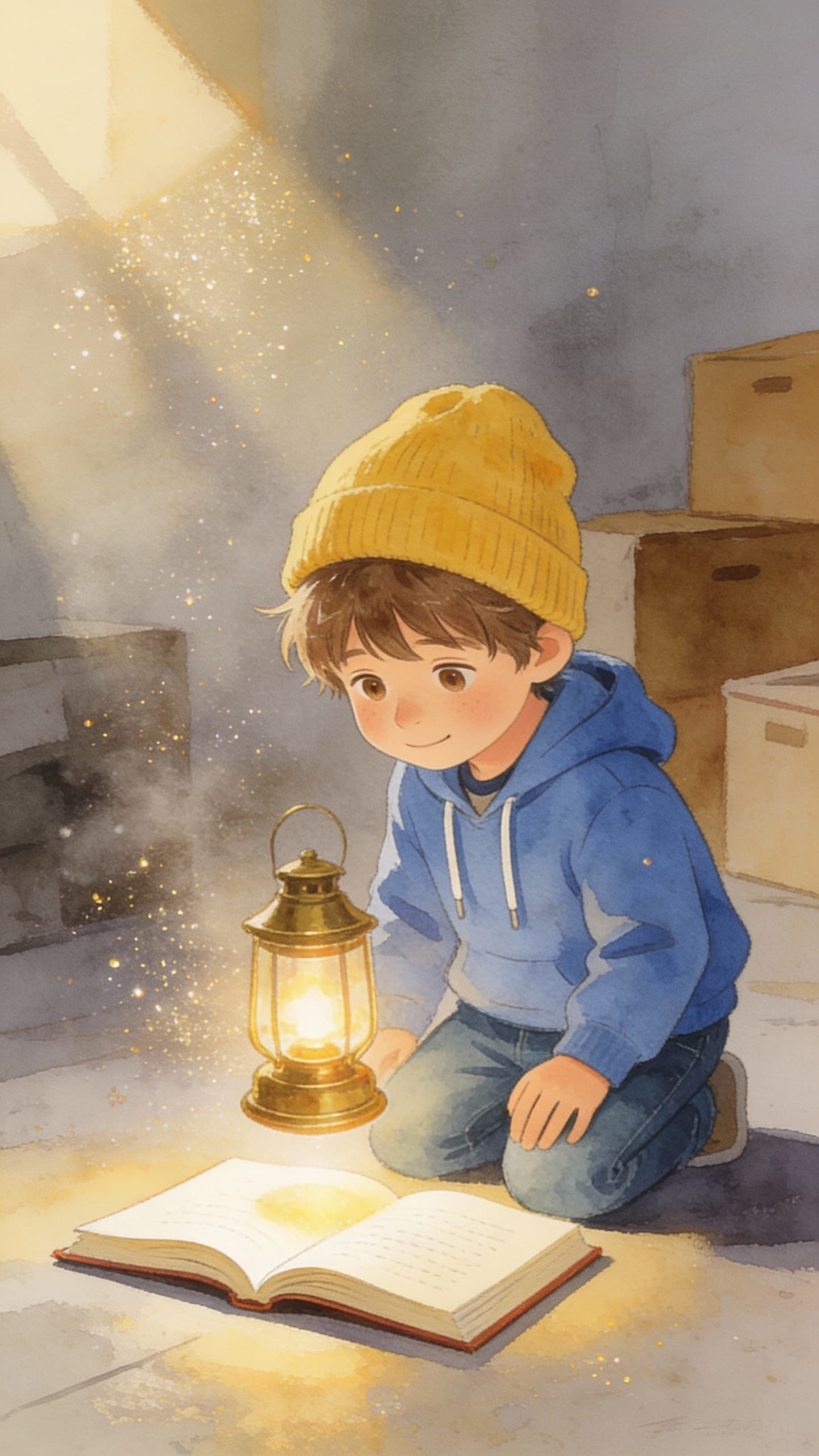
Oliver wrote, “Lantern.” The word snapped into the air, and a real lantern appeared, bobbing gently. Warm light filled the corners. Dust turned into dancing gold. “No way,” Oliver breathed, and the attic suddenly felt awake.
His heart drummed as he wrote more. “Curtains,” he tried, and bright fabric unfurled over a window that had never looked outside before. “Breeze,” and the air smelled like pine and rain. Oliver laughed, then paused. If words became real, his choices mattered. He reread the note. “Write true, write kind,” he murmured, letting that rule settle.
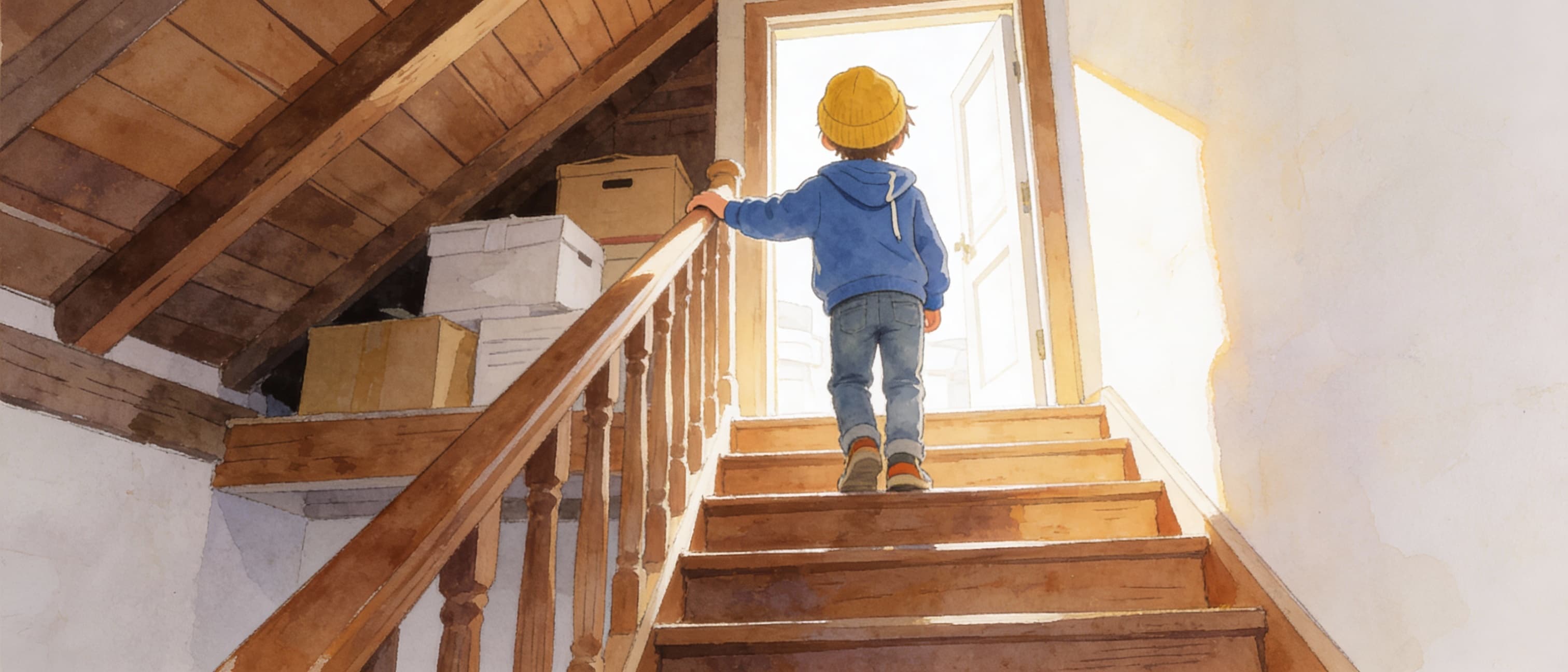
Oliver wrote, “Stairs.” A new stairway slid down with a soft thump, leading into a doorway of light. The attic floor faded behind him. “If I’m dreaming,” Oliver said, “don’t wake me yet.” He stepped through.
On the other side was a wide street made of smooth sugar tiles. Buildings rose like stacked cookies, and windows sparkled like hard candy. Oliver’s shoes stuck slightly, then released with a funny squeak. “Sweet City,” he declared, and the name seemed to ring like a bell. He scribbled, “Crosswalk,” and peppermint stripes appeared, neat and safe.
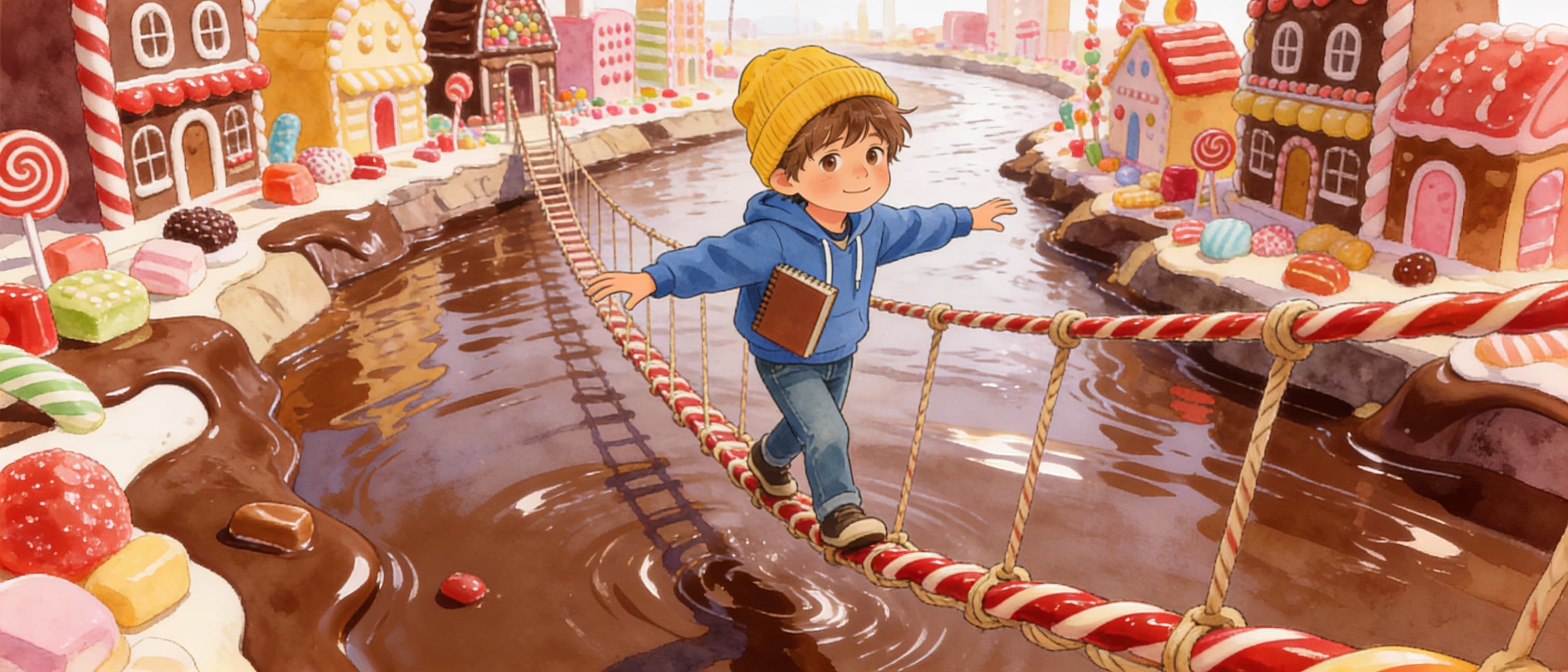
Oliver spotted a river of chocolate drifting past. He wrote, “Bridge,” but the pen made a bridge of licorice rope that wobbled. “Uh-oh,” Oliver said, gripping the rails. Halfway across, it dipped like a jump rope.
Oliver’s stomach fluttered. He could erase the bridge by writing something else, but the river below looked thick and slow. He crouched and tested each step, listening to the creaks. “Think,” he told himself. In his notebook he wrote, “Support beams.” Candy-cane poles rose under the bridge, firming it up. Oliver exhaled. “Better,” he said, and crossed carefully.
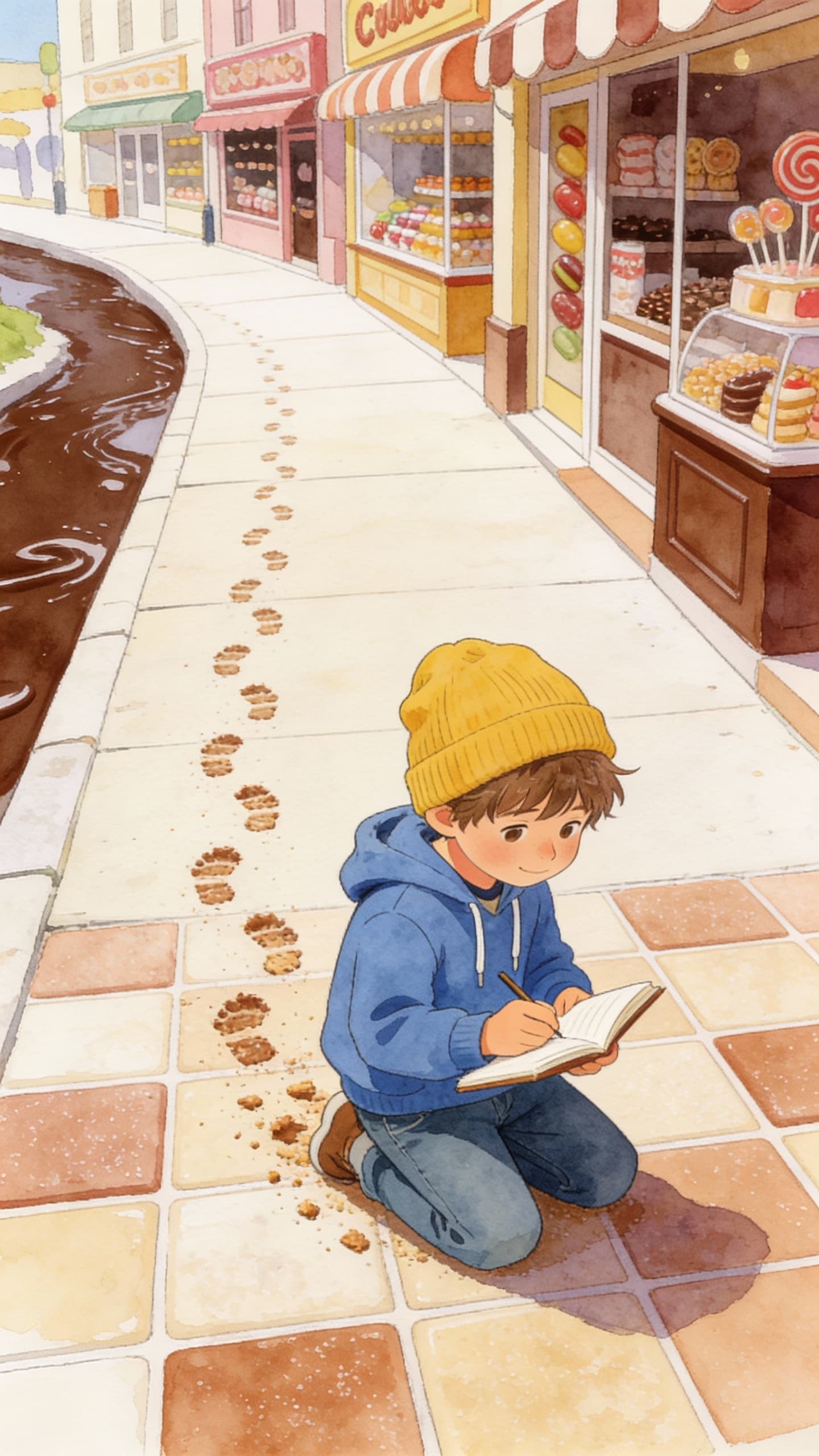
On the far side, Oliver saw his own footprints hardening into sticky prints that could trap someone else. “That’s not kind,” he muttered. He wrote, “Crumbs,” and the prints turned into harmless crumbs for birds. The street felt safer again.
A low rumble rolled through Sweet City. The cookie buildings shivered, and a gumdrop sign toppled into the street. Oliver looked up at the sky, suddenly uncertain. “Is this place breaking because I changed it too fast?” he wondered. He wrote, “Map,” hoping for answers. A paper map unfolded, showing dotted paths and a warning: “Too many wishes at once can crack a world.”
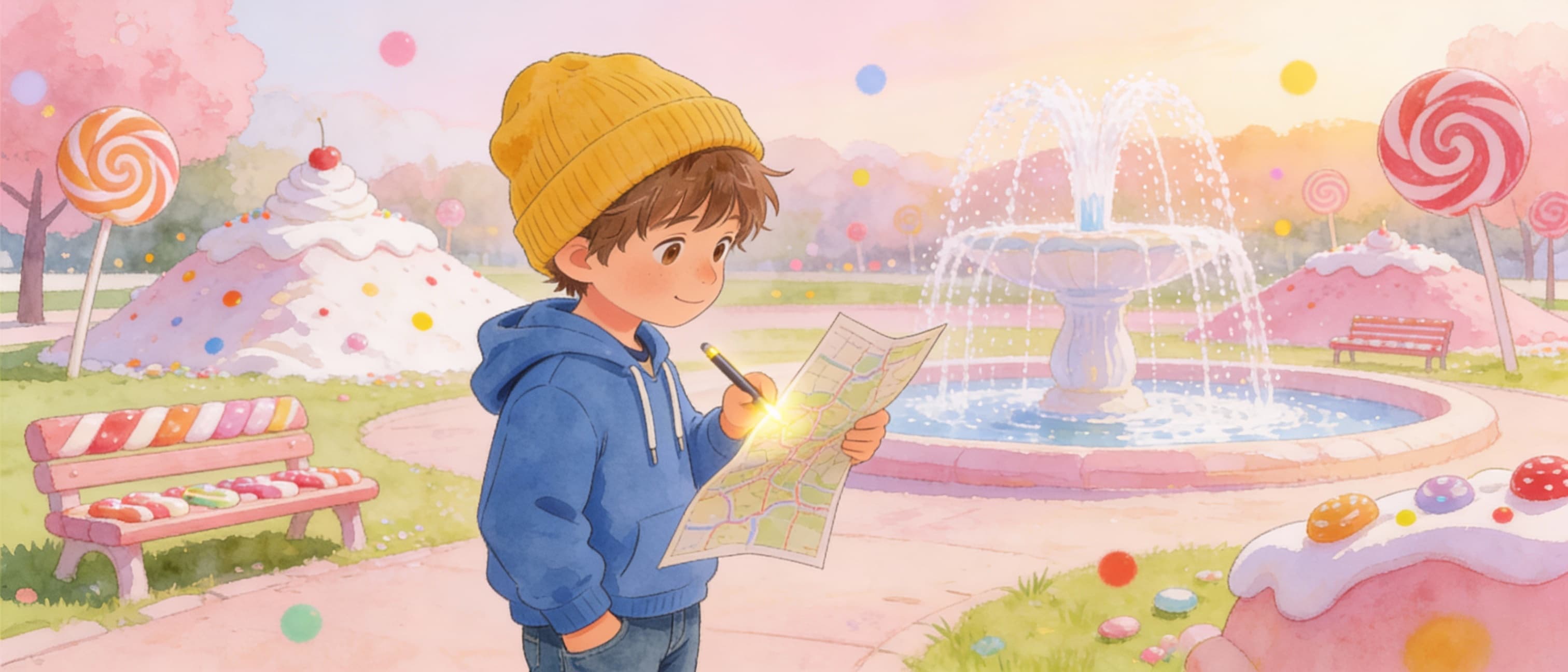
Oliver followed the map to a park of frosting hills. In the center stood a fountain that sputtered sprinkles instead of water. “You need balance,” Oliver said, feeling serious. He wrote, “Repair,” but the pen only shimmered, waiting for clearer words.
Oliver sat on a candy bench and thought of the note again. True. Kind. He tried smaller, steadier words: “Mortar,” then “Bricks,” and finally, “Patience.” The ground stopped trembling. The cookie walls regained their shape, one careful piece at a time. Oliver’s shoulders loosened. “So the pen isn’t a shortcut,” he said. “It’s a helper, if I’m careful.”

The map’s dotted path climbed into the sky, as if it didn’t care about gravity. Oliver grinned anyway. He wrote, “Stairway of air,” and pale steps appeared, each one humming softly. Up he went, toward a purple horizon.
Higher up, the air grew cool and smelled like thunderstorms. The purple sky deepened, and clouds drifted like slow ships. Oliver wrote, “Compass,” and a spinning needle floated above his notebook, pointing forward. Then he heard a deep, musical sound, like a cello played inside the sky. “Hello?” Oliver called. The sound answered with another gentle note.

A flying whale glided through the clouds, moving as calmly as a boat on a lake. Oliver stared, speechless. “You’re real,” he said. The whale tilted, as if listening, and the wind carried a warm, salty smell.
Oliver wanted to race alongside it, to write “Rocket shoes” and zoom. His hand hovered over the page, then stopped. “Kind first,” he reminded himself. The whale’s path led toward darker clouds, where lightning flickered quietly. Oliver wrote, “Safe passage.” A clear corridor opened through the storm, like a hallway made of calm air. The whale sang, and Oliver followed.
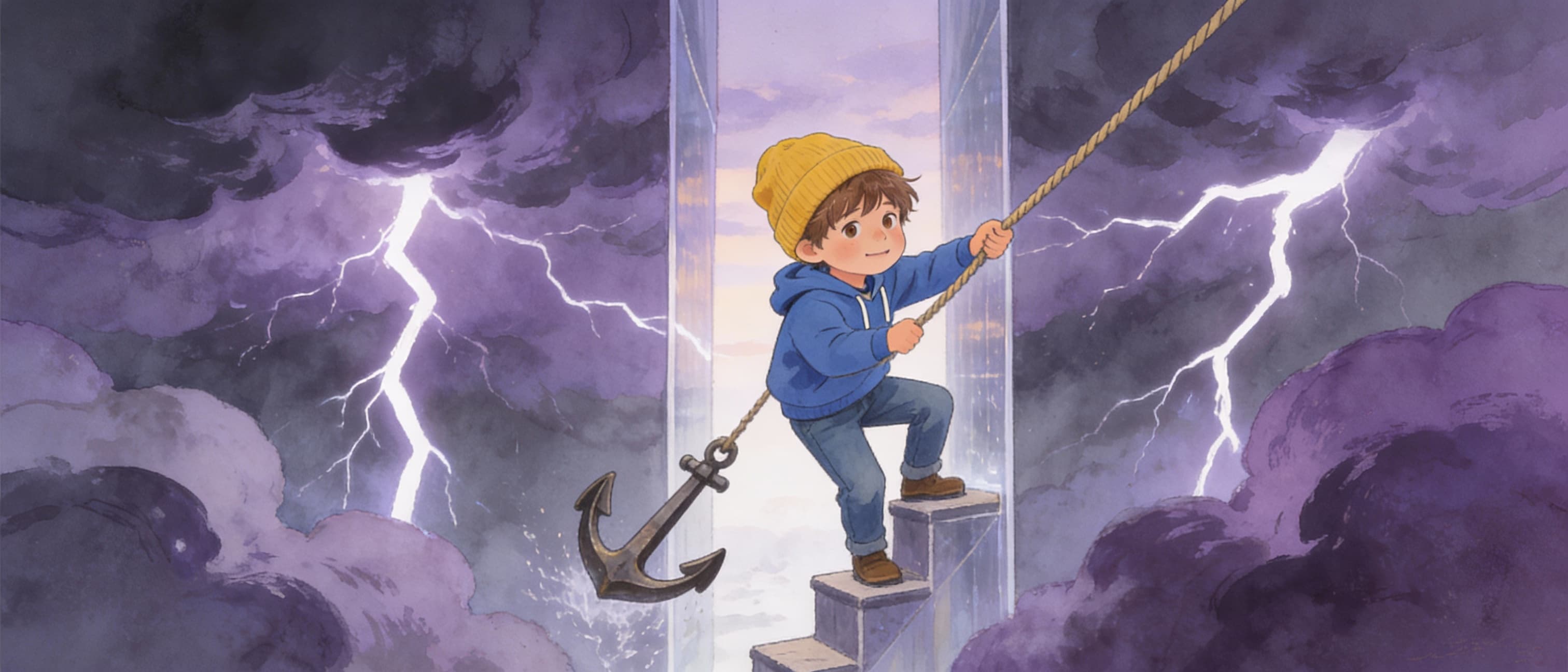
The corridor narrowed, and the air steps shook. Oliver’s notebook pages flapped wildly. “Hold on!” he shouted to himself. He wrote, “Anchor,” and a heavy anchor appeared—too heavy. It yanked him downward. “Wrong choice!” Oliver cried.
Oliver fought the pull, arms straining. The anchor wasn’t evil; it was simply doing what anchors do. He needed a truer word. With shaking fingers, he wrote, “Tether,” and the anchor transformed into a light cord tied to his waist, steady but not dragging. “Thank you,” Oliver whispered, to the pen or to the idea itself. The corridor widened, and he climbed back up.

Beyond the storm, a quiet island floated in the sky, covered with smooth stones that chimed when stepped on. Oliver found a small door standing alone. The map ended there. “This must be the hardest part,” Oliver said softly.
Oliver reached for the knob, then hesitated. What if he wrote something too big and couldn’t fix it? He listened to the stones’ gentle music and chose honesty over excitement. On the page he wrote, “A place to share.” The door opened into a bright room that felt like his attic, only clearer, ready for more than one person’s dreams.
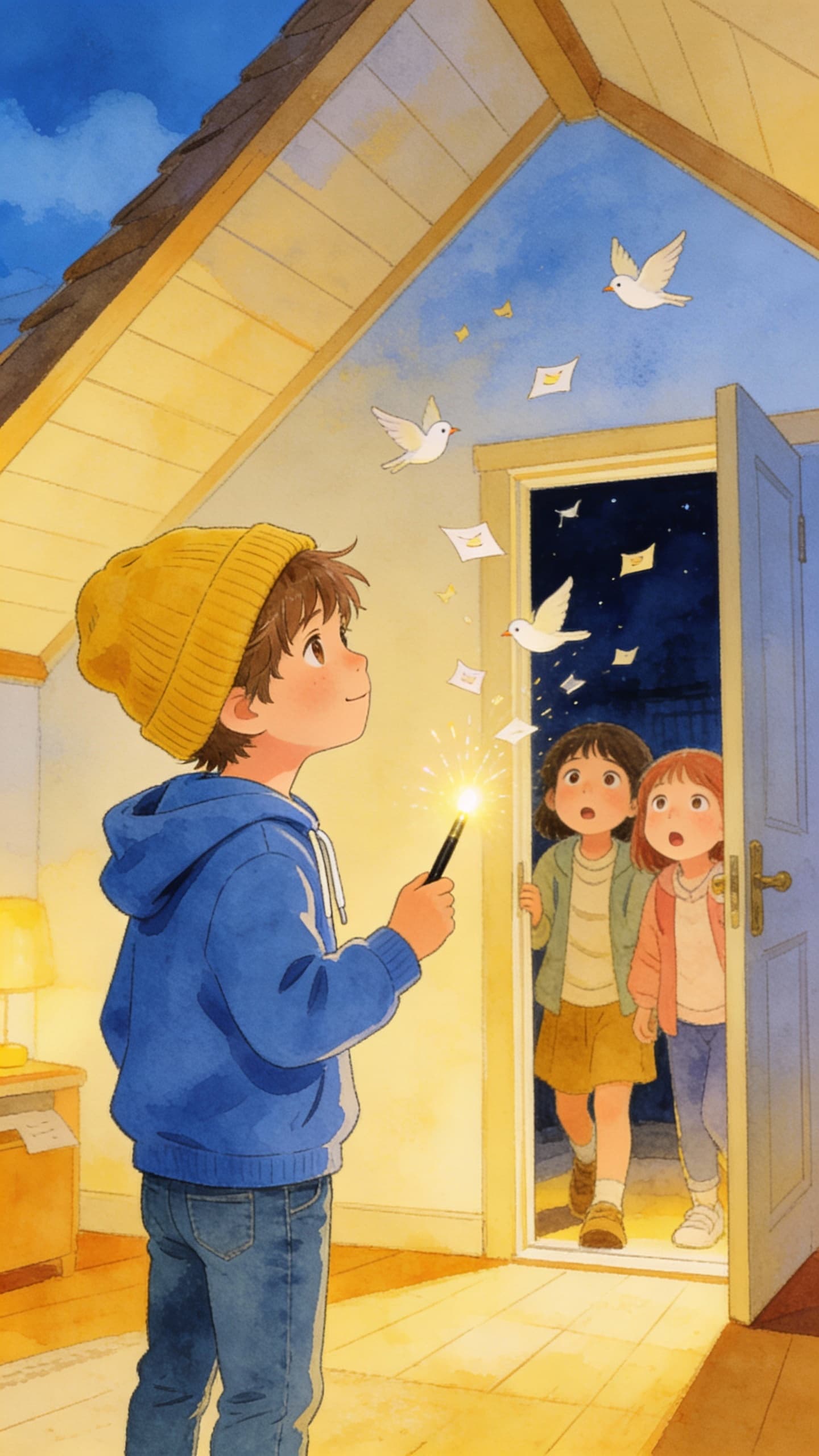
Oliver wrote, “Invitation,” and paper birds flew out, carrying simple notes: “Come up if you want to imagine.” Soon, two neighborhood kids arrived, blinking at the light. “Is this your trick?” one asked. “Not a trick,” Oliver said. “A promise.”
Oliver set rules aloud. “We only write what we can care for,” he said. Together they made a small garden first—real soil, sturdy benches, and a pond that stayed inside its stones. When one kid suggested a mountain of gumdrops, Oliver asked, “How would we keep it from collapsing?” They worked it out, writing supports and paths before anything tall appeared.
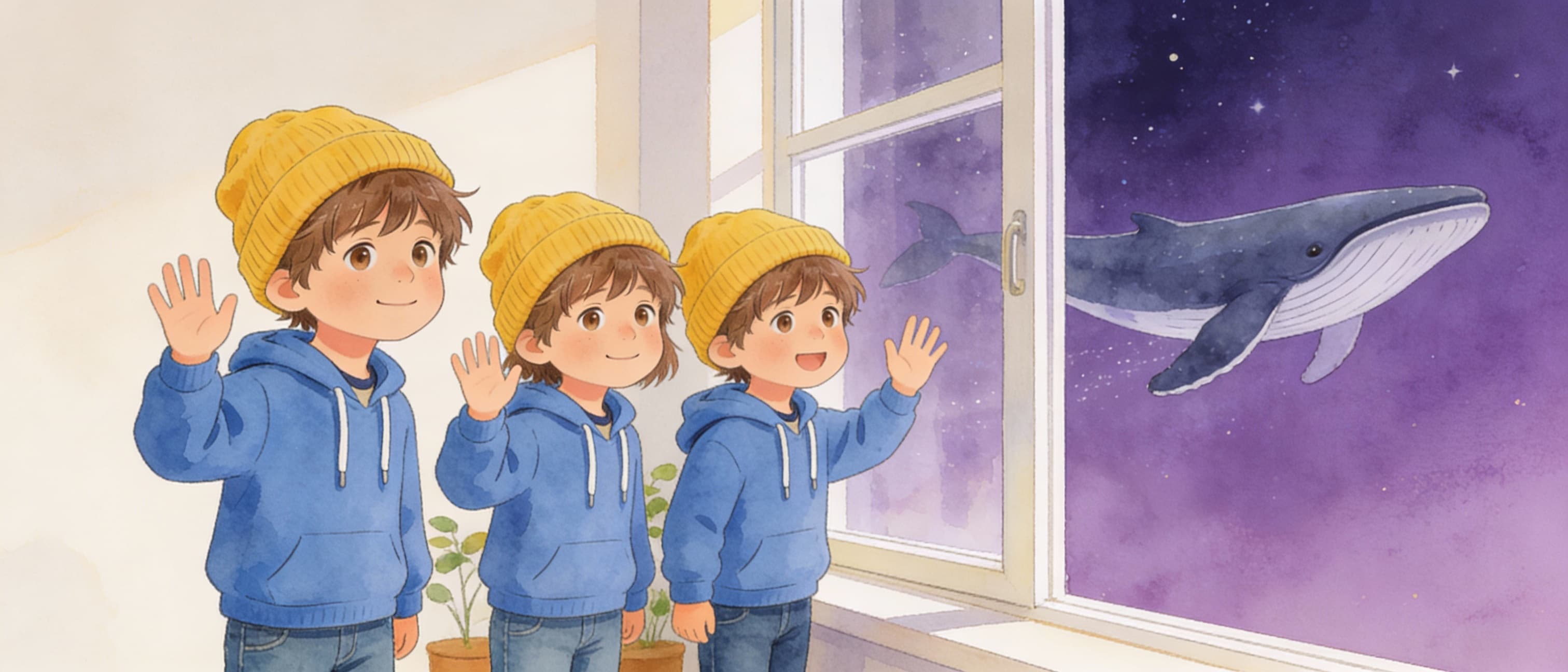
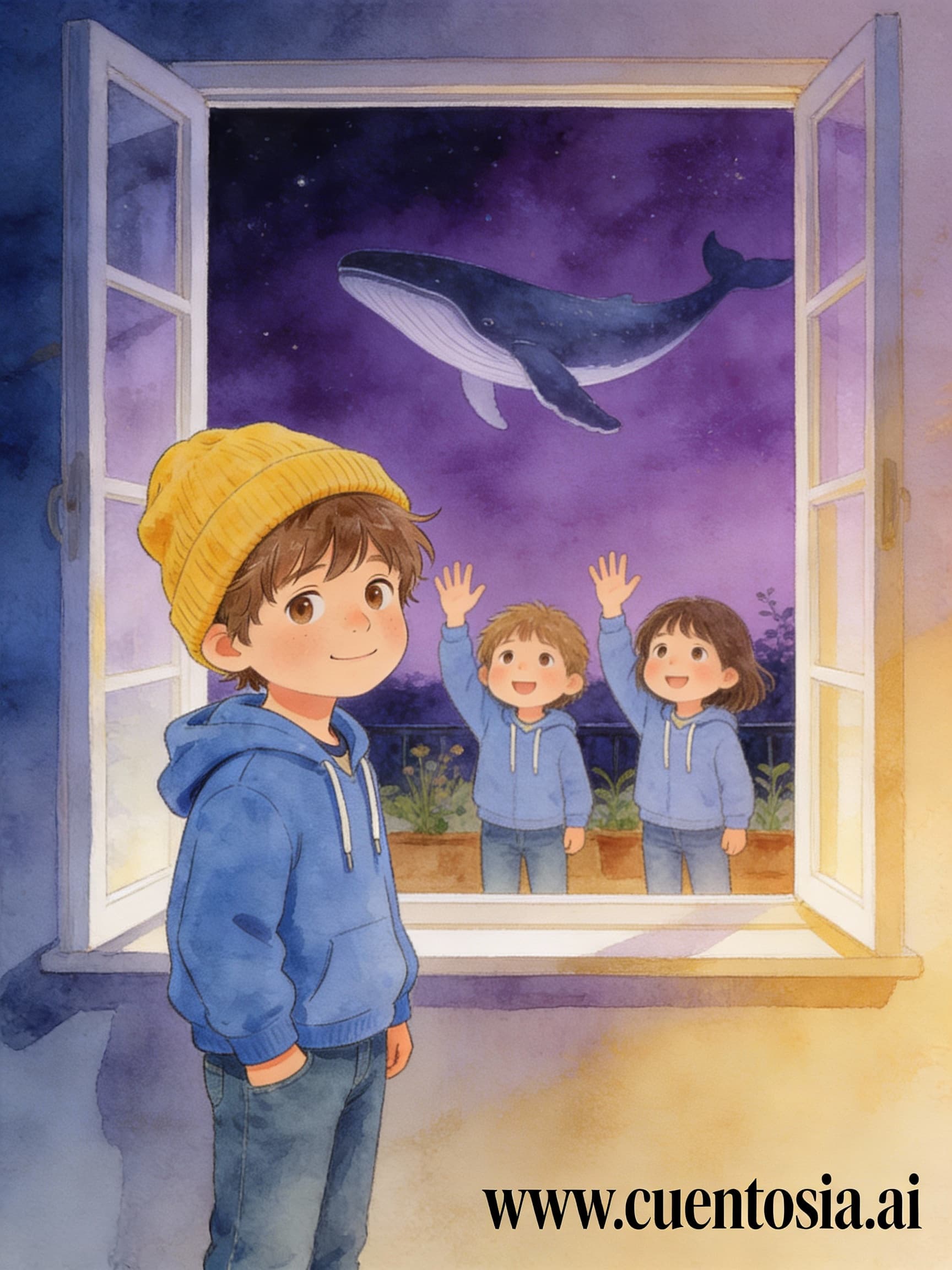
At last, Oliver wrote, “Window,” and the wall opened to a view of purple sky. The flying whale drifted past, singing low. The kids waved. Oliver didn’t chase it. He just listened, smiling, proud of choosing steady magic.
Later, when the others left, Oliver returned the pen to his notebook pocket instead of waving it around. He cleaned the attic, stacking boxes and sweeping old dust into neat piles. The gray space didn’t feel empty anymore. It felt like a starting line. “Tomorrow,” Oliver said, clicking the notebook shut, “I’ll write something true again—and I’ll make sure it lasts.”