Every Saturday, Belén plants beans in a corner of Grandpa Julio's garden and waits for them to hurry. They never do, and by the time she stops asking, she has learned something she cannot quite put a name to.
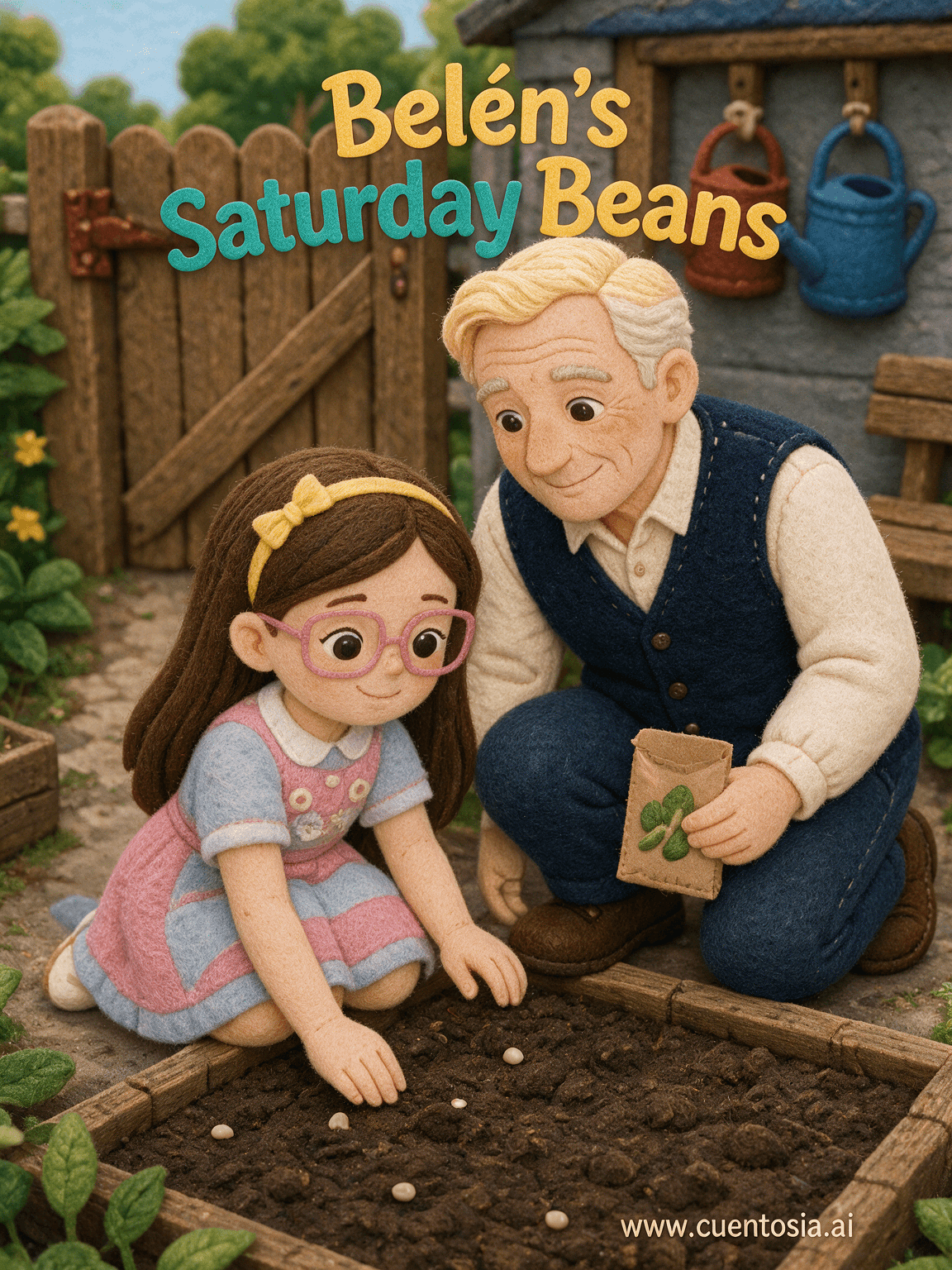
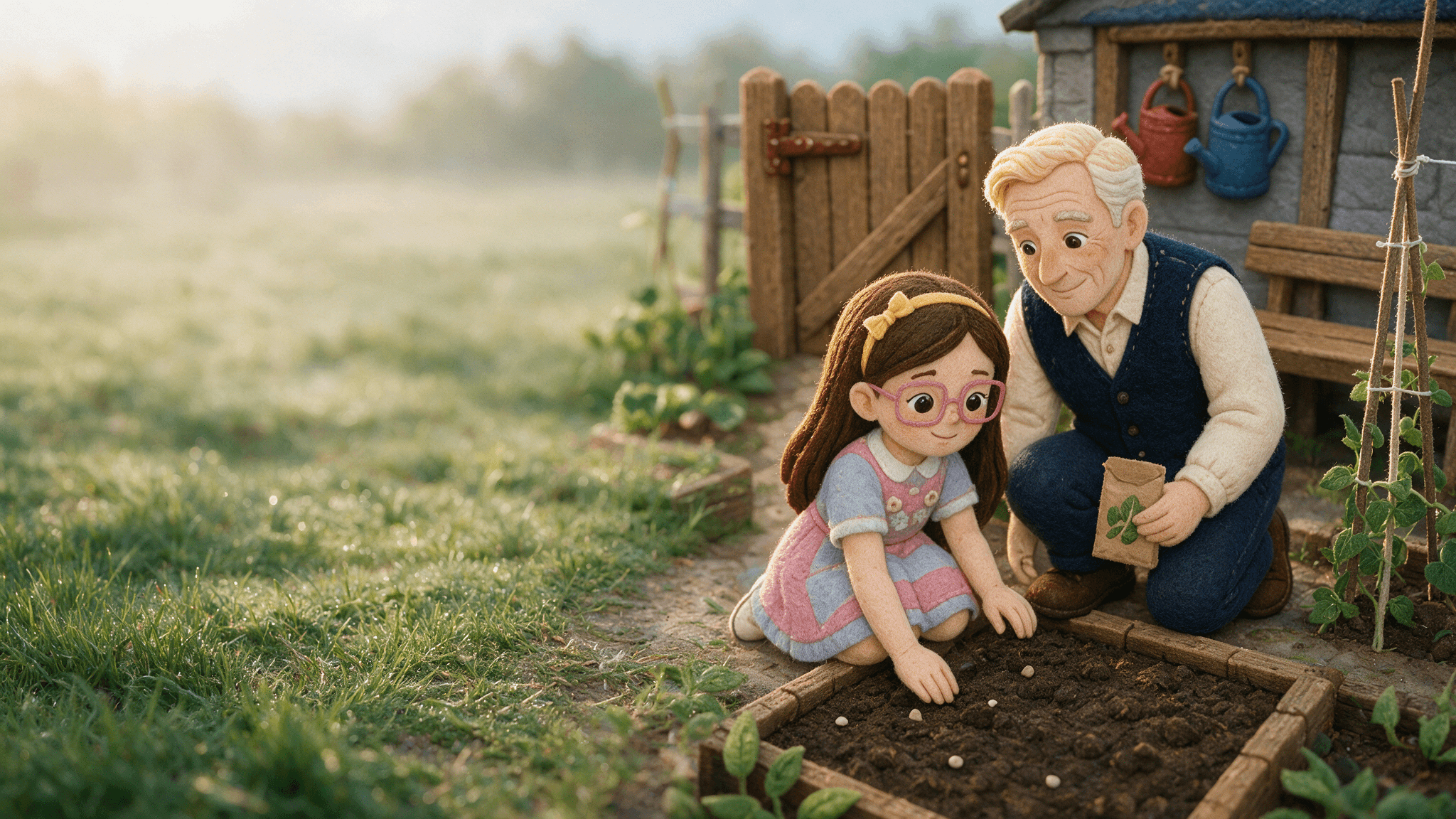
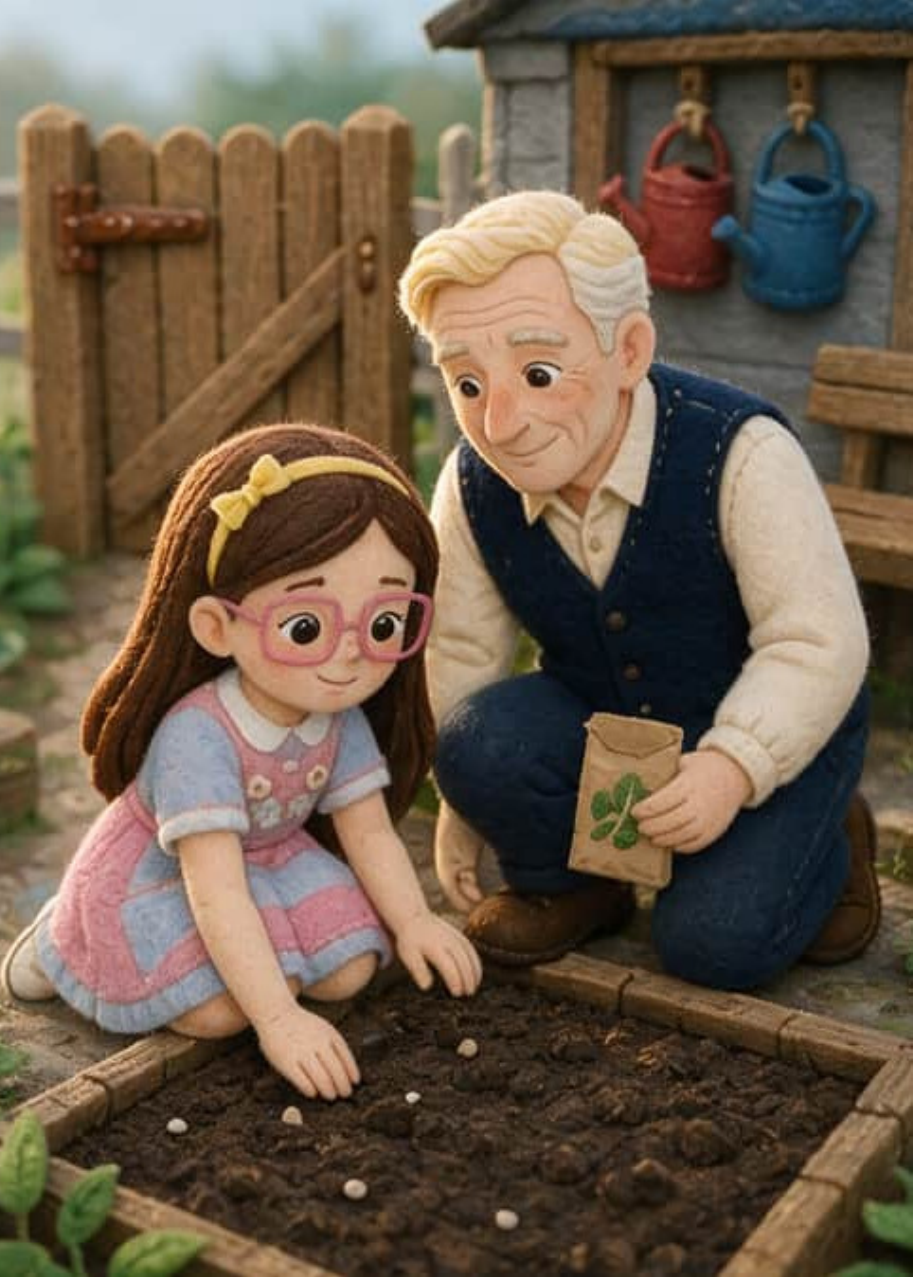
Every Saturday, Belén visited Grandpa Julio's garden plot, where growing took time. One bright morning, he cleared a small corner and handed her bean seeds. Belén tucked them into soil, patted it flat, and watered twice.
—When will they be ready?
Next Saturday, she decided.
1
023
The second Saturday, only brown soil waited. Belén crouched until her nose nearly touched the ground. Grandpa Julio offered no explanation. He filled the watering can and placed it beside her.
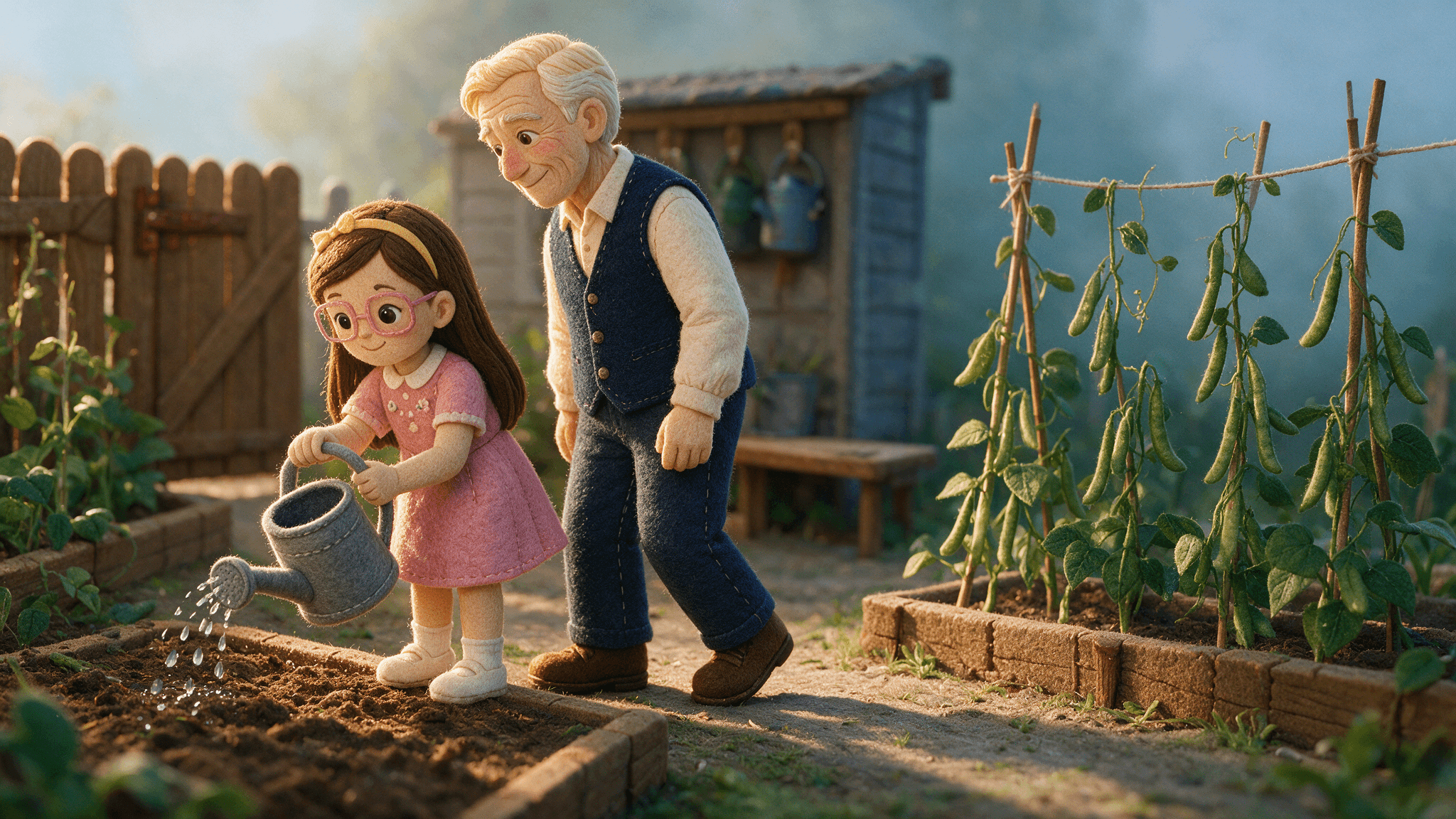
Belén carried it with both hands, then poured slowly. The earth drank every drop.
4
03
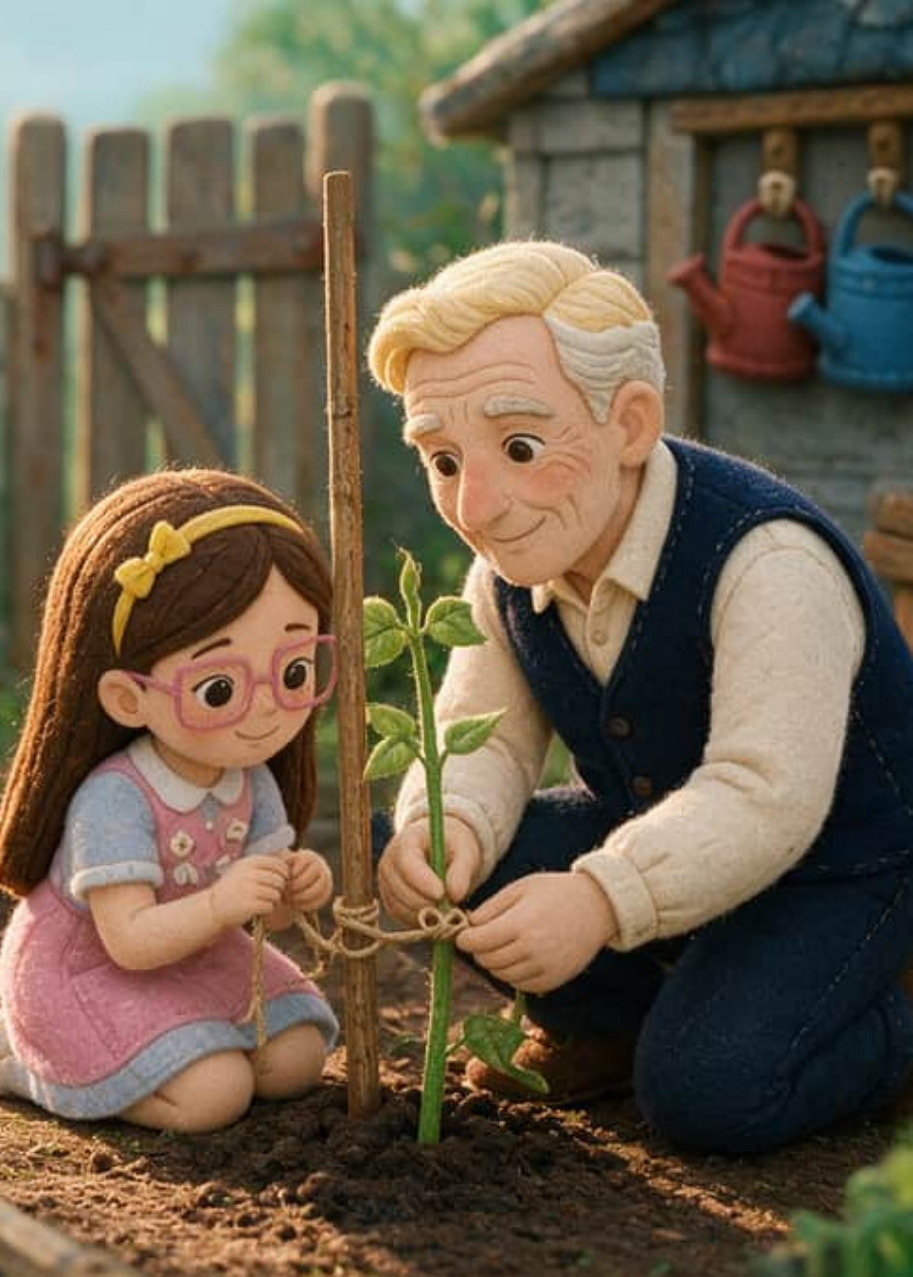
On the third Saturday, a green loop pressed through the crust like a tiny elbow. Belén reached to straighten it, but Grandpa Julio gently moved her hand away. Instead, he gave her a cane and string.
Together, they tied one knot at the new plant's exact height.
5
047
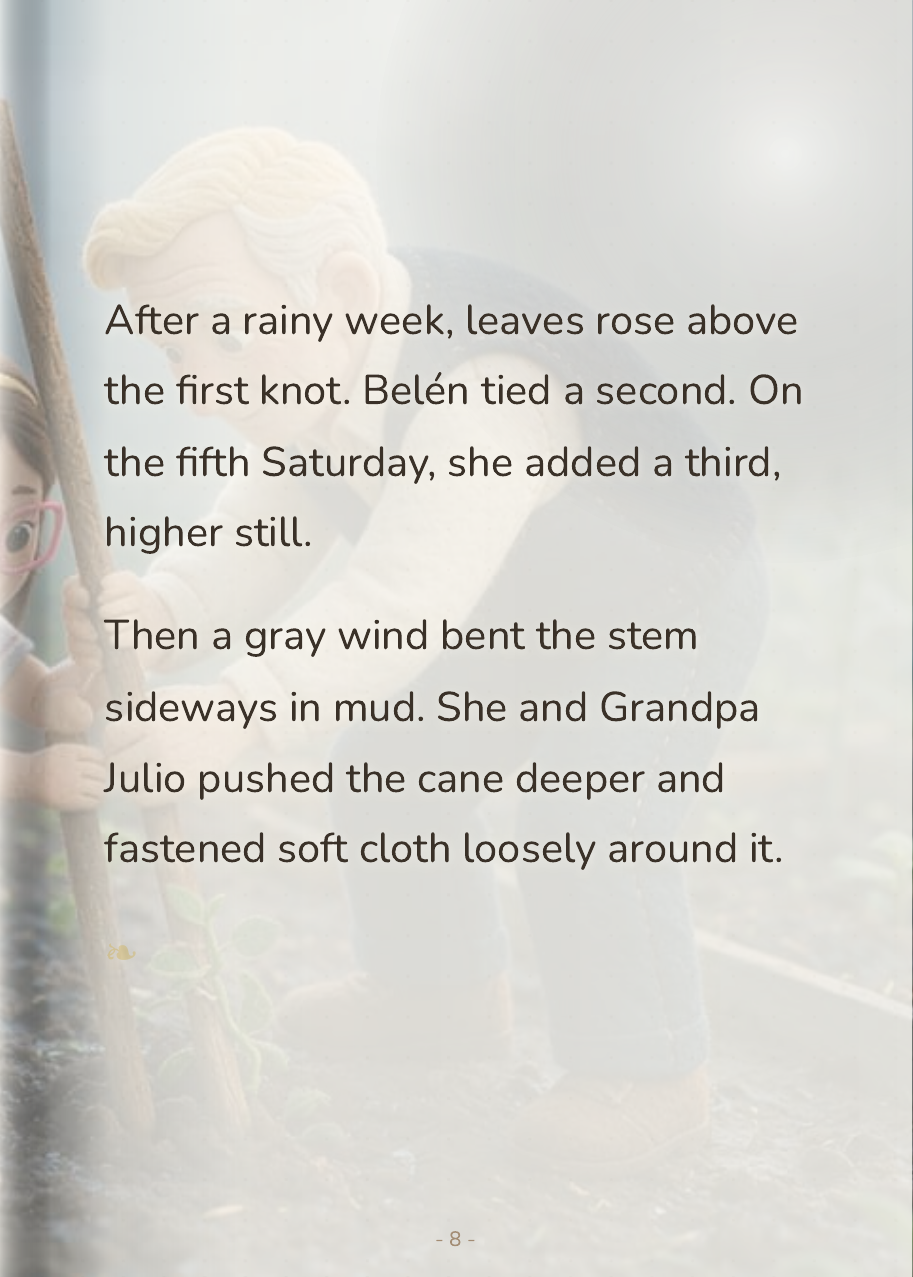
After a rainy week, leaves rose above the first knot. Belén tied a second. On the fifth Saturday, she added a third, higher still.
Then a gray wind bent the stem sideways in mud. She and Grandpa Julio pushed the cane deeper and fastened soft cloth loosely around it.
8
05
By the sixth Saturday, Belén had stopped asking when. She noticed bumblebees humming through Grandpa Julio's rows, the sharp smell of tomato leaves on her fingers, and knots climbing the cane like ladder rungs.
She checked the loose cloth. The stem could sway without falling.
9
0611
On the last Saturday, heavy pods hung ready. Belén stood on tiptoe while Grandpa Julio steadied the cane.
—This one is yours, he said.
They picked the pods together, then sat beside the shed, shelling smooth beans into a metal bowl. Tap, tap, they fell.
12
07
Belén looked at the beans, then at the knots stacked along the cane. Each marked a Saturday: watering, tying, noticing, returning. At last, she understood what her hands had been doing.
She and Grandpa Julio carried the bowl home together.
—What should we plant next Saturday?
13
An adventure starring your little one
Create a story with their name and photos turned into illustrations. Read it together today and keep it as a memory.
Interested in “Personalized Grandparents' Day Stories”? You can choose the topic of your own story.
Your first 12-page digital story is free when you sign up. The printed edition is purchased separately.
Children's story · Ages 4-9
Belén's Saturday Beans opens on a bright morning at Grandpa Julio's garden plot, on the edge of town, where everything grows slowly and that is precisely the point. He clears a small corner of soil, hands Belén a paper packet of bean seeds, and tells her the corner is hers. She tucks the seeds in, pats the earth flat, waters it twice to be sure, and asks the only question that really interests her: when will they be ready? Next Saturday, she decides.
They are not ready next Saturday. What follows is a whole summer of Saturdays: a watering can carried with both hands, a green loop pushing through the crust like a tiny elbow, a cane and a ball of string, and a knot tied at the exact height of the plant. Then a second knot after a week of rain, and a third, higher still. One grey, windy morning leaves a stem leaning in the mud, and the two of them push the cane deeper and tie it with a strip of soft cloth, loosely, so it can still sway. Grandpa Julio never explains and never rushes her. He simply keeps taking her back and putting the next tool in her hands.
It is a quiet, unhurried read for children aged 4 to 9, and a natural pick for Grandparents' Day, for a grandparent who gardens, or for any child who wants everything to happen today. It works beautifully read aloud at bedtime, in a classroom talking about how plants really grow, or as a keepsake passed from a grandparent to a grandchild.
A summer of Saturdays in Grandpa Julio's garden
The whole story takes place in one small place: a garden plot at the edge of town, with a wooden gate, raised beds, watering cans hanging on nails in the shed, and a bench where you can sit and shell beans into a metal bowl. Belén is seven, and she arrives every Saturday morning with the firm intention of making something happen. Grandpa Julio is seventy, and he has never once been in a hurry.
The engine of the story is a corner of soil that Belén is given as her own, and the bean seeds she pushes into it on the very first page. She waters them twice, just to be sure, and asks when they will be ready. Everything that follows is the distance between that question and the moment she stops needing to ask it. There is no villain, no danger, and nothing magical: the beans grow at exactly the speed beans grow.
The second Saturday, there is still nothing to see, so Belén waters the bare soil anyway.
What children take away from it
This is a story about patience that never once uses the word. Grandpa Julio gives no lessons and makes no speeches; he hands over a watering can, then a cane, then a ball of string, and lets Belén reach the idea by herself. That is what makes it land with young readers: nobody tells them the moral, they watch it happen over seven Saturdays.
Good things can be worth waiting for, and waiting is something you can actually get better at.
Looking after something is a habit made of small repeated actions, not one big gesture.
Measuring progress makes it visible: the knots climbing the cane are the story's quiet stroke of genius.
A setback, like a stem bent sideways by the wind, is something you fix together and carry on from.
When will they be ready?
Some Saturdays are for repairs: the stem is tied loosely, so it can still move in the wind.
Now picture it with your own child's name
Read this one aloud and it is hard not to think of a particular pair: a grandchild who asks the same question forty times, and a grandparent with a garden, a workshop, a kitchen or a fishing rod, who answers by simply making room. That is exactly the book you can make at cuentosIA, with your child as the protagonist and their grandparent beside them, both drawn from your own photographs and recognisable on every page.
Swap the beans for tomatoes, the plot for a balcony full of pots, the cane and string for a tape measure pencilled on a door frame. The shape of the story stays: someone small who wants it now, someone older who keeps coming back, and a summer that does the teaching.
How it works
Upload a photo of each character and tell us their names and ages.
Choose the illustration style, the length and the tone of the story.
In minutes you have your book: read it online, download the PDF, or order it printed.
Why it works so well as a gift
A personalised story is one of the few presents a grandparent cannot buy for themselves and will not put in a drawer. Seeing their own face beside their grandchild's, in a garden that looks like theirs, turns a book into a keepsake, which is why these make such good Grandparents' Day gifts, birthday presents and end-of-summer surprises.
It works in the other direction too. Plenty of grandparents order one for a grandchild who is learning to wait for something: a little brother on the way, a school year about to start, a plant on a windowsill that refuses to hurry.
By the sixth Saturday she has stopped asking when, and started noticing everything else.
What age is this story for?
It is written for ages 4 to 9. Younger children enjoy the Saturdays, the watering can and the bumblebees; from six or seven they pick up on what the knots along the cane are really counting.
Is it suitable for Grandparents' Day?
Yes, that is exactly what it was written for. It is a grandfather and granddaughter story with no drama and no goodbyes, so it can be read aloud on the day itself without anyone needing a tissue.
Can I read it for free?
Yes. The full story, with every illustration, is free to read here. If you want the same idea with your own family in it, you can create a personalised version.
Turn a summer of Saturdays into a story with your child's face and name in it.