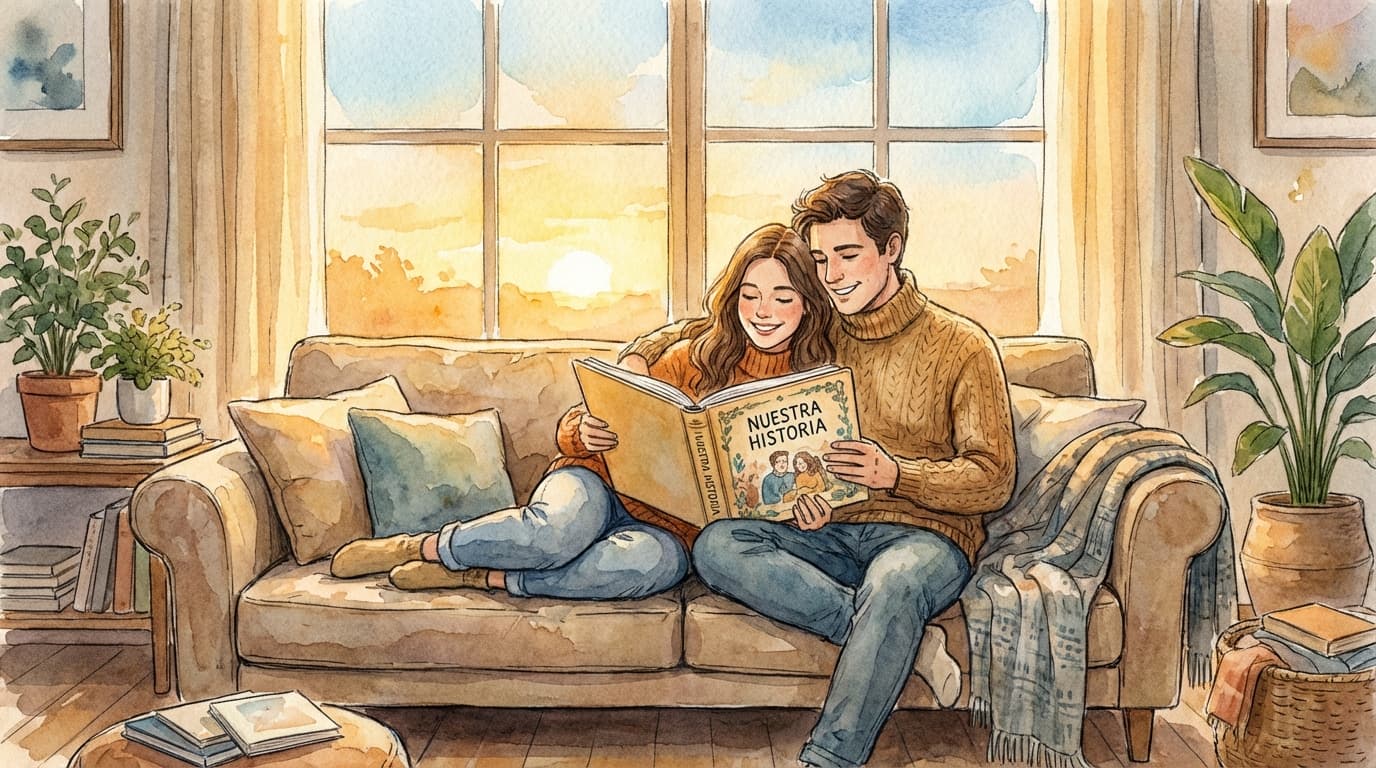
Personalised stories for adults combine emotional narrative with unique artistic illustration.
Sarah's partner handed her a book on their anniversary. She opened it and found herself as the heroine of a Mediterranean adventure — her face rendered in warm watercolour, her name woven into every chapter. The emotional reaction she felt in that moment has a name in cognitive science. And it is measurable.
A personalised book is not simply a beautiful gift. It is a tool with documented psychological effects: it activates the brain's empathy circuits, reinforces the self-esteem of the recipient, and creates an emotional bond that conventional gifts cannot replicate. The evidence does not come from marketing copy — it comes from peer-reviewed research published in Science, PLOS ONE and Clinical Psychology Review.
In this article we bring together the most relevant findings from psychology, neuroscience and consumer behaviour research to explain why personalised stories for teens and adults have such a profound impact. If you have ever wondered whether a book in which your partner, your closest friend, or you yourself are the protagonist is anything more than a curiosity, the answer lies in the data.
How stories rewire empathy — the transport effect
Not all reading affects us equally. An experimental study by Bal and Veltkamp (2013), published in PLOS ONE, tackled a crucial question: does reading fiction simply make us more empathetic, or does something specific need to happen first?
The answer is nuanced — and important. The researchers found that fiction does influence a reader's empathy, but only when that reader experiences what they called emotional transportation: the sensation of being completely immersed in the story, of feeling what the characters feel, of momentarily forgetting the real world.
Readers who experienced a high degree of emotional transportation in fiction showed a significant increase in empathy one week later. Without transportation, the effect reversed. In the non-fiction group, no change was observed at all.
— Bal, P. M., & Veltkamp, M. (2013). How Does Fiction Reading Influence Empathy? PLOS ONE, 8(1), e55341.This finding matters enormously for personalised stories. When a person recognises themselves — or someone they love — as the protagonist of the narrative, emotional transportation is not optional: it is practically unavoidable. Your name, your face transformed into an illustration, details from your actual life woven into the plot… all of this creates the exact conditions the science identifies as necessary for the effect to occur. Platforms like Cuentosia.ai are built precisely around that insight: personalisation goes far beyond inserting a name into a template.
Did you know? Mar, Oatley and Peterson (2009) demonstrated that people who read fiction frequently score higher on empathy tests, even after controlling for personality, gender and tendency toward narrative absorption. Exposure to non-fiction, by contrast, correlated with greater reported loneliness.
Fiction physically changes the brain: this is not a metaphor
Since 2006, a series of landmark studies in cognitive psychology have confirmed something avid readers had long suspected: fiction does not merely entertain — it literally changes how we process the emotions of others.
The most influential finding arrived in 2013, when researchers David Kidd and Emanuele Castano of the New School for Social Research published a landmark study in Science. Across five experiments, they demonstrated that reading literary fiction temporarily improves the capacity to understand other people's mental states — what psychologists call Theory of Mind (ToM).
Participants who read literary fiction scored significantly higher on tests of both affective and cognitive Theory of Mind than those who read non-fiction, popular fiction, or nothing at all.
— Kidd, D. C., & Castano, E. (2013). Reading Literary Fiction Improves Theory of Mind. Science, 342(6156), 377–380.But what exactly happens in the brain? A subsequent neuroimaging study published in Social Cognitive and Affective Neuroscience revealed that reading fiction with social content activates the default mode network — specifically the dorsomedial prefrontal cortex, the same region involved in understanding the beliefs and intentions of real people.
In plainer terms: reading a story about someone activates the same brain areas we use to understand actual people. And if that story features someone we know — or ourselves — the effect intensifies. As the novelist David Lodge once observed, fiction is the only art form that allows one consciousness to fully inhabit another. A personalised story takes that observation and makes it literal.
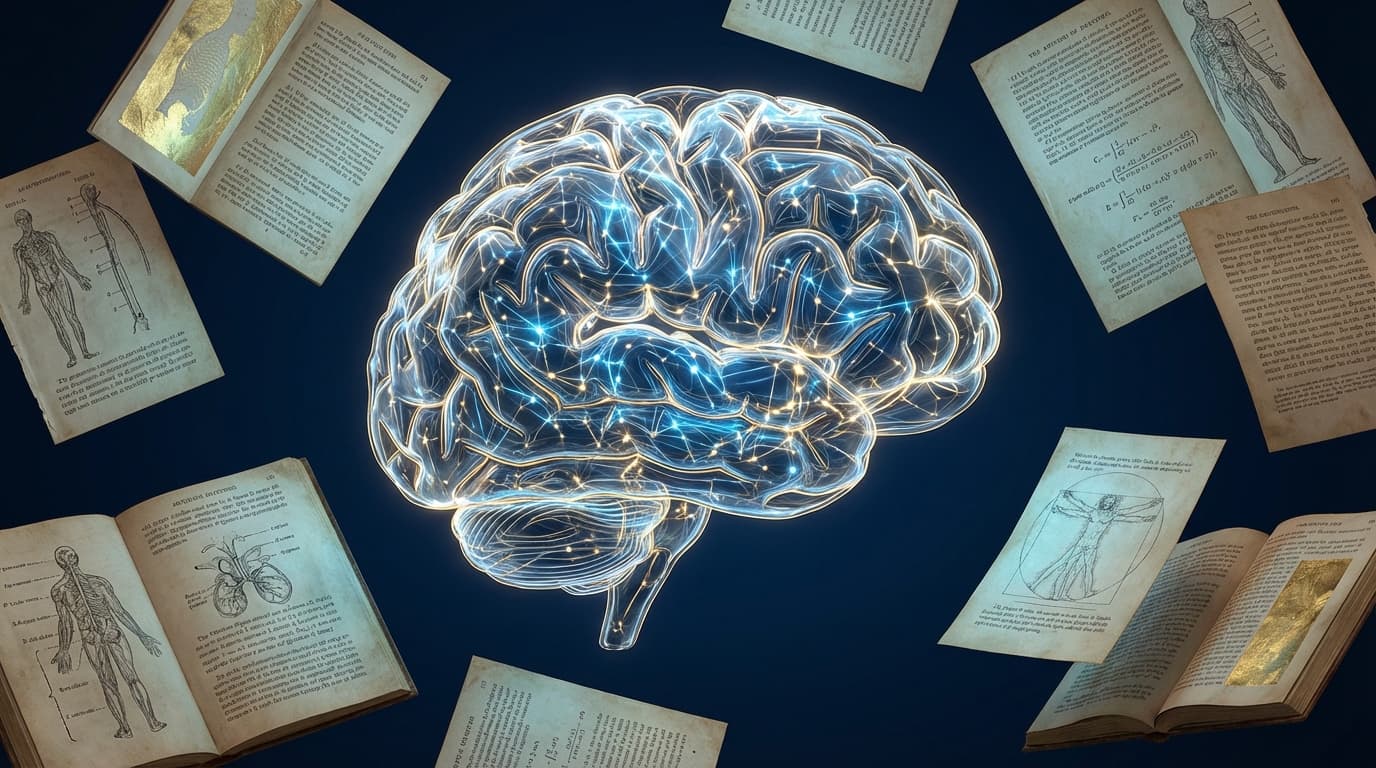
Fiction activates the same neural networks we use to understand real people.
Bibliotherapy: when reading is the treatment
The idea that reading can heal is ancient. The ancient Greeks already regarded libraries as sacred spaces with curative properties. But the formalisation of bibliotherapy as a psychological treatment began in 1916, when Samuel Crothers coined the term in an article published in The Atlantic Monthly.
Today, bibliotherapy is an established clinical practice. A systematic review published in Clinical Psychology Review in 2017 analysed randomised clinical trials and concluded that bibliotherapy is an effective long-term treatment for adults with mild depression. In follow-up periods ranging from three months to three years, adults showed a sustained reduction in depressive symptoms.
A meta-analysis of 29 studies published in the Journal of Consulting and Clinical Psychology (2015), with a combined sample of 2,061 adults, found that bibliotherapy produced a significant reduction in depression as a standalone treatment — showing efficacy comparable to face-to-face or group therapy.
— Gregory, R. J. et al. (2004). Cognitive Bibliotherapy for Depression: A Meta-Analysis. Professional Psychology: Research and Practice, 35(3), 275–280.Most relevant to our subject: the research consistently shows that the personalisation of reading material is a determining factor in the efficacy of bibliotherapy. When a reader can identify directly with the characters and situations in the text, the processes of reflection and insight accelerate. That is precisely what a personalised story for teens and adults delivers when you are the protagonist.

A personalised story combines the science of bibliotherapy with the emotion of seeing yourself as the protagonist.
The psychology of the personalised gift: vicarious pride
Beyond the reading experience itself, there is a fascinating psychological dimension to the act of giving a personalised book. Recent research led by Dr Diletta Acuti of the University of Bath — in collaboration with emlyon, SKEMA and the Università della Svizzera italiana — produced conclusive findings on the emotional impact of personalised gifts.
Across four experimental studies, the researchers discovered that personalised gifts generate a unique emotional response they called vicarious pride: a sense of satisfaction that the recipient experiences upon perceiving the effort and intention the giver invested in creating something exclusively for them.
Recipients of personalised gifts showed higher self-esteem, greater appreciation for the gift, and a stronger tendency to keep it long-term compared with those who received non-personalised gifts. The research also found sustainability implications: by valuing the object more, recipients tended to care for it and delay its replacement.
— Acuti, D. et al. (2024). “You designed that yourself for me? Vicarious pride in customized gift exchange.” University of Bath School of Management.Dopaminergic activation
Giving and receiving personalised gifts activates the mesolimbic reward system, releasing dopamine, oxytocin and endorphins.
Emotional bond
Vicarious pride reinforces the emotional connection between giver and recipient, strengthening the relationship itself.
Reinforced self-esteem
The recipient feels more valued and cared for, producing a lasting positive effect on self-perception.
Greater sustainability
By forming an emotional bond with the object, recipients keep it longer and treat it with greater care.
A revealing finding from the research: what recipients value most is not the monetary cost of the gift, but the evidence that someone has dedicated time and effort to creating something exclusively for them. A personalised story with photos — where your images are transformed into artistic illustrations, within a narrative that reflects your life or your relationship — embodies exactly that principle.
Science-backed moments to give a personalised story
The convergence of these findings suggests that a personalised story for teens and adults is not simply a creative indulgence. It is an emotional intervention with documented effects. And there are moments in life when those effects are especially powerful.
Anniversaries
Your love story illustrated. Personalisation maximises emotional transportation and the vicarious pride documented in the studies.
Milestone birthdays (30, 40, 50)
A narrative journey through the moments that defined a person. Reflective storytelling activates self-knowledge processes similar to those found in bibliotherapy.
Graduations and achievements
Public recognition of an accomplishment through personalised narrative reinforces self-esteem in a lasting way.
Retirements
An illustrated journey through an entire career. Research shows that narrating one's own life story supports emotional integration at major transitions.
Valentine's Day
More than flowers or chocolates: a romantic story in which you are both the protagonists. The gift with the highest possible vicarious pride charge.
New baby
The story of how they came into the world, told for them. A narrative legacy that will endure for generations.
Research from the University of Bath confirms: personalised gifts create stronger emotional bonds than conventional ones.
What AI makes possible that wasn't before
Bibliotherapy research consistently highlights a recurring factor: the efficacy of the treatment depends largely on the material being adapted to the reader. What in a clinical context requires a therapist carefully selecting texts, artificial intelligence now makes possible at scale — and with a level of specificity that was simply unachievable before.
At Cuentosia.ai, personalisation operates across multiple layers simultaneously. The protagonist is the real person, whose photo is transformed into an artistic illustration across 25 different available styles. The story adapts to the chosen theme: romantic, adventure, mystery, science fiction, nostalgic or reflective. And the tone is calibrated for an adult audience — with narrative complexity, rich vocabulary and themes that resonate with lived experience.
The result is a story that satisfies the three elements the research identifies as critical for the emotional impact of reading: identification with the protagonist (maximum, because it is you), emotional transportation (guaranteed by personal relevance) and narrative quality (generated with advanced technology but to human editorial standards).
Full editorial control: Unlike other personalisation services that simply insert a name into a generic template, Cuentosia.ai lets you edit the text and illustrations of each page individually before finalising. If an illustration does not feel right, regenerate it. The science tells us that active involvement in a process improves outcomes — here, that involvement begins before the reading does.
Digital, print, audiobook: three ways to experience the story
The neuroscience of reading also offers insight on formats. Studies suggest that physical reading tends to produce greater emotional retention than reading on screen, possibly because the tactile experience of paper reinforces memory encoding.
That is why a personalised story for adults offers a complete experience when the digital and the physical are combined. A digital PDF allows instant surprise — shared in under five minutes — while a printed book creates the tangible object that personalised gift research associates with greater long-term preservation and emotional bonding.
And then there is the audiobook: a third layer of experience. Bibliotherapy studies conducted during the COVID-19 pandemic highlighted that audio formats expand the accessibility of reading interventions, reaching people who face geographical, physical or time-based barriers to traditional reading.
Digital PDF (from £5)
Instant generation. Ideal for last-minute surprises or for reviewing before ordering a printed copy.
Printed book
Professional printing with home delivery. The tangible object that science associates with greater emotional impact.
Narrated audiobook
With music and effects. Expands accessibility and adds a different sensory dimension to the experience.
Frequently asked questions
Do personalised stories really have measurable psychological effects?
Yes. Research on bibliotherapy and fiction reading — published in journals including Science, PLOS ONE and Clinical Psychology Review — demonstrates that reading fiction improves empathy, reduces depressive symptoms and supports self-knowledge. Cuentosia.ai amplifies these effects by maximising reader identification with the story, since the protagonist is the person themselves.
Is a personalised story an appropriate gift for an adult, or will it seem childish?
Cuentosia.ai's stories for teens and adults are specifically designed with adult tone, vocabulary and narrative complexity. Themes include romance, mystery, science fiction, drama and humour. Illustrations are created from real photos transformed artistically — nothing about them resembles a children's picture book.
How long does it take to create a personalised story?
The digital PDF is generated in under five minutes and downloaded instantly. A printed book takes between five and ten working days. You retain full control over the content — you can edit each page, regenerate illustrations and adjust the text before finalising.
Can I include more than one person in the same story?
Yes. You can create characters for a partner, friends, family members, colleagues or even pets. Each person with their own photo transformed into an artistic illustration, with 25 styles available to choose from.
What does the science say about giving something personalised versus a conventional gift?
Research from the University of Bath (2024) across four experimental studies demonstrated that personalised gifts generate a unique emotional response called “vicarious pride”, increase the recipient's self-esteem, and create more durable bonds than non-personalised gifts.
Where can I create a personalised story for a teen or adult?
At Cuentosia.ai you can create personalised stories for teens and adults using artificial intelligence. Upload a photo, choose the theme and illustration style, and in under five minutes you have a unique story. The first story is completely free.
Academic references
- Kidd, D. C., & Castano, E. (2013). Reading Literary Fiction Improves Theory of Mind. Science, 342(6156), 377–380. doi:10.1126/science.1239918
- Bal, P. M., & Veltkamp, M. (2013). How Does Fiction Reading Influence Empathy? An Experimental Investigation on the Role of Emotional Transportation. PLOS ONE, 8(1), e55341.
- Mar, R. A., Oatley, K., & Peterson, J. B. (2009). Exploring the Link Between Reading Fiction and Empathy: Ruling Out Individual Differences and Examining Outcomes. Communications, 34, 407–428.
- Dodell-Feder, D., & Tamir, D. I. (2018). Fiction Reading Has a Small Positive Impact on Social Cognition: A Meta-Analysis. Journal of Experimental Psychology: General, 147(11), 1713–1727.
- Tamir, D. I., et al. (2016). Reading Fiction and Reading Minds: The Role of Simulation in the Default Network. Social Cognitive and Affective Neuroscience, 11(2), 215–224.
- Gregory, R. J., et al. (2004). Cognitive Bibliotherapy for Depression: A Meta-Analysis. Professional Psychology: Research and Practice, 35(3), 275–280.
- Gualano, M. R., et al. (2017). The Long-Term Effects of Bibliotherapy in Depression Treatment: Systematic Review of Randomized Clinical Trials. Clinical Psychology Review, 58, 49–58.
- Stip, E., Østlundh, L., & Aziz, K. A. (2021). Bibliotherapy: Reading OVID During COVID. Frontiers in Psychiatry, 12.
- Pmc.ncbi.nlm.nih.gov (2021). Bibliotherapy as a Non-pharmaceutical Intervention to Enhance Mental Health in Response to the COVID-19 Pandemic: A Mixed-Methods Systematic Review and Bioethical Meta-Analysis.
- Acuti, D. et al. (2024). “You designed that yourself for me? Vicarious pride in customized gift exchange.” University of Bath School of Management.
- Pettersson, C. (2018). Psychological Well-Being, Improved Self-Confidence, and Social Capacity: Bibliotherapy from a User Perspective. Journal of Poetry Therapy, 31(2), 124–134.
- Hart, J. (2021). Bibliotherapy: Improving Patient's Health Through Reading. Alternative and Complementary Therapies, 27(3).
- Djikic, M., Oatley, K., & Moldoveanu, M. (2013). Reading Other Minds: Effects of Literature on Empathy. Scientific Study of Literature, 3(1), 28–47.
- Djikic, M., et al. (2009). On Being Moved by Art: How Reading Fiction Transforms the Self. Creativity Research Journal, 21(1), 24–29.
Keep exploring
The science confirms it: your story deserves to be told
Turn whoever you choose into the protagonist. Upload a photo, pick the adventure, and in five minutes you'll have a unique story with artistic illustrations. The first story is free.
Create my story freeReady to experience it instead of reading about it? Explore our stories for teens and adults and create one starring someone you love.