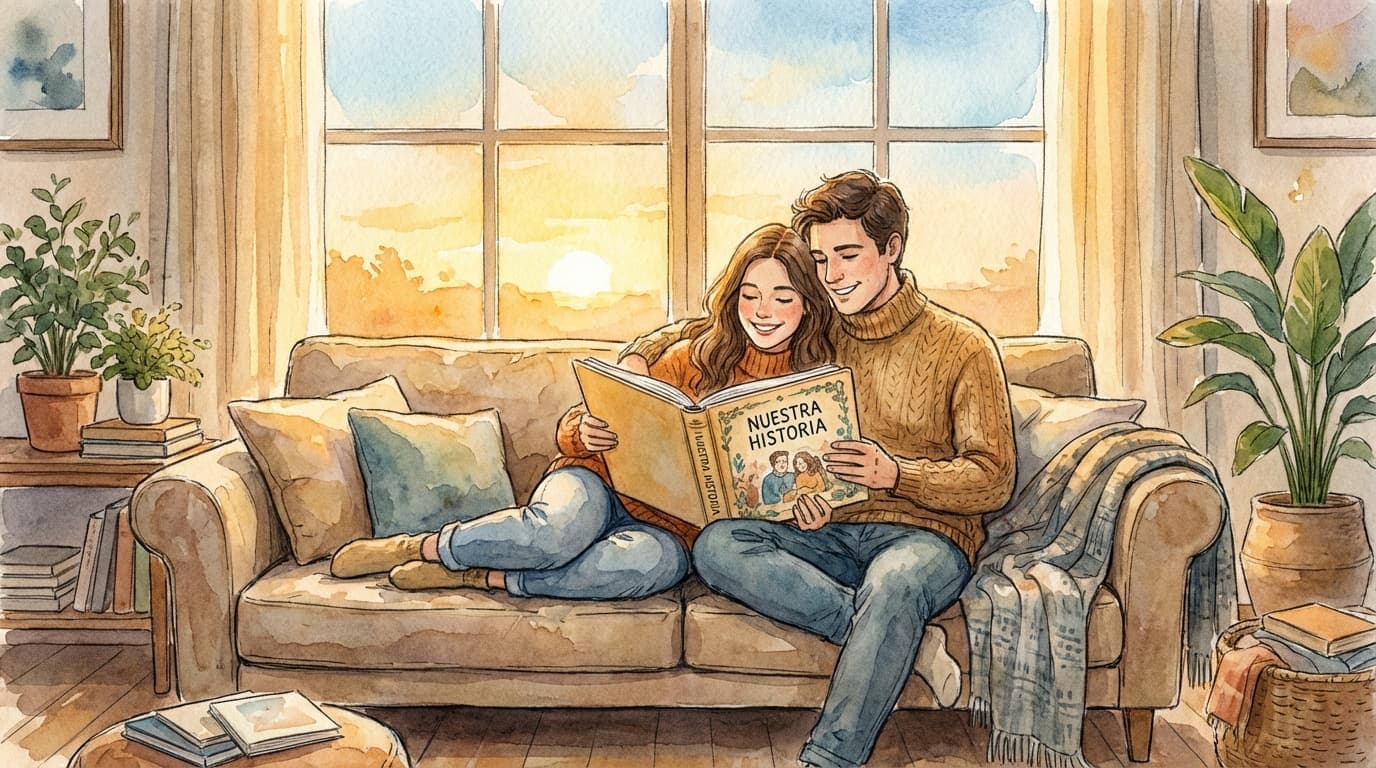
Think about the last time someone told a story where you were the main character. Did you listen more carefully? Remember more details? That feeling has a scientific name. In children, the effect is even stronger.
Every parent knows the scene: your child asks for "the story where I'm the hero" for the tenth night running. Not a different one. Not a new one. That one — the one about them. And they remember every word, with a precision that sometimes stops you in your tracks.
What you may not know is that behind that obsession lies a brain mechanism studied for over 30 years. It is called the self-reference effect, and researchers have spent decades uncovering just how dramatically it transforms the way children process, retain and connect with what they read.
This article is a tour through what we know — with real studies, published in peer-reviewed journals — about what happens in your child's brain when they see themselves inside a story. And about how you can use that knowledge to create reading moments that truly leave a mark.
Why the personalised story stays in memory longer
In 1977, psychologists Rogers, Kuiper and Kirker published a study that changed our understanding of human memory. They discovered something deceptively simple yet profound: when we process information in relation to ourselves, we remember it significantly better than when we process it any other way.
This phenomenon — the self-reference effect — has since been replicated hundreds of times. A meta-analysis by Symons and Johnson (1997) confirmed it as one of the most robust and consistent findings in all of memory research.
The big question was: does it work in young children too? At what age does this effect switch on?
A study published in Nature Communications in 2025 pushed further still: it found evidence that the roots of this effect may appear as early as age 2, coinciding with the moment children first recognise themselves in a mirror.
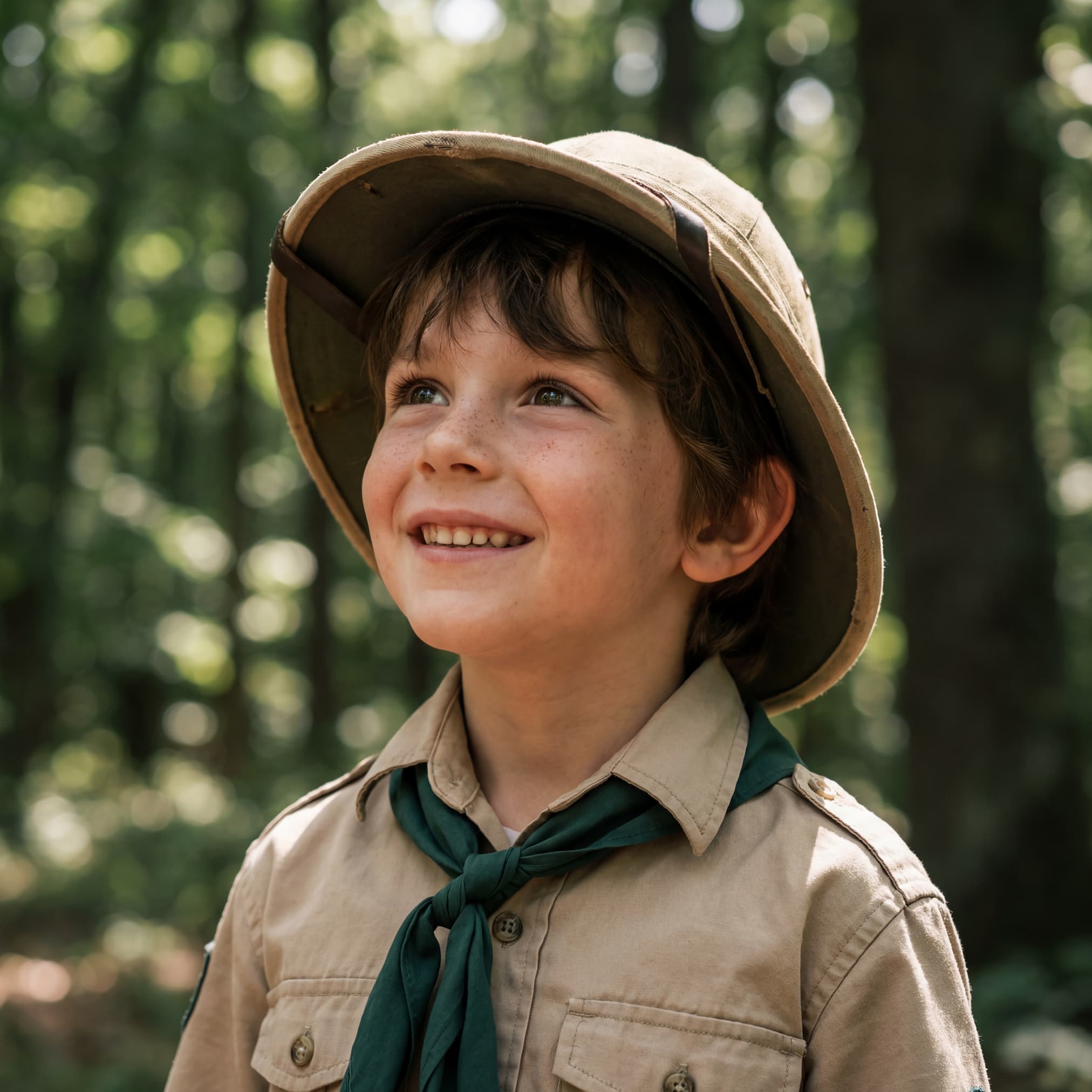
When your 3-, 4- or 5-year-old sees their name, their face or details from their own life in a story, their brain processes that story more deeply. It is not just that they enjoy it more. They encode it more firmly, retain it longer and connect it to their own lived experience.
The Cunningham study: what happens at age 4, 5 and 6
The Cunningham (2014) study deserves closer attention because it answered a question that had long troubled developmental psychologists: is the self-reference effect present before children have a fully consolidated sense of self?
The answer, unambiguously, was yes. Even 4-year-olds — who are still in the early stages of self-concept development — showed a clear memory advantage when information was linked to their own image. The effect did not grow stronger with age within the 4-to-6 range, suggesting it is already operating at full power by the time children start school.
The implications for reading are direct. A story that places your child's name, face and familiar details at its centre is not a gimmick. It is working with a fundamental cognitive architecture that evolution has spent a very long time building.
Kucirkova's findings: more words, more questions, more engagement
Natalia Kucirkova, Professor of Early Childhood Education at The Open University and the University of Stavanger, has spent more than a decade answering exactly this question with personalised books and young children. Her studies are the most rigorous that exist on this topic.
What you can do with this knowledge
You do not need to wait for the perfect book to put the science to work. Here are three things you can do tonight:
Make your child the verbal protagonist. When reading any story, substitute the main character's name with your child's. It is basic personalisation, but it works. Watch how their attention shifts.
Ask questions, do not just narrate. "What would you have done?" "Does this remind you of something that happened to you?" Dialogic reading — the kind that connects the story to your child's life — is the interaction type that activates the brain most powerfully. A study using functional MRI in 4-year-old girls found that the quality of maternal reading, measured by verbal interactivity and engagement, correlated positively with brain activation in regions supporting complex language, executive functions and socioemotional processing.
Repeat without anxiety. If they ask for the same book again, do not change it. A study by Horst, Parsons and Bryan (2011) found that children who heard the same story three times learned significantly more new words than children who heard three different stories. Each repetition is consolidating vocabulary, narrative comprehension and self-concept.
This study matters because it demonstrates that personalisation works regardless of family socioeconomic background. It is not a luxury. It is a tool.
Not just better learning — a stronger sense of self
There is something beyond vocabulary and memory. When a child sees themselves solving a problem in a story, overcoming a fear or helping someone, they are mentally rehearsing a version of themselves that does not yet fully exist. Psychologists call this cognitive rehearsal.
Think of your child being afraid of the dark. You can explain a thousand times that there is nothing to fear. Or you can read them a story where they — with their name, their face — face the dark and discover they can handle it. The difference between those two approaches is not just emotional. It is neurological.
A recent study published in Pediatric Research (2025) examined what happens in the brains of children aged 5 to 7 when they hear a story narrated by their parent compared with a stranger. The difference was clear: parental narration differentially activated brain networks associated with attention, executive functions and sensory processing. The emotional bond between parent and child amplifies the brain's response during reading. The feeling of safety and closeness when a parent reads is not a nice-to-have. It is an active component of learning.
A personalised story is not just a pretty book with your child's name. It is a catalyst for conversation, shared laughter and moments where you say "do you remember when something like that happened to you?" Those moments build the bond. And your child's brain registers every one of them.
Create a story your child will remember
Build a personalised illustrated story with your child's photos. With the science of self-reference working in their favour.
Create your personalised story →Frequently asked questions
From what age do personalised stories work?
The self-reference effect appears as early as age 2 in emerging form, and is fully operational by age 4. Any child old enough to recognise themselves in a photo will benefit.
Is it enough to just put my child's name in a generic story?
Researchers distinguish between surface personalisation (name only) and deep personalisation (name, photo, personal details, familiar context). Studies that use deep personalisation — including photos and meaningful details — produce the strongest effects on vocabulary, emotional engagement and retention. Cuentosia.ai offers 25 different illustration styles so each story is genuinely unique to your child.
Why does my child want to hear the same story every night?
Because their brain is doing something useful. Repetition is a consolidation mechanism: each time your child hears the same personalised story, their brain reinforces the neural connections associated with that content. Far from being boring, repetition is the engine of retention.
Does this work for children who are not keen readers?
Particularly so. Studies show that personalised books increase reading time and spontaneous verbal engagement even in children who typically show little interest in books. Seeing yourself in a story changes the motivational equation entirely.
Scientific references
- Rogers, T.B., Kuiper, N.A. & Kirker, W.S. (1977). Self-reference and the encoding of personal information. Journal of Personality and Social Psychology, 35(9), 677-688.
- Symons, C.S. & Johnson, B.T. (1997). The self-reference effect in memory: A meta-analysis. Psychological Bulletin, 121(3), 371-394.
- Cunningham, S.J., Brebner, J.L., Quinn, F. & Turk, D.J. (2014). The self-reference effect on memory in early childhood. Child Development, 85(2), 808-823.
- Kucirkova, N., Messer, D. & Sheehy, K. (2014). Reading personalized books with preschool children enhances their word acquisition. First Language, 34(3), 227-243.
- Kucirkova, N., Messer, D. & Sheehy, K. (2013). Sharing personalised books: Observations of parent-child interaction. Journal of Early Childhood Literacy.
- Mendive, S., Placencio-Castro, M., Strasser, K. & Kucirkova, N. (2023). Impacts of a personalized book giveaway intervention in low-SES households. Early Childhood Research Quarterly, 63, 230-243.
- Hutton, J.S. et al. (2017). Shared Reading Quality and Brain Activation During Story Listening in Preschool-Age Children. The Journal of Pediatrics, 191, 204-211.
- Canfield, C.F. et al. (2020). Beyond Language: Impacts of Shared Reading on Parenting Stress and Early Parent-Child Relational Health. Pediatrics, 146(4).
- Horst, J.S., Parsons, K.L. & Bryan, N.M. (2011). Get the story straight: Contextual repetition promotes word learning from storybooks. Frontiers in Psychology, 2, 17.
- Horowitz-Kraus, T., Magaliff, L.S. & Schlaggar, B.L. (2024). Neurobiological Evidence for the Benefit of Interactive Parent-Child Storytelling. Journal of Cognitive Education and Psychology.
- American Academy of Pediatrics (2024). Literacy Promotion: An Essential Component of Primary Care Pediatric Practice. Pediatrics, 154(6).
- Logan, J.A.R. et al. (2019). When Children Are Not Read to at Home: The Million Word Gap. Journal of Developmental & Behavioral Pediatrics, 40(5), 383-386.
- Montag, J.L., Jones, M.N. & Smith, L.B. (2015). The Words Children Hear: Picture Books and the Statistics for Language Learning. Psychological Science, 26(9), 1489-1496.