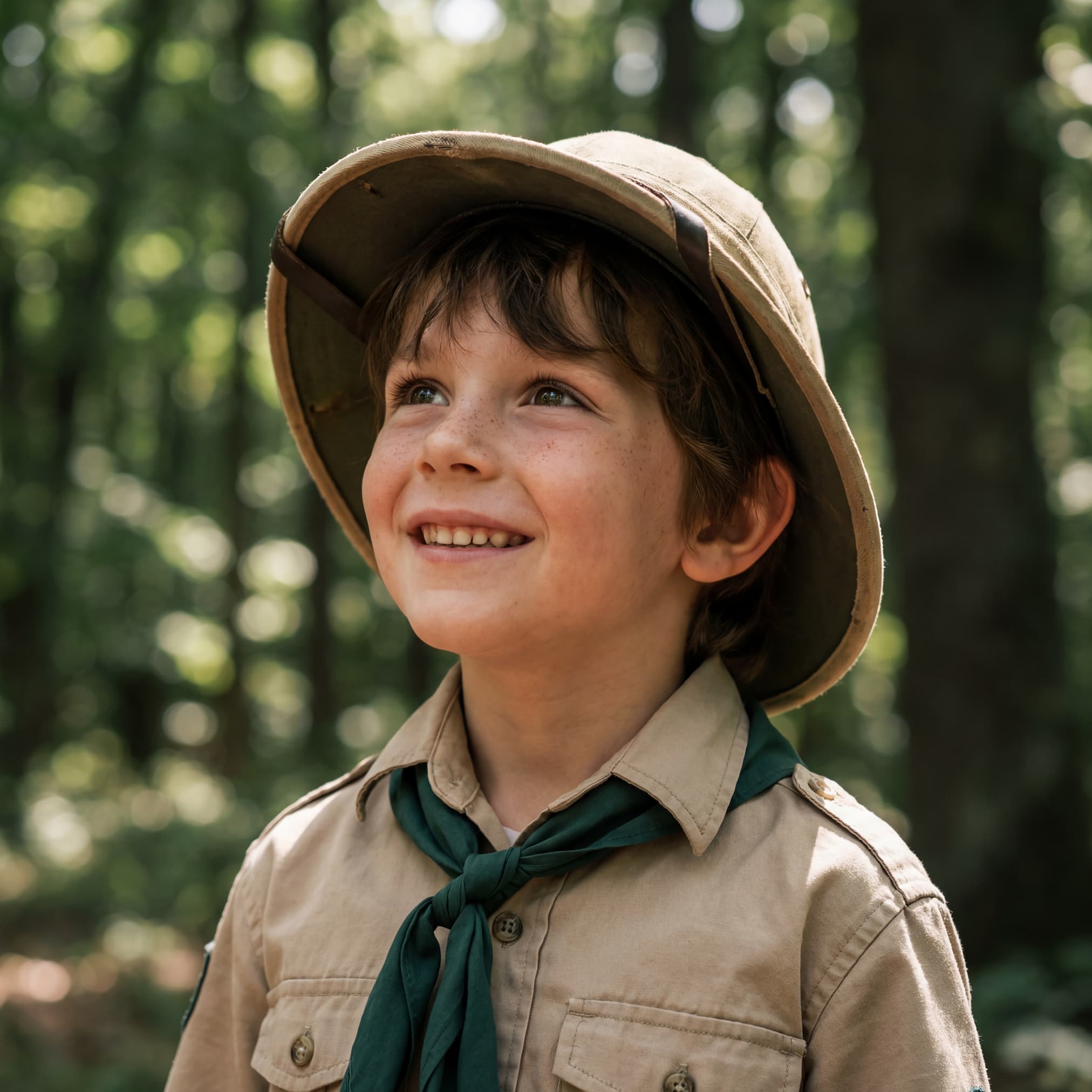
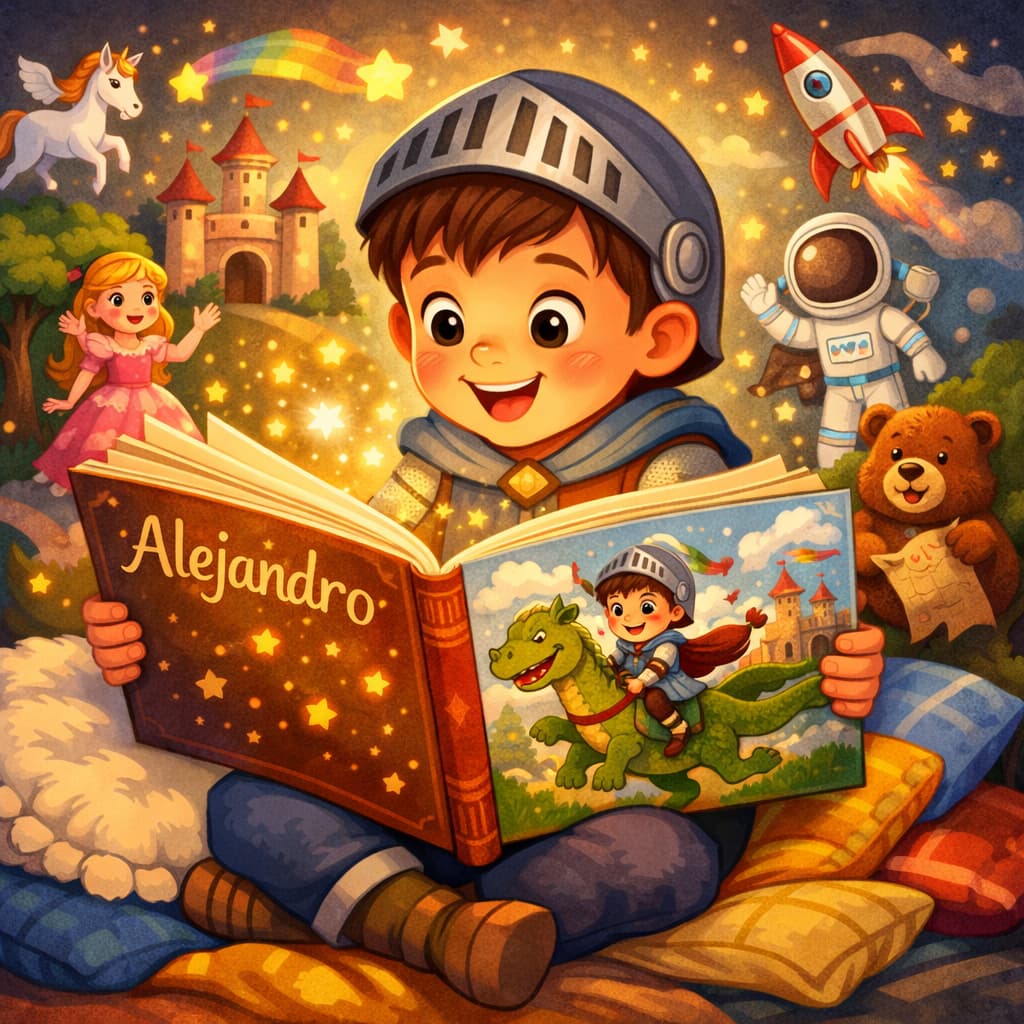
Two identical books, same story. One says "Pablo went into the forest." The other says "[your child's name] went into the forest." The brain processes these completely differently. That single change — a name — triggers a cascade of neurological responses that affect attention, memory and emotional engagement.
Personalised children's stories are not just a novelty. Child psychology provides clear, evidence-based reasons why they generate greater attention, emotional involvement and retention than generic books. Understanding these mechanisms helps you use them well.
Five reasons your child's brain responds differently to their own story
Researchers in developmental psychology and cognitive neuroscience have identified five distinct mechanisms through which personalisation amplifies a story's impact on a child's brain.
1. Attention
The brain prioritises information linked to the self. A child hears their own name and attention locks in immediately — no coaxing needed.
2. Emotional engagement
The child stops experiencing the story as external ("it happens to someone else") and lives it as their own ("it is happening to me"). Emotions become real, not imagined.
3. Memory encoding
Self-referential information is encoded with richer contextual and emotional connections. The child remembers the story because it is, in part, their own story.
4. Intrinsic motivation
No external reward needed. The child wants to read because the story is about them — and wants to show it to everyone. This is the foundation of a lifelong reading habit.
5. Identity building
When a child sees themselves being brave, kind or resilient in a story, their brain rehearses those qualities. Values are not told — they are lived in first person.
The science: the self-reference effect
In 1977, psychologists Rogers, Kuiper and Kirker published a landmark study in the Journal of Personality and Social Psychology that changed how we understand memory: we retain information far better when it relates to ourselves. They called it the self-reference effect.
Subsequent decades of research — including work endorsed by the British Psychological Society — confirmed the effect extends to children. When a child sees their name in a story, recognises their face in the illustrations, or finds their familiar world reflected in the setting, their brain processes that information more deeply. It is not merely greater attention — it is qualitatively different memory encoding, with richer emotional and contextual connections.
In practice: more concentration during reading, a stronger desire to re-read the book, and significantly better retention of the values and messages embedded in the story.
Dr Kucirkova's personalisation research
Professor Natalia Kucirkova, based at the Open University (UK) and widely recognised as a world authority on personalised books for children, has produced a body of research that makes the evidence concrete.
Her studies (published in First Language, Journal of Pragmatics and New Media & Society) found that children who read personalised stories show a significant increase in vocabulary, spontaneous speech and engagement during shared reading. They ask more questions, make more connections to real life, and sustain attention for longer.
Key finding
Children reading personalised books generate markedly more spontaneous speech during the reading session — they comment, ask questions, and connect the story to their own life. That is intrinsic motivation made visible.
Personalised vs generic: what the studies show
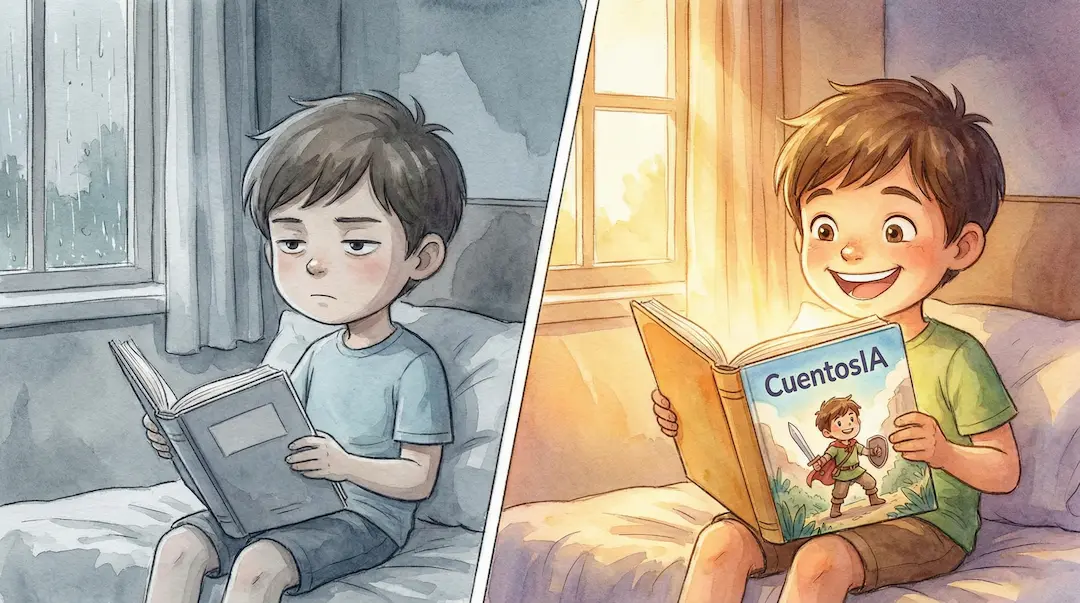
Here is how the psychological mechanisms compare between a generic and a personalised story at a glance.
Generic story
Child listens as an external observer
Partial identification with the protagonist
Moderate content retention
Motivation depends on topic and illustrations
Values transmitted abstractly
Personalised story
Child lives the story as the protagonist
Immediate and deep identification
Higher retention via self-reference effect
Intrinsic motivation — reads because they see themselves
Values lived in first person
Conclusion: they do not replace the classics, but they are a powerful tool
Personalised stories are not trying to replace Little Red Riding Hood or The Little Prince. Classic tales are a fundamental part of culture and childhood development and will always have their place on the shelf.
But from a child psychology perspective, personalised stories activate mechanisms that generic ones cannot: attention through self-reference, direct emotional identification, intrinsic motivation and experiential value learning. They are an extraordinary complementary tool for nurturing reading and emotional development.
At Cuentosia.ai, we combine these psychological principles with AI illustration technology to create stories where every child is the protagonist — with their real photos transformed into art. Because the science says it works, and every family that tries it confirms it.
Scientific references
Rogers, T. B., Kuiper, N. A., & Kirker, W. S. (1977). Self-reference and the encoding of personal information. Journal of Personality and Social Psychology, 35(9), 677–688.
Kucirkova, N., Messer, D., & Sheehy, K. (2014). The effects of personalisation on young children's spontaneous speech during shared book reading. Journal of Pragmatics, 71, 45–55.
Kucirkova, N., Messer, D., & Sheehy, K. (2014). Reading personalised books with preschool children enhances their word acquisition. First Language, 34(3), 227–243.
Kucirkova, N. et al. (2021). Children's engagement with digital personalised books. New Media & Society.
OECD (2019). PISA 2018 Results: What Students Know and Can Do. Early childhood reading and cognitive development.
Frequently asked questions
Are personalised stories suitable for all ages?
Yes. The self-reference effect operates from infancy. Cuentosia.ai stories are designed for children aged 2–12, with content and reading level adapted to each age group.
Does the child need to see their photo in the illustrations for it to work?
No — simply having their name as protagonist already activates the self-reference effect. Personalised illustrations amplify the impact further, but name personalisation alone produces measurable results.
Do personalised stories replace classic books?
No — they complement them. Classic stories carry cultural heritage and universal themes. Personalised stories activate specific psychological mechanisms that generics cannot. Both belong in your child's bookshelf.
Cuentosia.ai — personalised stories where your child is the protagonist. Available in English, Spanish and French.
Ready to see the difference a personalized story makes? Explore our full collection of children's stories and create one where your child is the hero.