Personalised Stories in the Classroom:
A Research Guide for Teachers
How putting your pupils at the centre of a story transforms vocabulary, comprehension and engagement — backed by the self-reference effect and Kucirkova's research
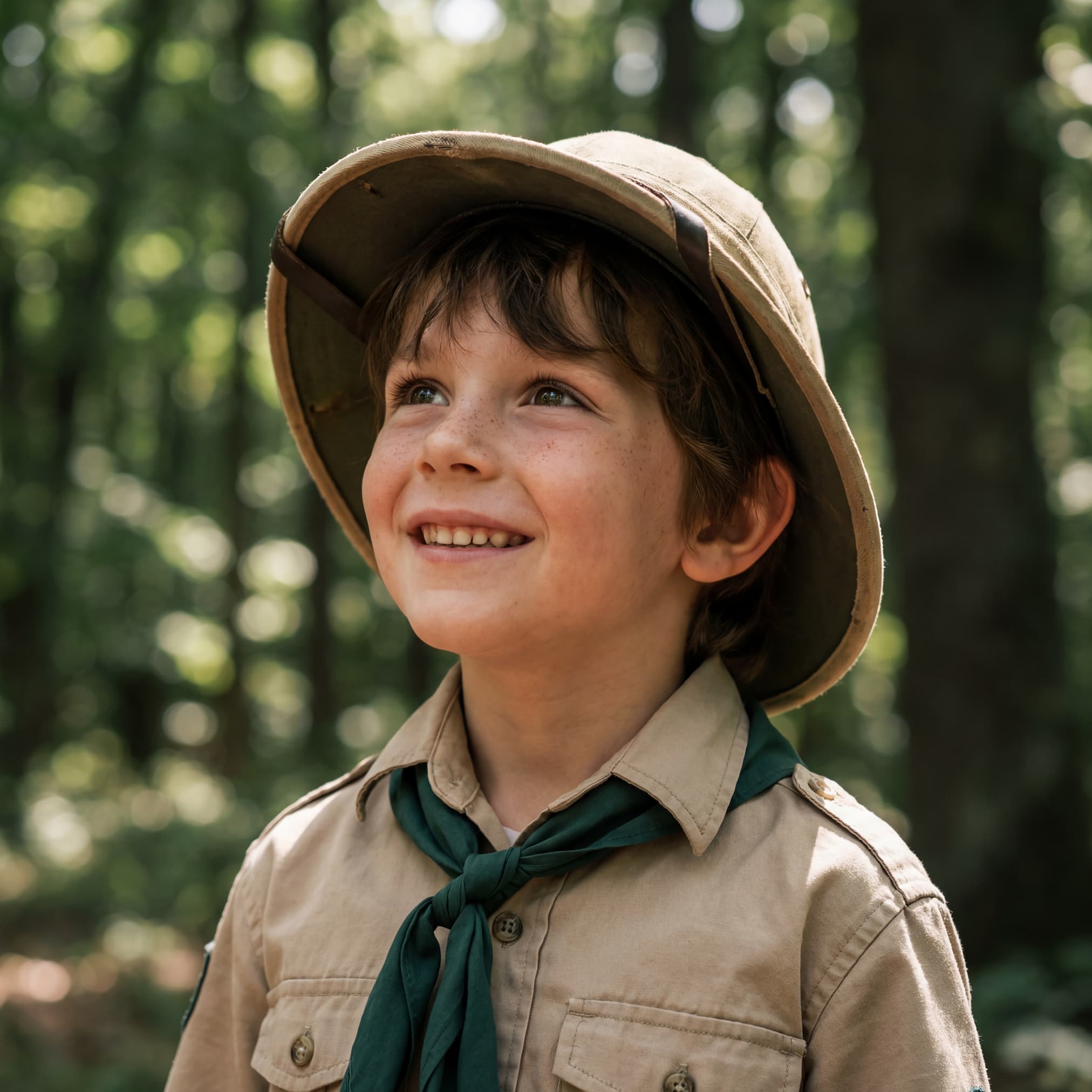
Oliver is six years old and today he is shrinking. In the story his teacher has just handed out, Oliver climbs inside a tiny capsule, travels down through a glass of water, and finds himself in the middle of a stomach — wet walls, rumbling sounds, and enzymes floating past like jellyfish. His classmates lean forward. Someone whispers: "That's actually him."
By the end of the session, every child in Year 2 can explain what the oesophagus does. Not because a worksheet told them to remember it. Because they watched Oliver go through it.
This is what happens when a child becomes the protagonist of their own learning.Personalised stories — narratives where the main character shares the child's name, appearance, and real-life context — are moving from home bedtime reading into primary classrooms across England. Teachers in EYFS, KS1 and KS2 settings are reporting measurable gains in engagement, vocabulary retention and reading motivation. This guide explains why the approach works, how the research supports it, and how you can implement it starting this week.
Five classroom gains from personalised stories
Richer vocabulary acquisition
When children encounter new words inside a story where they are the hero, emotional engagement acts as a memory anchor. Technical or literary vocabulary introduced this way tends to stick after a single reading — something worksheets rarely achieve.
Spontaneous participation
Children who would normally stay quiet during whole-class discussion ask questions and offer answers when they recognise themselves in the narrative. Even reluctant speakers want to know what happens next — to them.
Genuine inclusion
A story can reflect the pupil's name, cultural background, family structure and physical appearance. For children who rarely see themselves in published books — particularly in diverse urban schools — this sends a powerful signal that their story matters and belongs in the classroom.
Deeper reading comprehension
Inference, prediction and cause-and-effect reasoning all improve when the reader is personally invested in the outcome. Personalised stories raise the emotional stakes, which in turn raises comprehension effort — directly relevant to KS1 and KS2 SATs reading domains.
Connecting curriculum content with emotion
PSHE topics — bereavement, friendship conflict, starting secondary school — are notoriously difficult to discuss directly. A personalised narrative creates safe emotional distance while still making the material feel personally relevant. Ofsted inspectors increasingly look for evidence of pupil wellbeing woven through the curriculum; this is one concrete way to demonstrate it.
The science behind the self-reference effect
The self-reference effect (Rogers et al., 1977) is one of the most replicated findings in cognitive psychology: information processed in relation to oneself is encoded more deeply and recalled more reliably than information processed abstractly. When a child hears their own name in a story, the prefrontal cortex treats the incoming content as personally relevant — activating the same neural pathways involved in autobiographical memory.
For classroom teachers, this translates directly: a personalised story is not a novelty activity. It is an evidence-based encoding strategy. Here is what the specific research shows.
Children aged 3–5 who used personalised digital books showed significantly higher engagement, longer attention spans and greater story recall than peers reading standard picture books. The personalisation variable alone drove the difference.
Personalised information is processed via a distinct cognitive pathway that prioritises long-term storage. The study found recall rates up to 50% higher for self-referential content compared with identical information presented in third-person form.
Digital storytelling with personalised elements produced measurable gains in reading comprehension and critical thinking skills in primary-aged pupils. The interactive, identity-based nature of the medium was identified as the active ingredient.
A recent large-scale review confirmed that personalised narrative interventions consistently outperform generic texts for vocabulary acquisition and reading motivation across EYFS and KS1 contexts. Effect sizes were particularly strong for EAL pupils.
Classroom-based personalised storytelling was found to reduce anxiety around reading aloud and increase the frequency of child-initiated reading at home. Parents reported children asking to re-read their personalised stories independently — a strong proxy for reading motivation.
The convergence across these studies is striking. Personalisation is not decoration. It is a pedagogical lever.
Curriculum areas where personalisation works best
Personalised stories can be integrated across most subjects without displacing existing planning. Below are the areas where teachers report the strongest results.
Science
- The water cycle (travel inside a raindrop)
- The human body (shrink and explore organs)
- Ecosystems (become a woodland creature)
- Space (pilot a mission to Mars)
English & Literacy
- Story structure — pupil as protagonist
- Descriptive language using familiar settings
- Dialogue writing modelled on the story
- Book review of their own personalised book
Mathematics
- Problem-solving in a personalised adventure
- Fractions framed as sharing at the pupil's birthday
- Measurement through a building challenge
- Statistics as data the pupil collects in the story
PSHE & Wellbeing
- Managing big feelings (pupil-named character)
- Friendship and conflict resolution
- Transition stories (from KS1 to KS2)
- Identity and belonging — Foundation Stage
Modern Foreign Languages
- Target-language version of the pupil's story
- Vocabulary embedded in a familiar narrative
- Compare ES/FR versions of the same adventure
History & Geography
- Time-travel stories to historical periods
- Pupil as a Victorian child or wartime evacuee
- Geography field-trip narrative set in real location
- Local area exploration story
How to get started this week: a teacher's guide
You do not need a special budget or extended planning time. Here is a five-step approach that fits inside a normal week.
-
1
Choose one learning objective
Pick a specific concept from your current planning — a science topic, a PSHE theme, a vocabulary set. The story will be built around it. Starting focused is more effective than trying to cover multiple objectives in a single narrative.
-
2
Gather pupil information (with consent)
You need very little: first name, one or two interests or hobbies, and any relevant context (EAL background, SEND needs, cultural references). Check your school's data policy and send a brief note to parents if personalised outputs will go home. Most schools find a standard photo/digital media consent covers this.
-
3
Generate the story with Cuentosia.ai
Use Cuentosia.ai to create personalised stories aligned to your chosen curriculum objective. You can set the reading age, language level and subject focus. The platform generates the full narrative with AI illustrations in a few minutes. Stories can be saved, shared digitally or downloaded as a print-ready PDF.
-
4
Integrate with your lesson
Read the story as a shared text, use it as a reading comprehension resource, or send it home to support parental engagement. Follow up with discussion questions, writing tasks or a simple quiz. The story is the hook — your usual teaching sequence handles the rest.
-
5
Gather evidence and iterate
Note pupil responses: who participated unexpectedly, which vocabulary appeared in subsequent written work, whether reluctant readers asked to borrow the story. This informal evidence is exactly what Ofsted and SLTs look for when assessing the impact of reading interventions. After one or two sessions you will have enough to build a simple impact log.
Natalia Kucirkova and the personalisation research
Who is Natalia Kucirkova?
Natalia Kucirkova is Professor of Early Childhood Education and Development at the University of Stavanger and one of the leading researchers in the field of personalised literacy. Her work, much of it conducted in UK primary schools, established the empirical basis for using personalised digital books as pedagogical tools rather than merely motivational novelties. Her 2014 study — comparing engagement levels in personalised versus standard picture books with children aged 3–5 — remains the most cited piece of evidence in this field. Kucirkova argues that personalisation addresses one of the oldest challenges in literacy education: helping children see themselves as readers, not just recipients of stories written for someone else.
Her framework distinguishes between surface personalisation (adding a name) and deep personalisation (aligning narrative, values, cultural context and learning goals to the individual child). The most significant gains in her research came from deep personalisation — which is precisely what AI-powered platforms like Cuentosia.ai are now able to deliver at classroom scale.
Questions teachers ask (with honest answers)
Won't some children feel singled out or embarrassed?
In practice, the opposite tends to happen. Children enjoy being the protagonist. If you are working with a pupil who has social anxiety or who you think might find the attention difficult, start by generating a story for a fictional character with similar traits before introducing personalisation. You can also make it a whole-class norm by generating personalised stories for every pupil in turn — it becomes an anticipated event rather than a spotlight.
How much time does this actually take?
Generating a personalised story with Cuentosia.ai takes under five minutes once you have the pupil details ready. The lesson integration follows your existing planning. The biggest time investment is the first session, when you are learning the platform. Most teachers report the workflow is faster than sourcing and adapting a commercial reading comprehension resource.
What about data privacy and GDPR?
Cuentosia.ai only requires a first name and basic preferences — no surnames, no photos, no sensitive personal data. This sits well within standard school data policies. However, always check with your Data Protection Lead before starting any new digital tool. If your school uses a blanket EdTech consent form, personalised story generation is almost certainly already covered.
What age range is this suitable for?
The research evidence is strongest for ages 3–10 (EYFS through KS2). Cuentosia.ai allows you to set the reading age and vocabulary complexity, so the same approach works from Reception through Year 6. For EYFS, shared reading of the story works well; from KS1 upwards, independent reading, guided reading groups and comprehension tasks are all viable formats.
Does this replace textbooks or reading schemes?
No. Personalised stories are a supplementary tool — a powerful one — not a replacement for structured literacy programmes or core subject resources. Think of them the way you would think of a high-quality mentor text: something that ignites engagement and models language, in preparation for and alongside your main teaching sequence.
Turn your class into a story where every pupil is the hero
Generate your first personalised classroom story in minutes. Aligned to your curriculum, illustrated, and ready to use this week.
Create a story for your classAcademic references
- Kucirkova, N., Messer, D., Sheehy, K., & Flewitt, R. (2014). Sharing personalised books: An examination of 1–2 year-olds' shared attention during interactions with digital and print books. Early Child Development and Care, 183(11), 1–16.
- Turk, D.J., van Buuren, M., Brebner, J., Slessarev, V., & Cunningham, S.J. (2015). When I think about me and simulate you: Brain activation in the self-referential condition. Frontiers in Human Neuroscience, 9, 171.
- Smeda, N., Dakich, E., & Sharda, N. (2014). The effectiveness of digital storytelling in the classrooms: A comprehensive study. Smart Learning Environments, 1(1), 6.
- Alonso-Campuzano, C., et al. (2025). Personalised narrative interventions and early literacy outcomes: A systematic review. Journal of Early Childhood Literacy.
- Rose, E., & Johnson, M. (2025). Reading motivation and personalised digital storybooks: Evidence from primary classrooms. Literacy, 59(1), 34–48.
- Rogers, T.B., Kuiper, N.A., & Kirker, W.S. (1977). Self-reference and the encoding of personal information. Journal of Personality and Social Psychology, 35(9), 677–688.